Steel Framed Doors vs Aluminium Doors: What’s the Difference for Luxury Homes?
Introduction: Why Material Choice Matters
When specifying internal glazed doors for a luxury home, the decision often comes down to steel or aluminium. At first glance, both materials can deliver slim-framed glazing with a contemporary aesthetic. However, beneath the surface, the structural properties, performance characteristics and long-term value differ significantly.
For homeowners and architects investing in high-end interiors, understanding these differences is essential. The choice of material influences not only appearance but also durability, weight, detailing and how the system integrates with the architecture of the property.
At Joshua James, we specialise in bespoke steel-framed doors and partitions, designed for projects where quality and longevity are priorities. This guide explains how steel compares with aluminium and why material selection should be carefully considered.
Structural Strength and Sightlines
One of the most important distinctions between steel and aluminium lies in structural strength.
Steel is significantly stronger than aluminium. This inherent strength allows for refined profiles without compromising rigidity. Slim sightlines are achieved because the material itself provides the necessary structural support.
Aluminium, while lightweight and corrosion resistant, is less rigid than steel. To achieve comparable strength, aluminium systems often require slightly thicker profiles or internal reinforcement.
In high-end interiors where precision and proportion are paramount, steel allows for exceptional clarity of line. Frames appear crisp and architectural rather than engineered to compensate for material limitations.

The visual difference may be subtle to some, but in carefully considered interiors, these proportions contribute significantly to the overall architectural language.
Explore our steel-framed door configurations: Single Doors & Double Doors
Weight and Feel
Material choice also affects how a door feels in use. Steel-framed doors have a solidity that reflects their strength. When opened and closed, they offer a reassuring weight and presence.
Aluminium doors are lighter. In some contexts, this may be perceived as practical. In luxury settings, however, the tactile experience of a door contributes to perceived quality. A well-engineered steel door moves with controlled precision, reinforcing the sense of craftsmanship.
This distinction is particularly noticeable in larger double door sets or full height partitions where stability is critical.
Durability and Longevity
Steel has a long history of use in architectural applications due to its durability. When properly finished, it provides exceptional longevity in internal environments.
Aluminium also offers corrosion resistance and low maintenance, making it popular in external glazing applications. However, in internal residential settings where structural performance and long-term integrity are priorities, steel offers greater robustness.
Steel’s resistance to bending and distortion over time ensures doors maintain alignment, particularly in high-traffic areas.
For luxury homes designed as long-term residences rather than short-term developments, this durability contributes to overall value.
Aesthetic Character
Beyond technical performance, steel and aluminium convey different aesthetic qualities.
Steel has an architectural depth that feels intentional and permanent. It complements both period properties and contemporary homes, adding definition without appearing lightweight.
Aluminium systems can deliver a clean look, although they usually carry with them a thicker framework, often associated with larger-scale glazing systems rather than refined internal partitions.
In period renovations, steel-framed doors provide contrast while respecting original features. In contemporary spaces, they reinforce clean lines and structural clarity.
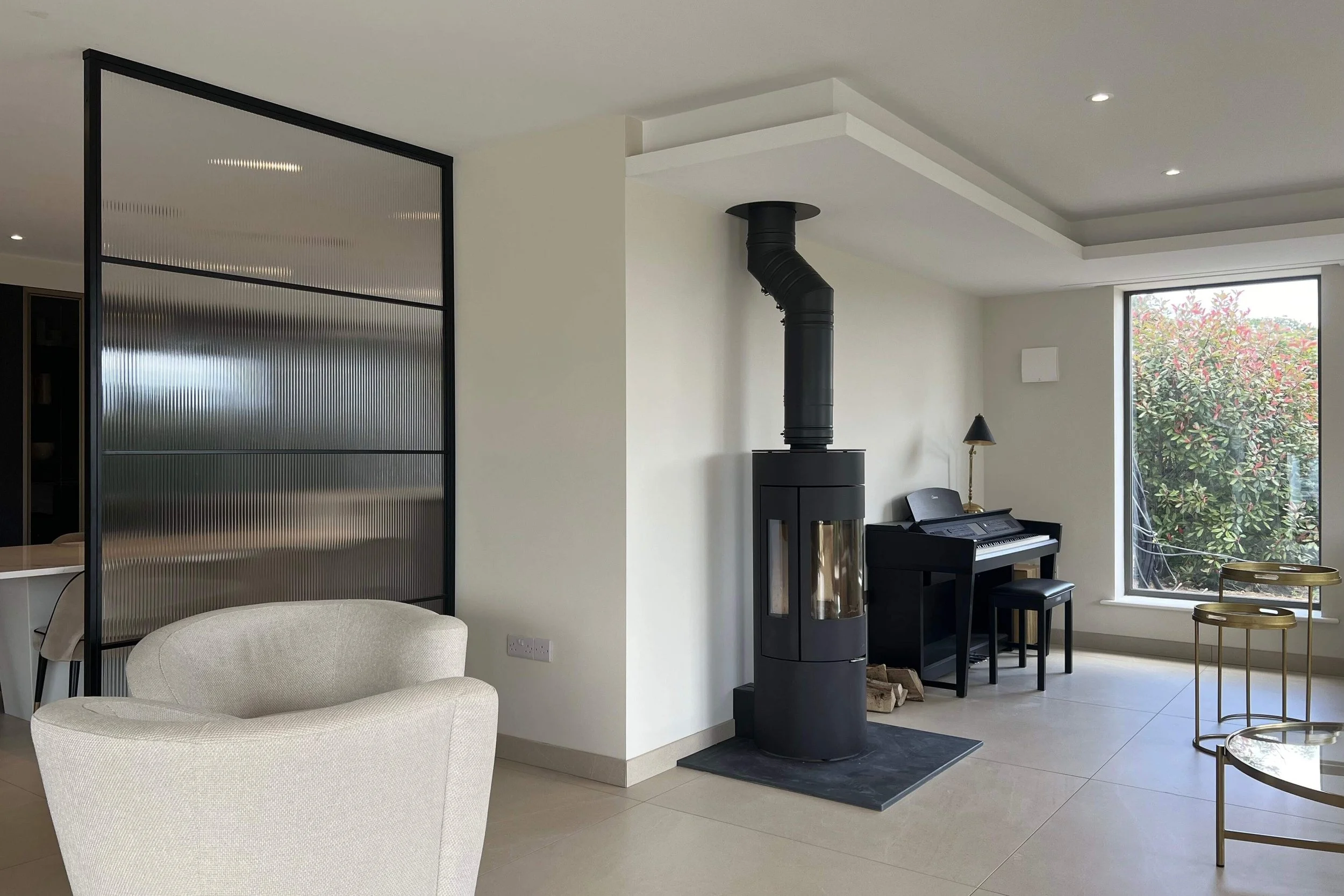
The subtle texture and finish options available with steel also allow for greater character within bespoke projects.
Discover more about glass types and finish options
Bespoke Capability
In luxury residential projects, standard sizes rarely suffice. Ceiling heights vary, wall openings differ and layouts evolve throughout the design process.
Steel-framed doors lend themselves particularly well to bespoke manufacture. Their structural strength supports custom dimensions and tailored configurations without compromising integrity. Steel can be cut and welded at exact angles to match the client’s design intent with accuracy.
Aluminium systems are often supplied within more modular ranges, which can limit flexibility depending on the supplier.
At Joshua James, every steel door and partition is made to measure, ensuring precise fit, balanced proportions and seamless integration within the architecture.
Learn about our most popular designs and ordering process
Fire-Rated Options
Fire performance is another critical consideration in luxury homes. Where separation is required between kitchens and escape routes or within multi-storey properties, fire-rated systems may be necessary.
Steel is particularly well-suited to fire-rated applications due to its structural stability under heat. Fire-rated steel doors and screens can be engineered to meet regulatory requirements while maintaining aesthetic continuity throughout the property.
While aluminium fire-rated systems exist, steel remains the preferred material for projects requiring architectural coherence across both fire-rated and non-fire-rated elements.
Explore our fire-rated systems
Acoustic Performance
In open-plan homes, acoustic separation is increasingly important. Steel-framed doors combined with appropriate glazing and seals can help reduce sound transfer between spaces.
The rigidity of steel supports tighter tolerances and improved alignment, contributing to effective sealing around the door leaf.
For homeowners balancing entertaining spaces, work areas and private rooms, this acoustic benefit enhances everyday usability.
Maintenance Considerations
Both steel and aluminium require minimal maintenance in internal settings. However, the longevity of the finish and structural integrity should be considered.
Powder-coated steel provides a durable finish suitable for luxury interiors. Its robustness ensures that doors retain their appearance over time.
Powder-coated aluminium also provides a durable finish, though in internal architectural applications, the difference lies more in perceived quality and material presence rather than maintenance alone.
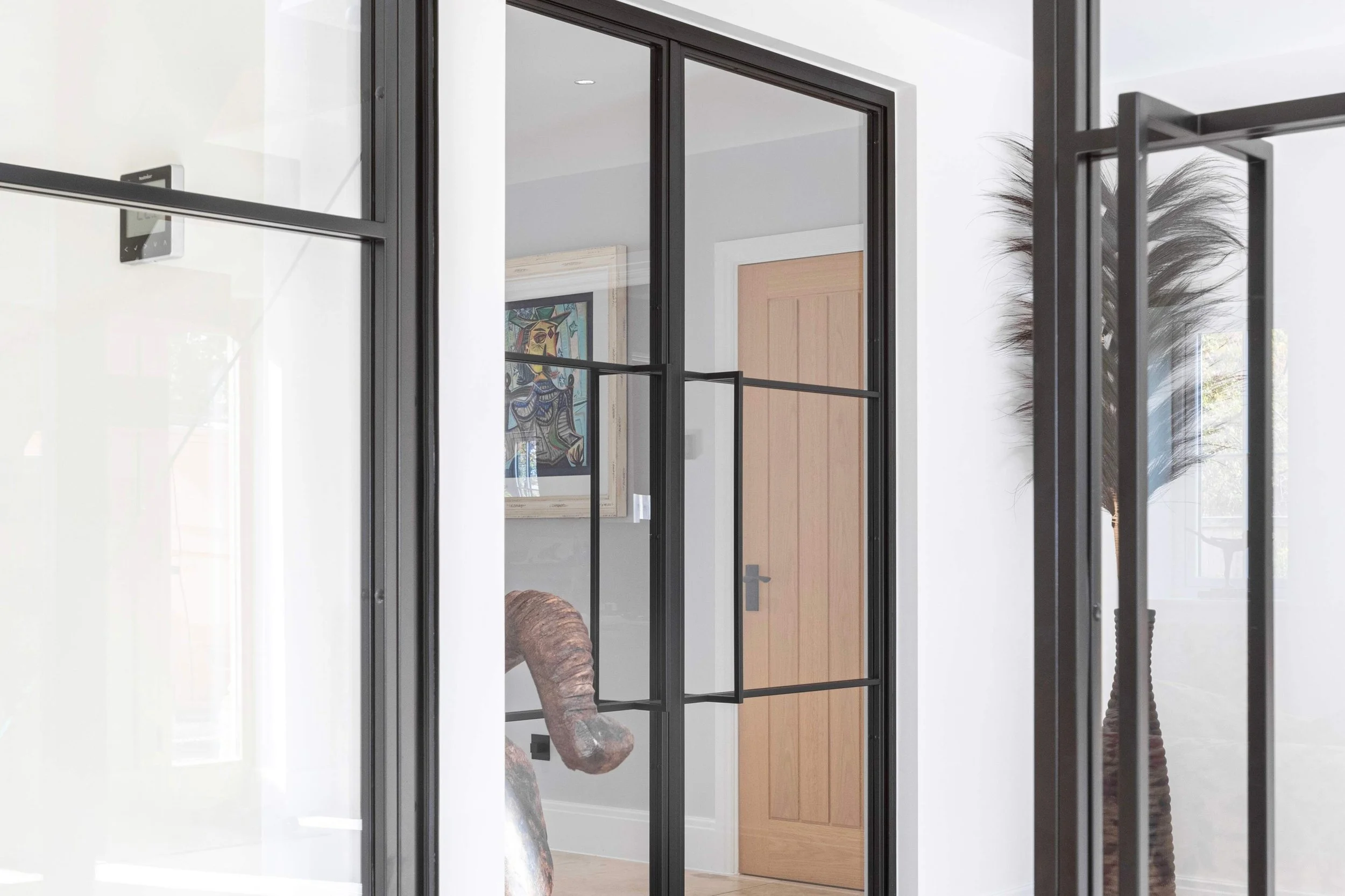
The detailing of steel systems, particularly around handles and junctions, reinforces the sense of craftsmanship expected in high-value homes.
Cost Versus Value
While aluminium systems may sometimes present a lower initial cost depending on specification, material choice should not be assessed solely on upfront pricing.
In luxury residential projects, long-term value, durability and architectural integrity carry greater weight than short-term savings.
Steel-framed doors often become defining features within a property. Their permanence and visual impact contribute to both daily enjoyment and future resale appeal.
When evaluating cost, it is important to consider lifespan, performance and how well the system aligns with the overall design ambition of the home.
Which Is Right for Your Project
The decision between steel-framed doors and aluminium doors ultimately depends on project priorities.
If the aim is architectural clarity, bespoke flexibility, structural strength and long-term value, steel remains the material of choice for many high-end residential applications.
If lightweight modular systems are sufficient and bespoke detailing is less critical, aluminium may meet basic requirements.
For projects where precision, proportion and design coherence are central, steel-framed doors offer a level of refinement that aligns with luxury expectations.
Conclusion: Material Choice Reflects Design Intent
In luxury homes, material selection signals intent. Steel-framed doors communicate permanence, craftsmanship and architectural confidence. Aluminium systems provide practicality, yet may not deliver the same depth of character or structural refinement.
Understanding the differences allows homeowners and architects to make informed decisions aligned with both performance requirements and aesthetic ambition.
Ready for steel?
Enquire today to discuss your next project:
Submit an enquiry or call our team for a tailored consultation.
Let’s Talk
Whether you're renovating a home, specifying for a new build, or delivering a luxury interior for a client — we’re here to help.
At Joshua James, we work with architects, interior designers, homeowners and contractors across the UK to design and supply bespoke steel internal doors. Every door is crafted to exacting standards, tailored to suit each project’s vision, and built to stand the test of time.
If you're ready to elevate your next project with precision-made steel framed doors, let’s talk.