Sliding Steel Doors in Luxury Homes: When to Choose Sliding Over Hinged
Introduction: The Growing Role of Sliding Doors in Interior Design
In modern residential architecture, flexibility within the home has become increasingly important. Open plan layouts remain highly desirable, yet homeowners often seek ways to introduce separation when needed without compromising light or spatial flow.
Sliding steel doors have emerged as an elegant solution to this challenge. By gliding effortlessly along a track or disappearing into a wall pocket, sliding systems allow spaces to remain connected while offering the option of privacy and acoustic separation when required.
While hinged steel doors remain a classic and widely used configuration, sliding doors offer distinct advantages in specific layouts. Understanding when each system is most appropriate is essential when designing a high end interior.
At Joshua James, sliding steel doors are designed as bespoke architectural elements that integrate seamlessly with surrounding steel doors, screens and partitions, ensuring consistency throughout the home.
What Are Sliding Steel Doors
Sliding steel doors are glazed steel framed door panels that move horizontally along a track rather than opening on hinges. The door either slides across a fixed glazed screen, over a wall or travels into a concealed pocket within the wall.
This configuration allows the door to open without requiring the swing space associated with hinged doors. As a result, sliding doors are particularly well suited to layouts where spatial efficiency is important.
Sliding systems can be configured in several ways, here a a few examples:
Single sliding doors moving across a fixed panel
Double sliding doors meeting at the centre
Pocket doors disappearing into the wall
Large sliding partitions dividing open plan spaces
Each configuration provides flexibility while maintaining the clean lines and architectural presence associated with steel framed doors.
When Sliding Doors Make the Most Sense
Sliding steel doors are not simply a stylistic alternative to hinged doors. In many cases, they solve practical design challenges within a home.
They are particularly effective in areas where space is limited or where maintaining clear circulation routes is essential. Because sliding doors do not swing open, they avoid interfering with furniture placement or foot traffic.
Common situations where sliding doors are ideal include:
Between kitchens and dining spaces
Dividing living rooms from hallways
Separating bedrooms and dressing areas
Creating flexible home offices
Dividing snugs from entertainment spaces
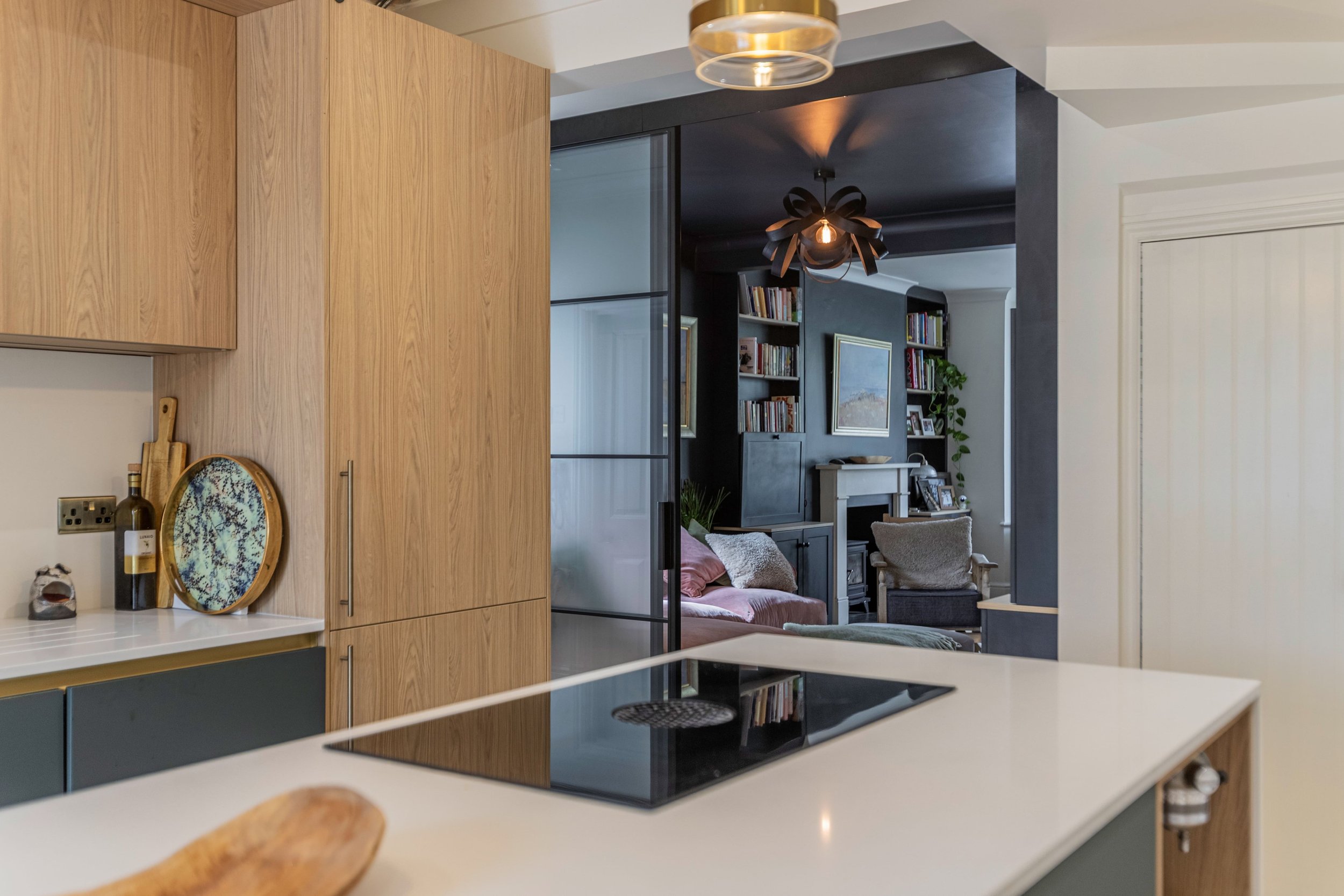
In these scenarios, sliding doors allow spaces to remain visually connected while introducing the option of separation when required.
You can explore sliding door examples here.
Space Efficiency and Layout Flexibility
One of the primary advantages of sliding doors is the way they preserve usable space within a room. Hinged doors require clearance for the door leaf to swing open. In smaller rooms or corridors, this can restrict layout options.
Sliding doors eliminate this requirement entirely. Because the door moves laterally rather than outward, furniture can be positioned closer to the opening without obstructing the door’s movement.
This becomes particularly valuable in apartments, compact homes or areas where circulation space is limited.
Even in larger luxury homes, sliding systems help maintain uninterrupted sightlines and uncluttered layouts.
Pocket Sliding Doors for Seamless Design
Pocket sliding doors take this concept even further. In a pocket system, the door disappears completely into the wall cavity when opened. When the door is closed, it forms a full steel framed partition. When open, the doorway remains entirely unobstructed.
Pocket doors are particularly popular in:
Kitchen entrances
Dressing rooms
En suite bathrooms
Private studies
They offer a seamless transition between spaces, preserving both architectural clarity and functionality.
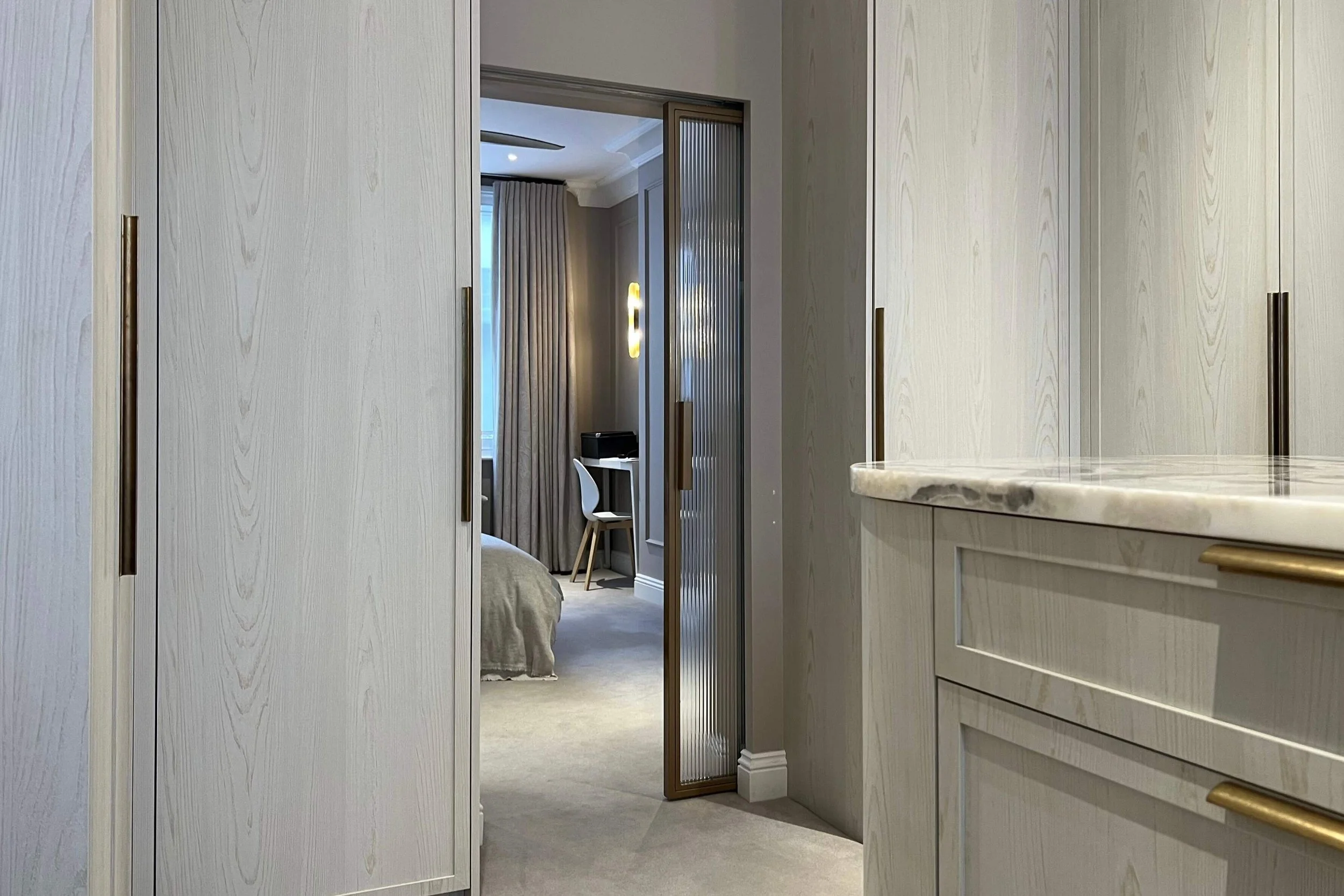
In luxury interiors, pocket systems provide the ultimate balance between openness and privacy.
When Hinged Doors Remain the Better Option
Despite the advantages of sliding systems, hinged steel doors continue to play an essential role in residential design. In many cases, they remain the most appropriate choice.
Hinged doors provide a sense of permanence and traditional functionality. They are particularly well suited to areas where a clear threshold between rooms is desirable.
Hinged steel doors are often preferred in:
Entrance hallways
Formal reception rooms
Rooms requiring acoustic separation
Fire rated applications
Smaller door openings
Because hinged doors seal against the frame when closed, they can offer improved acoustic performance compared with sliding systems.
Architectural Character and Visual Impact
Sliding and hinged steel doors each contribute different visual qualities to an interior.
Sliding systems emphasise horizontal movement and continuity. When open, they allow large expanses of space to merge visually, reinforcing the openness of the layout.
Hinged doors introduce a more traditional architectural rhythm, with defined openings and symmetrical proportions.
In many luxury homes, both systems are used together. Sliding doors may define larger spaces such as kitchens and living areas, while hinged doors serve bedrooms, hallways and more private rooms.
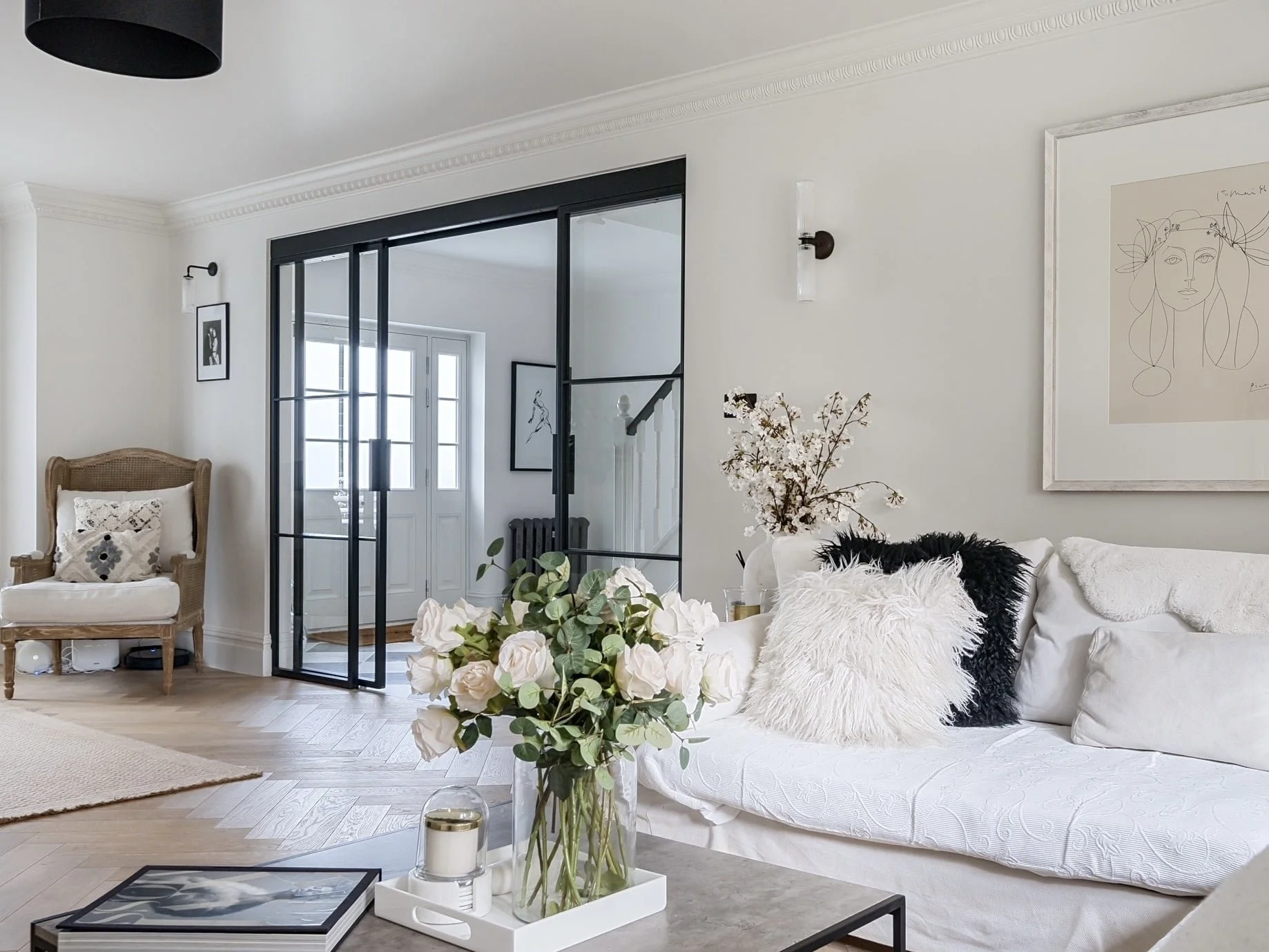
This combination allows the architecture to respond to how each area of the home is used.
Explore our hinged door configurations
Light and Transparency
Both sliding and hinged steel doors support one of the most valued aspects of steel framed systems: the ability to distribute natural light throughout the home.
Because steel doors incorporate large glazed panels, they allow light to travel between rooms even when closed. This is particularly beneficial in properties where interior spaces rely on borrowed light from adjacent areas.
Sliding doors often enhance this effect by enabling wider openings and larger glazed partitions. When opened fully, they restore the openness of the original layout while retaining the option of separation when needed.
Acoustic and Practical Considerations
While sliding doors offer flexibility and space efficiency, they do perform differently from hinged doors in certain areas.
Because sliding doors move along tracks rather than sealing tightly against a frame, they typically provide less acoustic separation than hinged systems. For spaces where sound control is important, such as home offices or media rooms, this should be considered during the design stage.
However, for most living spaces where visual connection and spatial flexibility are priorities, sliding systems provide an ideal balance between openness and functionality.
Bespoke Design and Integration
As with all steel framed systems, sliding doors should be designed specifically for the space they occupy. Ceiling heights, wall openings and structural constraints all influence the final configuration.
At Joshua James, sliding steel doors are manufactured to order, ensuring precise alignment with surrounding steel screens and hinged doors elsewhere in the property.
This bespoke approach ensures consistency of sightlines, frame proportions and finish across the entire interior.
Learn more about our most popular designs and ordering process
Long Term Value in Luxury Homes
Sliding steel doors are not simply functional elements. In many homes they become defining architectural features that shape how the interior is experienced.
Their ability to adapt spaces for different uses adds long term practicality, while their refined appearance enhances the overall design of the property.
When thoughtfully integrated, sliding systems offer both everyday convenience and enduring aesthetic value.
Conclusion: Choosing the Right Door for the Right Space
Sliding steel doors and hinged steel doors each serve an important role in modern residential design. The decision between them should be guided by how a space is used, the available layout and the level of separation required.
Sliding doors excel in open plan environments where flexibility and spatial efficiency are priorities. Hinged doors remain ideal for areas requiring stronger separation and traditional functionality.
When combined thoughtfully within a home, both systems contribute to interiors that feel cohesive, practical and architecturally refined.
Looking for sliding doors?
Enquire today to discuss your next project:
Submit an enquiry or call our team for a tailored consultation.
Let’s Talk
Whether you're renovating a home, specifying for a new build, or delivering a luxury interior for a client — we’re here to help.
At Joshua James, we work with architects, interior designers, homeowners and contractors across the UK to design and supply bespoke steel internal doors. Every door is crafted to exacting standards, tailored to suit each project’s vision, and built to stand the test of time.
If you're ready to elevate your next project with precision-made steel framed doors, let’s talk.