Fire-Rated Steel Doors for Luxury Homes: Safety Without Design Compromise
Introduction: The Evolution of Fire Safety in Residential Design
Fire protection in the home has historically been associated with solid timber doors, visible closers and elements that interrupt design flow. As residential architecture has become more ambitious, particularly in high-end projects, this traditional approach has become increasingly incompatible with open-plan living and expansive glazing.
Luxury homes today frequently include basement levels, integral garages, large kitchen spaces and multi-storey layouts. These design features often trigger the requirement for fire separation under building regulations. The challenge is not whether fire-rated doors are required. It is how they can be integrated without undermining the architectural vision.
Fire-rated steel doors and screens provide a solution that balances performance with aesthetics. When engineered correctly, they offer the required fire resistance while maintaining transparency, proportion and visual cohesion.
At Joshua James, fire-rated systems are developed to feel consistent with the wider design language of the property, ensuring that compliance enhances rather than disrupts the overall scheme.
What Is a Fire-Rated Steel Door
A fire-rated steel door is a glazed door system that has undergone formal testing to withstand fire for a specified period of time. In residential settings, E30 systems are commonly required, meaning the door is tested to resist the passage of flames and hot gases for 30 minutes.
Fire-rated systems differ from standard steel doors in several critical ways:
Specialist fire-rated glazing is used
Intumescent seals are incorporated within the frame
Construction methods are designed to withstand extreme heat
Hardware is selected to maintain integrity during a fire event
The performance of the door is determined through controlled testing, ensuring that it meets regulatory standards when installed correctly.
The engineering behind the system is complex. The appearance, however, need not be.
Where Fire-Rated Doors Are Required in Luxury Homes
In modern residential architecture, fire-rated steel doors are typically required in areas where compartmentation is necessary to protect escape routes.
Common examples include:
Between kitchens and hallways, forming part of the primary escape route
At the base or top of staircases in multi-storey homes
Between integral garages and living spaces
Within properties containing basement conversions
In properties divided into separate units
In open-plan homes, glazed partitions are often introduced to enclose stair cores or create defined corridors. Where these spaces form part of a protected escape route, fire-rated glazing and framing become essential.
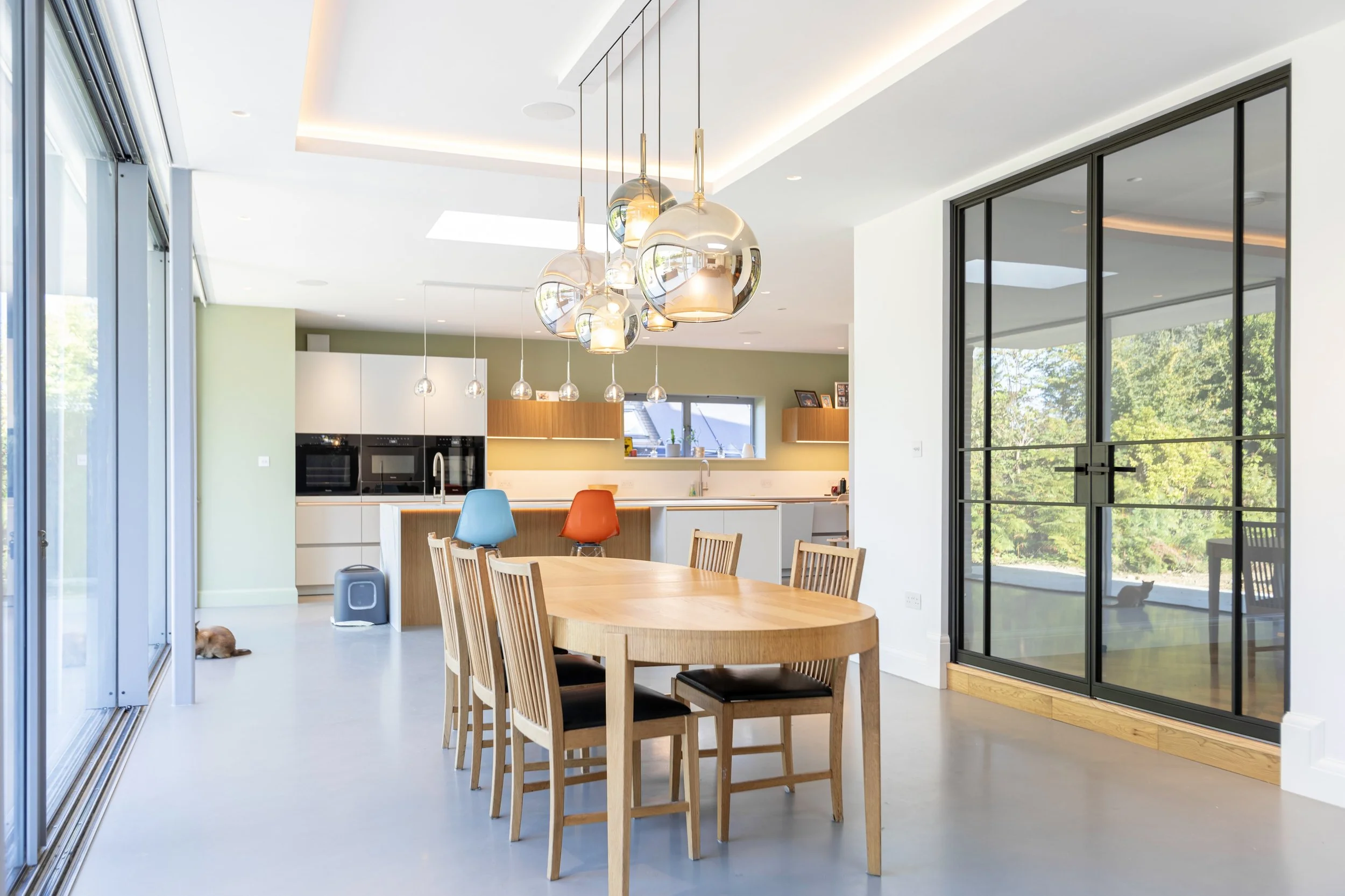
The key consideration is ensuring that the required fire separation does not appear visually disconnected from the rest of the interior. A well-designed fire-rated steel door should sit comfortably alongside non-fire-rated steel systems elsewhere in the home.
Explore our fire doors and screens.
The Technical Principles Behind Fire Rated Steel Systems
Fire-rated steel doors function by maintaining compartmentation. In simple terms, they contain the fire within one area for a defined period, slowing the spread of flames and smoke and allowing safe evacuation.
There are two main performance classifications commonly referenced in residential projects:
Integrity only rating, such as E30
Integrity and insulation rating, such as EI30, where heat transfer is also restricted
In high-end homes, E30 integrity systems are typically sufficient, though specific requirements should always be confirmed with building control.
Steel is particularly well-suited to fire-rated applications because of its structural strength. It maintains rigidity under high temperatures more effectively than many alternative materials. When combined with specialist glazing and seals, the system forms a cohesive protective barrier.
Fire-Rated Glass Explained
A common misconception is that glass cannot provide meaningful fire resistance. In reality, fire-rated glazing is specifically engineered to perform under extreme heat.
Depending on the specification, fire-rated glass can:
Prevent the passage of flames
Restrict the movement of hot gases
Maintain structural stability during testing
Limit radiant heat transfer where required
This allows designers to retain transparency and visual continuity while meeting regulatory obligations.
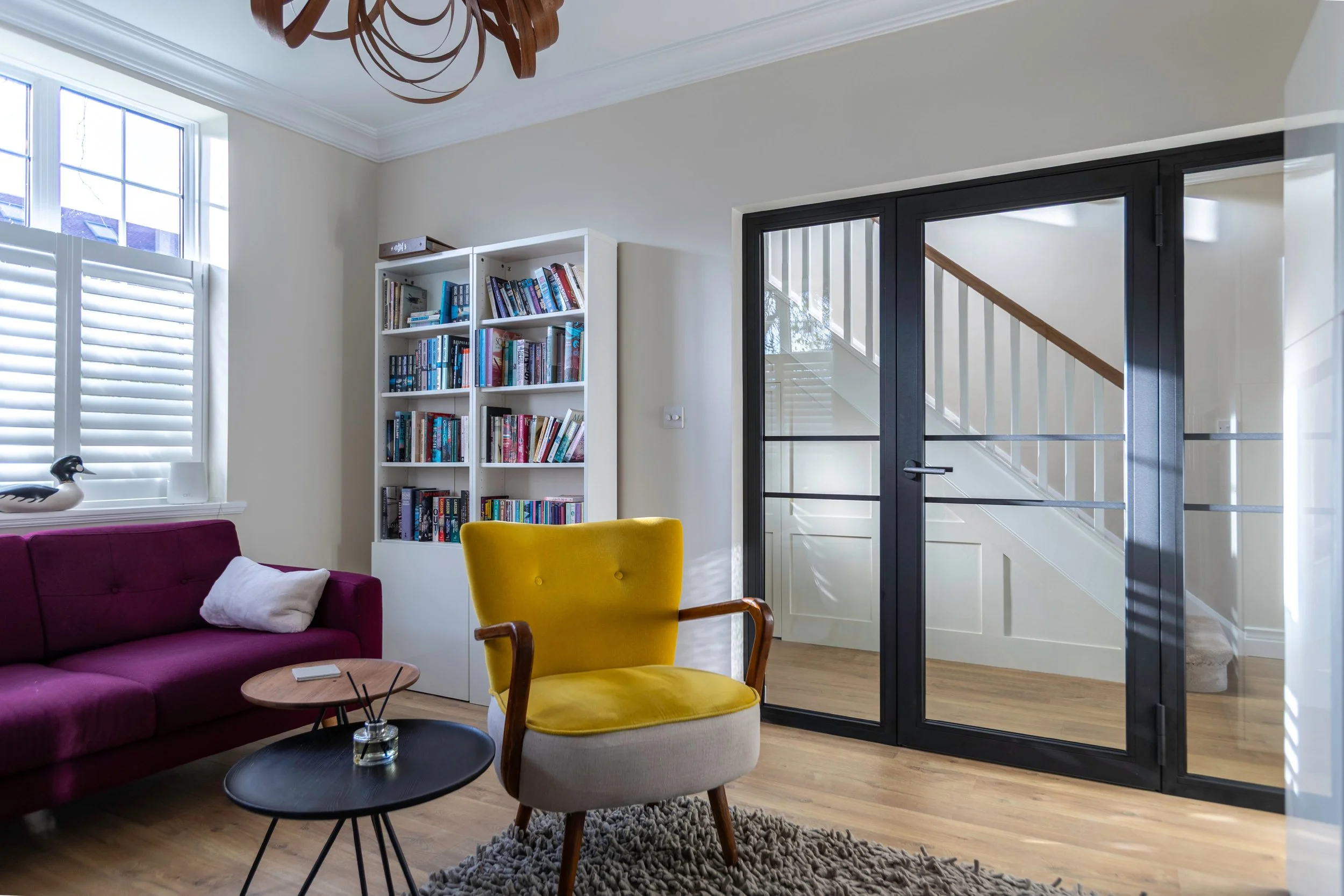
The ability to incorporate large glazed areas into fire-rated systems is particularly important in homes that rely on borrowed light to illuminate central circulation spaces.
Integrating Fire-Rated Doors Into a Cohesive Design Scheme
In luxury residential projects, consistency is critical. Proportions, bar layouts, frame finishes and hardware should align across all steel systems within the property.
A poorly integrated fire-rated door can disrupt this cohesion, appearing heavier or visually distinct from adjacent doors. This is why early collaboration during the design stage is essential.
When fire-rated systems are developed alongside non-fire-rated systems, visual continuity can be maintained. Sightlines remain consistent, frame detailing aligns and finishes match throughout.
Explore our single and double-door configurations.
Fire-Rated Steel Screens and Larger Partitions
Fire protection within the home is not limited to individual doors. In many contemporary layouts, full-height glazed screens are required to form part of a protected corridor or stair enclosure.
Fire-rated steel screens allow larger glazed partitions to achieve compliance without reverting to opaque construction. These screens are commonly used:
Around staircases in open-plan homes
To enclose entrance halls
Within properties with habitable basements
To create protected lobbies and hallways
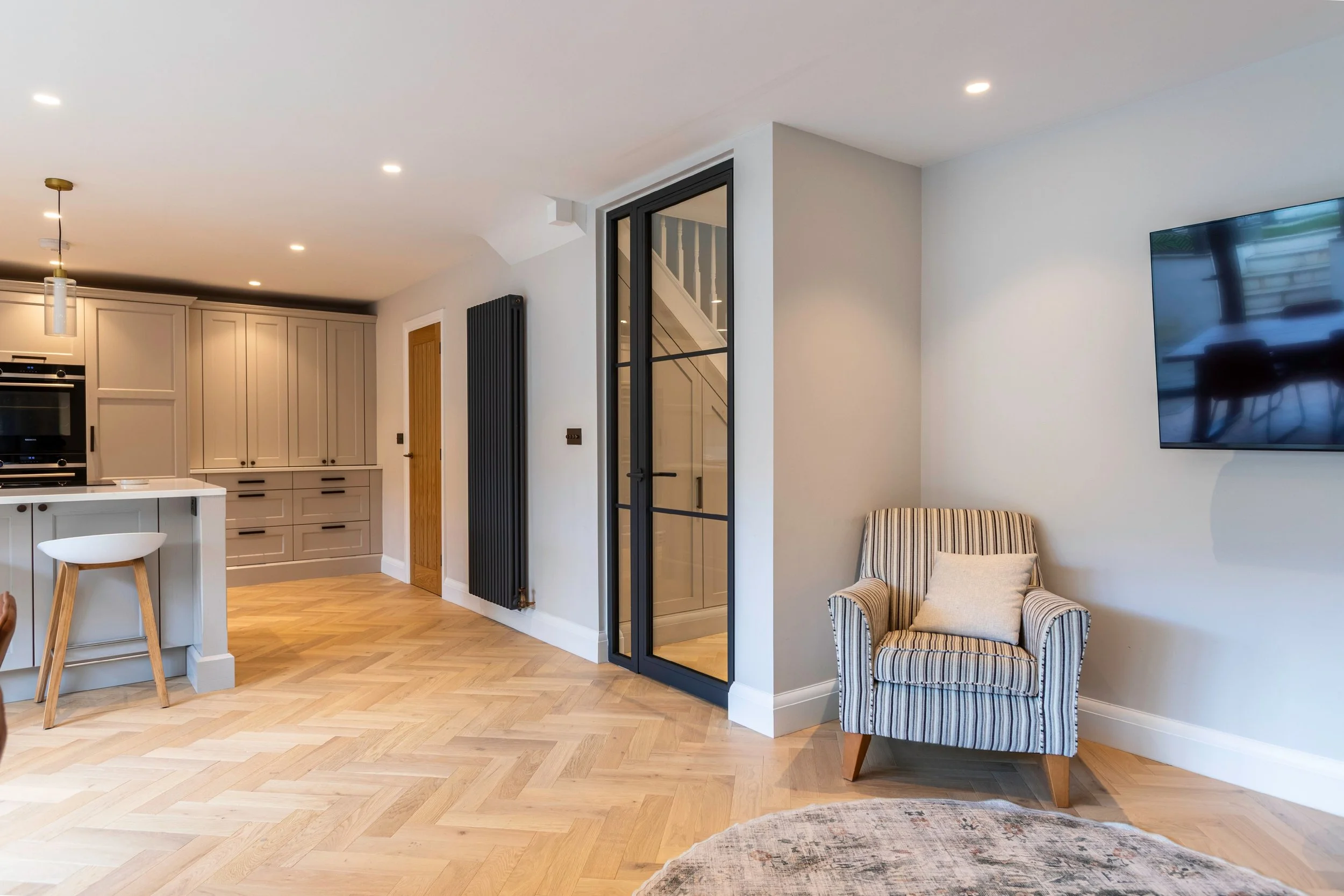
When combined with fire-rated doors, these screens form integrated partitions that protect escape routes while maintaining light and openness.
Hardware and Compliance Considerations
Fire-rated steel doors must be specified with compatible hardware. This can include:
Lever latch handles
Approved locking systems
Self-closing mechanisms, where required
Certified hinges
Hardware selection should not be treated as an afterthought. It plays a critical role in ensuring the door performs as tested.
At Joshua James, handle and component options are considered in relation to both aesthetics and compliance, ensuring that fire-rated systems align with the overall interior scheme.
Acoustic and Lifestyle Benefits
Although fire performance is the primary objective, fire-rated steel doors can also contribute to improved acoustic separation. In open plan homes, containing sound between kitchen, living and circulation spaces enhances comfort and usability.
Where home offices or entertainment spaces sit adjacent to staircases or hallways, a fire-rated glazed partition can provide both safety and practical noise reduction.
Early Engagement and Building Control
One of the most common mistakes in residential projects is addressing fire compliance late in the build process. Retrofitting fire-rated doors after layouts are finalised can compromise both aesthetics and efficiency.
Early engagement with a specialist manufacturer allows fire-rated systems to be integrated into the architectural concept from the outset. This ensures correct sizing, appropriate glazing selection and coordination with structural openings.
Learn more about our designs and ordering process.
Long Term Value and Peace of Mind
In high-value residential projects, safety should never feel like a compromise. Fire-rated steel doors provide reassurance while maintaining architectural refinement.
Their durability, tested performance and seamless integration into the wider design contribute to long-term value. Rather than appearing as regulatory necessities, they become part of the home’s defining architectural language.
Conclusion: Compliance as Part of Design
Fire-rated steel doors and screens represent a shift in how safety is approached within luxury homes. They demonstrate that compliance and design excellence are not mutually exclusive.
When engineered and specified correctly, they provide the required fire resistance while preserving transparency, proportion and aesthetic integrity.
At Joshua James, fire-rated systems are developed with the same attention to detail as every bespoke steel door and partition, ensuring that safety enhances the architectural ambition of the home.
Let’s Talk
Whether you're renovating a home, specifying for a new build, or delivering a luxury interior for a client, we’re here to help.
At Joshua James, we work with architects, interior designers, homeowners and contractors across the UK to design and supply bespoke steel internal doors. Every door is crafted to exacting standards, tailored to suit each project’s vision, and built to stand the test of time.
If you're ready to elevate your next project with precision-made steel-framed doors, let’s talk.