Steel Doors in Luxury Homes: Why They’ve Become a Defining Feature — and Why This Will Continue in 2026
In the past, internal doors were rarely given much attention. They were functional necessities, something to open and close, often chosen late in the project and specified to blend into the background. That mindset has changed dramatically.
Today, steel internal doors are one of the most recognisable markers of a luxury home. They are no longer peripheral elements but architectural statements, used to frame views, define transitions and anchor interiors with confidence and clarity.
Across the UK, we are seeing steel doors specified earlier, more deliberately and with greater intent. In many new luxury homes, they are no longer optional upgrades but expected features, part of the language of contemporary, high-end residential design.
As we move into 2026, this shift shows no sign of slowing. In fact, it is accelerating.
From Functional Element to Architectural Centrepiece
One of the most notable changes in recent years is the role steel doors now play within a home.
Rather than being concealed, they are often:
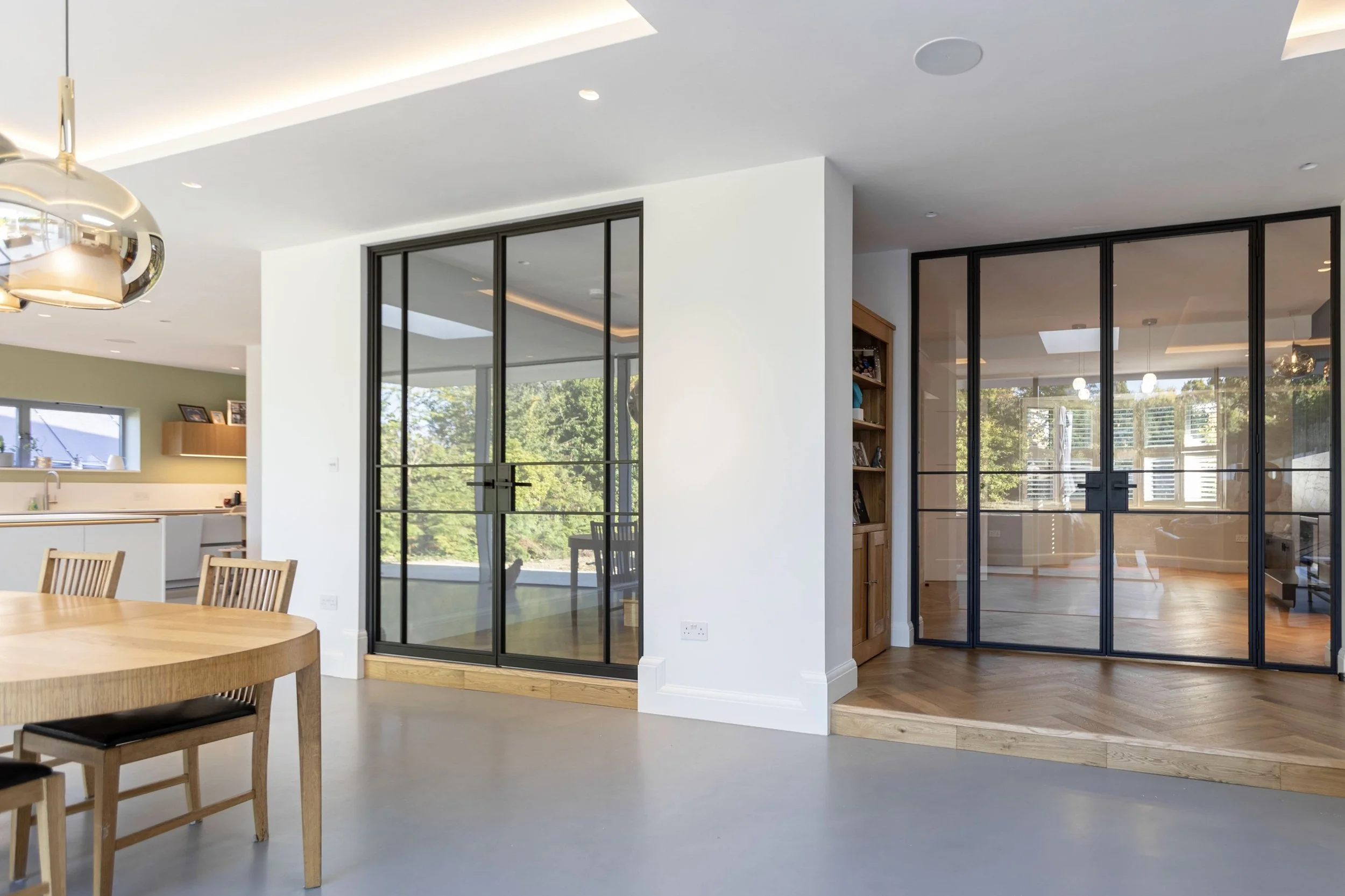
Positioned on central sightlines
Used to divide principal rooms
Designed as symmetrical features
Finished to contrast or complement key features of a property
In many projects, the door set becomes the first architectural element you notice when entering a home, a visual anchor that immediately communicates quality, intention and restraint.
Steel doors work particularly well in this role because of their inherent strength and precision. Slim frames, crisp geometry and refined detailing allow them to command attention without overwhelming a space.
Where timber doors often disappear and aluminium systems can feel lightweight or modular, steel doors have a visual authority that feels deliberate and permanent, qualities that align closely with luxury design values.
Steel Doors as a Marker of Quality and Status
In the same way that natural stone, bespoke joinery or architectural lighting signal quality, steel internal doors have become a status marker in high-end homes.
This is not about overt display, but about recognition. Architects, designers and developers increasingly see steel doors as shorthand for:
Bespoke fabrication
Design-led decision making
Long-term durability
Investment in craftsmanship
In luxury homes, clients expect materials that age well, feel substantial, and contribute to the value of the property over time. Steel delivers on all three.
As a result, steel doors are increasingly specified not as a point of comparison against cheaper alternatives, but as the default for projects operating at the top end of the market.
Steel Doors and the Psychology of Luxury Interiors
Luxury interiors are as much about how a space feels as how it looks. Steel internal doors play a subtle but powerful role in shaping that experience.
In high-end homes, there is an expectation of weight, precision and intentionality across all elements. Doors that feel insubstantial or visually generic can undermine an otherwise considered interior. Steel doors, by contrast, communicate permanence. They open with confidence, sit precisely within their openin, and hold their presence whether open or closed.
This psychological response is one reason steel doors have become so closely associated with luxury. They reassure occupants and visitors that the home has been designed with care, where materials are chosen not for convenience but for longevity and quality. In this sense, steel doors function much like architectural staircases or bespoke joinery: they quietly reinforce the calibre of the home without demanding attention.
As more homeowners become design-literate and aware of material nuances, this emotional response is becoming increasingly important and steel doors consistently deliver it.
How Steel Doors Define Space Without Closing It Off
One of the reasons steel doors have become so prevalent in luxury homes is their ability to define space without disconnecting it.
Modern living demands flexibility. Homes are expected to feel open and connected, while still offering moments of privacy and separation when needed. Steel doors achieve this balance exceptionally well.
Used between:
Hallways and living areas
Kitchens and dining spaces
Snugs and family rooms
Home offices and circulation spaces
Steel doors allow rooms to be visually connected while still being functionally distinct.
Their slim profiles maximise glazing, allowing light to move freely through the home. This creates interiors that feel layered rather than segmented, an increasingly important quality in larger, open-plan properties.
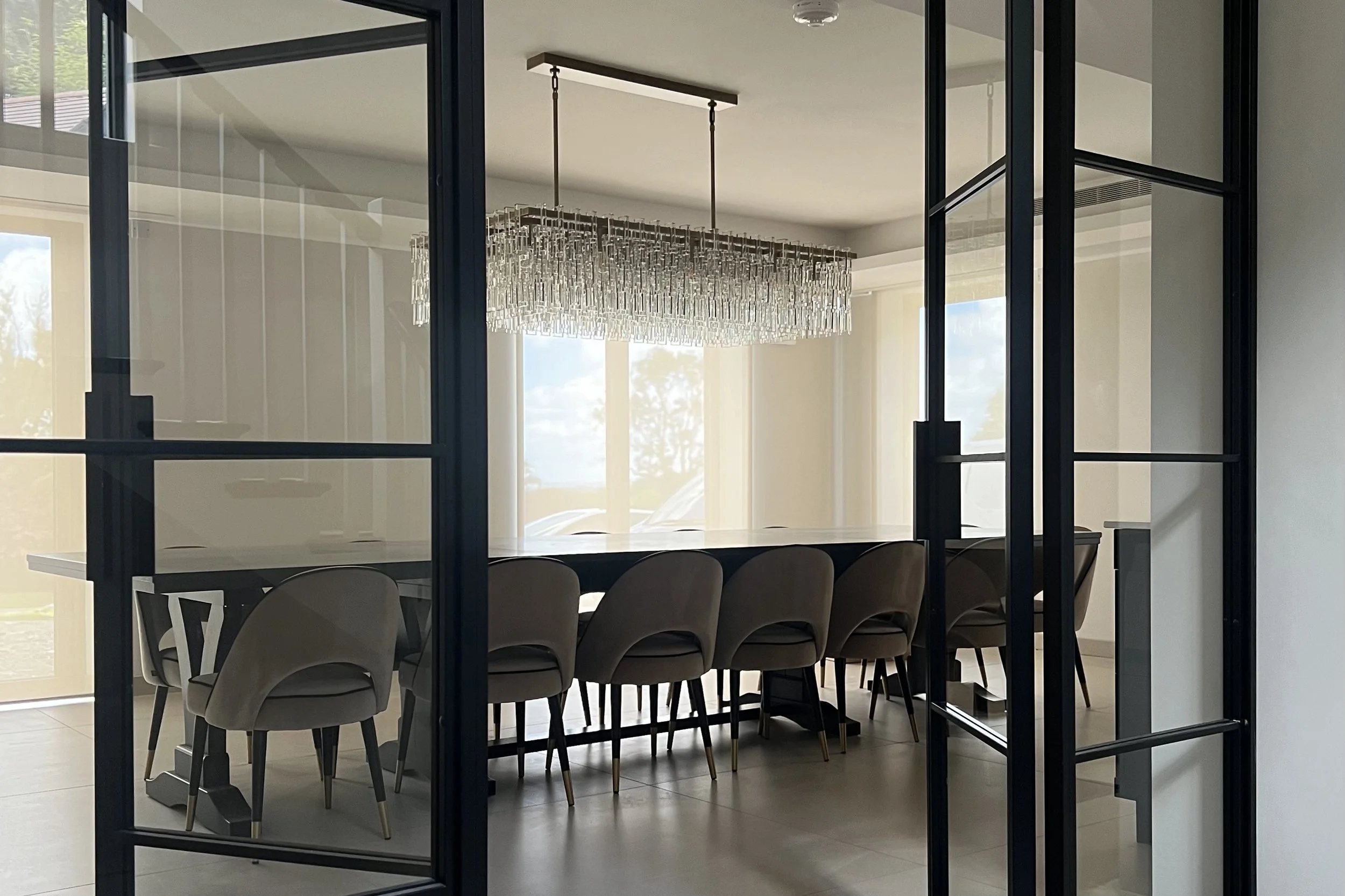
Case Study: Ascot, Berkshire — Steel Doors as a Refined Architectural Divider
A clear example of steel doors being used as a defining architectural feature can be seen in a recent project in Ascot, Berkshire.
This Neo-Georgian-inspired home required a door set that could gracefully divide the entrance hallway from the dining area without disrupting the property’s sense of balance or refinement. The brief was not for a bold or experimental design, but for something timeless, composed and quietly confident.
The door set was finished in classic black, creating a sharp yet elegant contrast against the rich wood flooring and bordering tiles. The choice of our Linear handle reinforced the clean, architectural feel of the doors, maintaining visual consistency without unnecessary ornamentation.
The doors were specified in our InoCross20 system, chosen for its slender profiles and understated proportions. This allowed natural light to flow through the entrance hall while still providing a clear division between spaces.
With 180-degree hinges, the doors fold back onto their adjoining screens, allowing the hallway and dining area to open into one another when required. The absence of a threshold ensured a seamless transition between rooms — an important detail in a home of this calibre.
Here, the steel doors are not decorative additions. They are integral to how the space functions and how it is experienced on a daily basis.
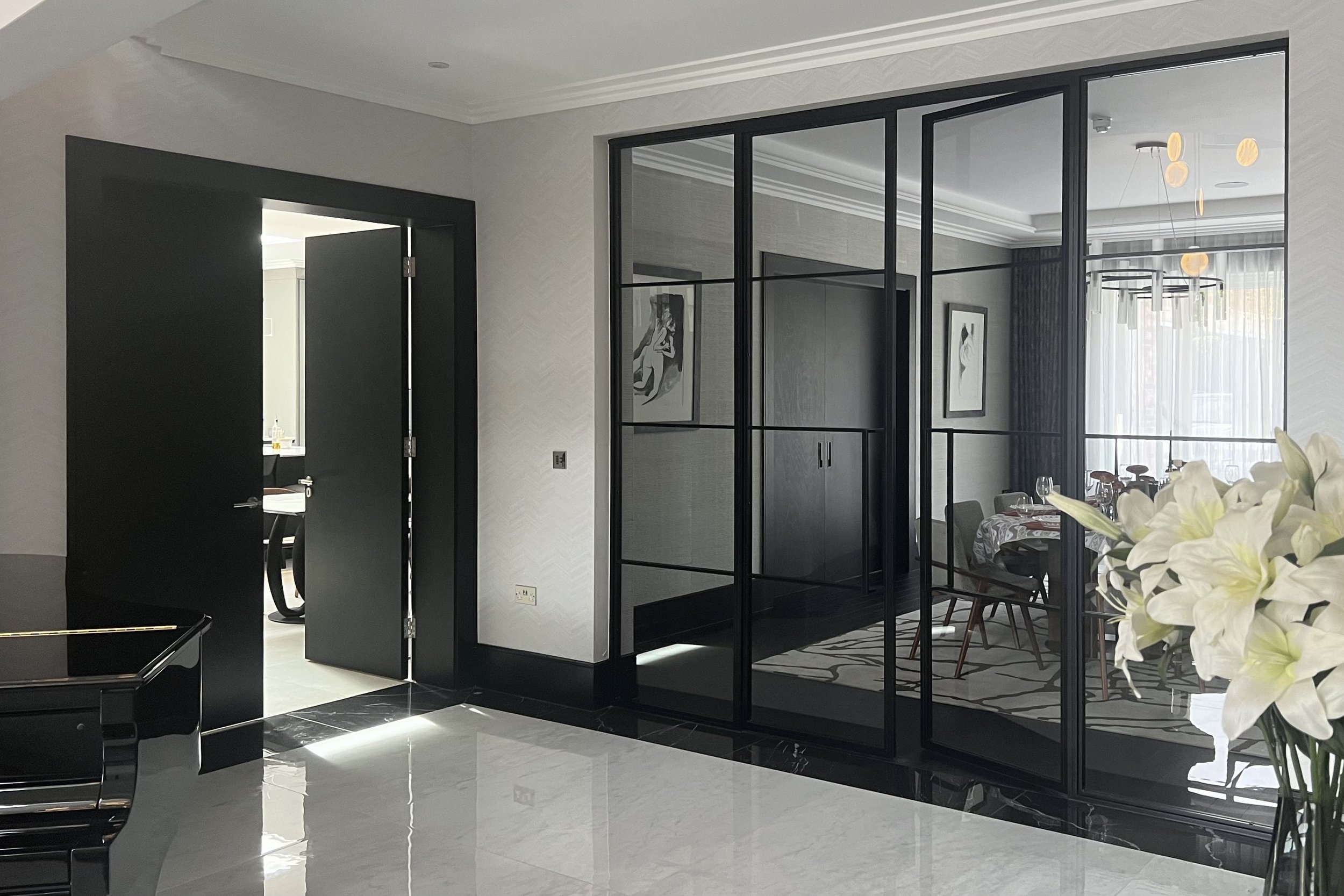
How Steel Doors Shape First Impressions
First impressions matter, particularly in luxury homes. The entrance sequence, from front door to hallway to principal living spaces, sets the tone for the entire property.
Steel internal doors are increasingly used at key transition points within this sequence. Positioned between entrance halls and living or dining areas, they act as visual gateways, offering a glimpse into the home while maintaining a sense of structure and order.
In this role, steel doors do more than divide space; they introduce the architecture of the interior. Their presence communicates confidence and refinement, ensuring the home feels intentional from the moment it is entered.
This is why we often see steel doors placed not at the periphery but at the very heart of luxury homes, where their impact is most keenly felt.
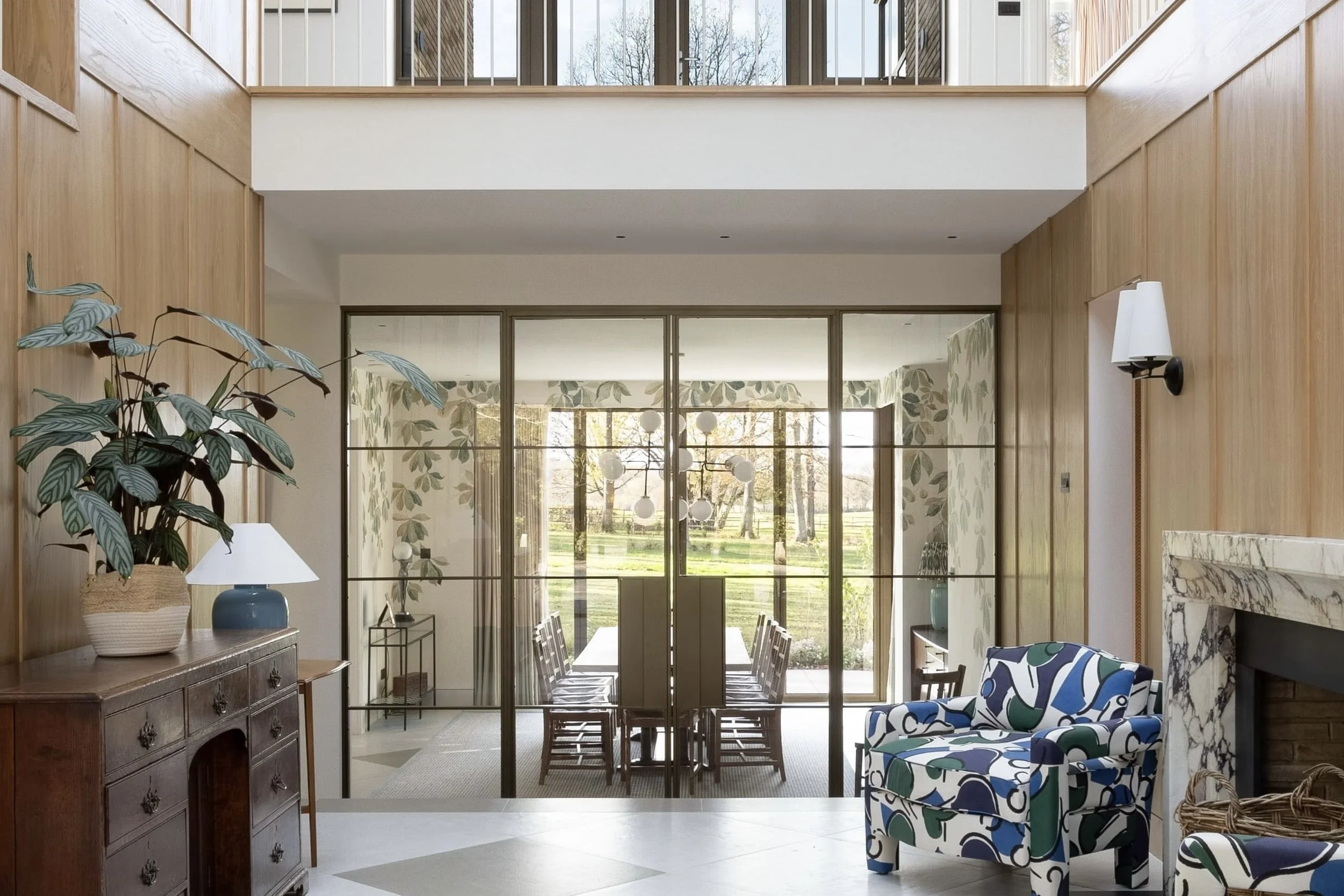
Steel Doors as an Architectural Anchor
In luxury interiors, the most successful designs often rely on a small number of strong architectural anchors, elements that ground the space and give it structure.
Steel doors frequently serve this role.
Because of their precision and clarity, they can:
Establish symmetry
Create strong vertical and horizontal lines
Frame views between rooms
Align with architectural features such as staircases or windows
Designers increasingly use steel door sets as reference points, allowing other elements such as furniture, lighting and finishes to respond to them rather than compete.
This approach leads to interiors that feel intentional rather than layered and considered rather than styled.
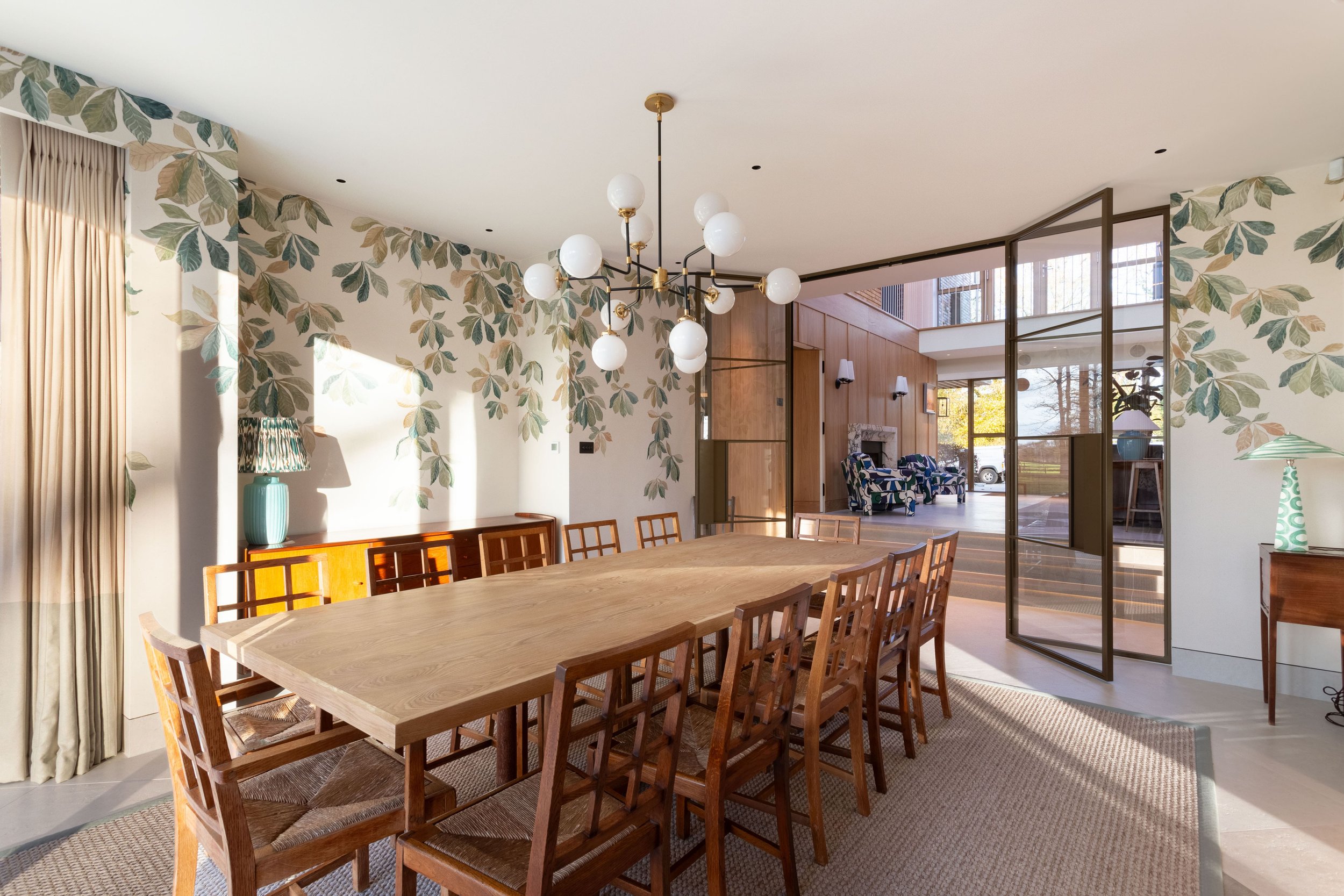
The Role of Steel Doors in Creating Visual Rhythm
Beyond acting as standalone features, steel doors increasingly contribute to the visual rhythm of a home.
In luxury properties, repetition and alignment are often what elevate a scheme from good to exceptional. Steel doors allow designers to introduce consistent verticals and horizontals that echo through a floor plan, across hallways, between rooms and along key sightlines.
This rhythm might be subtle: aligned bar layouts, repeated frame proportions or consistent door heights across multiple openings. Or it may be more deliberate, with symmetrical double doors forming focal points at the end of corridors or between principal rooms.
Because steel doors are bespoke, they can be tuned precisely to the architecture of the building. This allows them to act as connective tissue, visually linking spaces and reinforcing cohesion throughout the home.
In 2026, we expect this approach to become even more prevalent, particularly in homes designed with strong axial planning and long internal views.
Why Steel Doors Are Becoming Standard in New Luxury Homes
Perhaps the most telling shift we’ve observed is that steel doors are now being specified as standard in many new luxury homes, particularly those delivered by high-end developers.
This reflects a broader change in expectations.
Buyers at the upper end of the market now expect:
Architectural glazing internally
Visual connection between spaces
Bespoke detailing
Materials that signal longevity
As this becomes more common, steel doors are no longer perceived as “special features”; they are simply part of what defines a premium home.
Why Developers Are Standardising Steel Doors in High-End Builds
For property developers operating at the luxury end of the market, steel internal doors are no longer a design indulgence; they are a strategic decision.
High-end buyers are increasingly discerning. They understand materials, recognise quality and expect architectural detailing that reflects the price point of the property. Steel doors deliver immediate visual impact while also offering long-term durability, making them a natural fit for developer-led specification.
From a developer’s perspective, steel doors:
Differentiate properties in a competitive market
Signal quality from the moment a buyer enters the home
Reduce the need for future upgrades or replacements
Align with contemporary and classic interiors alike
As more premium developments adopt steel doors as standard, buyer expectations rise accordingly. This creates a reinforcing cycle: what was once considered an upgrade becomes the baseline for luxury living.
This shift is a key reason we expect steel doors to continue gaining ground throughout 2026 and beyond.
Replacing Timber and Aluminium at the Top End
While timber and aluminium doors still have their place, we are seeing steel increasingly replace both at the luxury end of the market.
Timber doors, particularly in glazed formats, can struggle with:
Visual bulk
Warping and chipping over time
Limited sightlines
Aluminium systems, while often marketed as slim, typically rely on modular construction and thicker profiles to achieve structural stability.
Steel, by contrast, offers:
Structural strength with minimal material
Fully welded construction
Long-term stability
Crisp detailing and fine proportions
For architects and designers working at the top end, these qualities make steel the natural choice.
Steel Doors and the Language of Modern Craftsmanship
Another reason steel doors resonate so strongly in luxury homes is their association with craftsmanship.
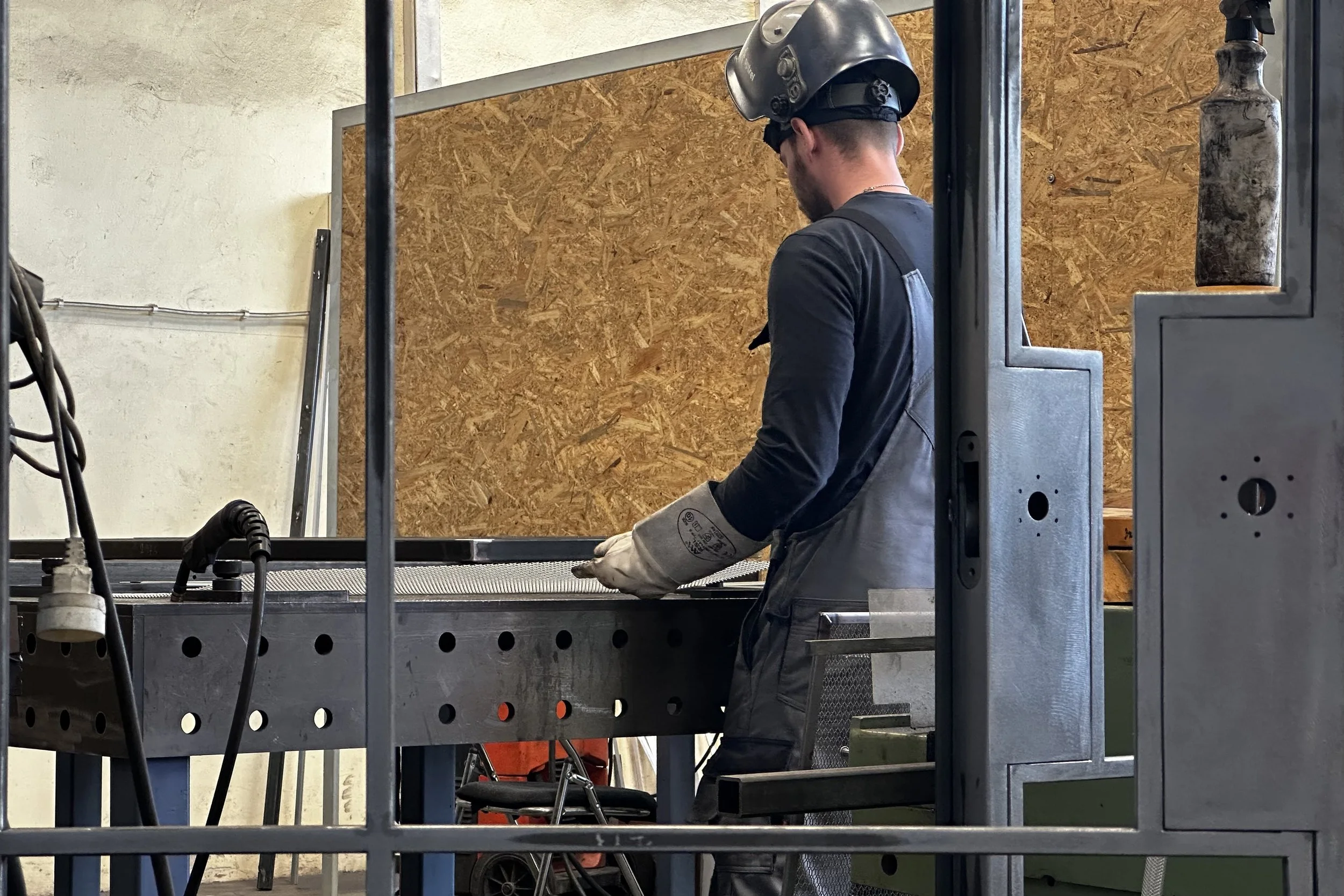
Unlike mass-produced door systems, bespoke steel doors reflect a design-and-make philosophy that aligns with the values of high-end residential design. Welded frames, refined junctions and carefully resolved details speak to a level of care that is increasingly rare in modern construction.
For architects and interior designers, steel doors offer a material honesty that is difficult to replicate. They are not trying to imitate something else; they are unapologetically steel. This authenticity resonates in homes where clients value substance over surface.
As interest grows in bespoke, hand-finished and design-led elements, steel doors sit comfortably within a broader movement toward meaningful, enduring materials, a trend we expect to strengthen in 2026.
Steel Doors as a Long-Term Investment
Luxury homes are not designed for quick turnover. They are often intended to be lived in for years, usually for generations.
Steel internal doors align perfectly with this mindset. They are:
Durable
Stable
Resistant to wear and movement
Timeless in appearance
Rather than following short-lived trends, steel doors sit comfortably within both classic and contemporary interiors. This longevity makes them not just a design choice, but a long-term investment in the quality of the home.
Why This Shift Will Continue Into 2026
Looking ahead to 2026, several factors suggest that steel doors will continue to grow in prominence:
Increased architectural involvement early in projects
Greater emphasis on internal sightlines and light
Rising expectations around material quality
Continued demand for bespoke, design-led solutions
As more luxury homes are delivered with steel doors as standard, they will become part of the visual language of high-end residential design, much like large-format glazing or architectural staircases.
For homeowners, designers and developers alike, steel doors are no longer a question of “if”, but “how”.
Conclusion: Steel Doors as the New Standard of Luxury Living
Steel internal doors have moved well beyond trend status. Their growing presence in luxury homes reflects a deeper shift in how interiors are designed, specified and experienced.
They are no longer chosen simply for their appearance but for what they represent: permanence, clarity, craftsmanship and intent. Steel doors define space without closing it off, elevate interiors without excess and contribute to a sense of architectural confidence that few other elements can achieve.
As more luxury homes are delivered with steel doors as standard, they are becoming part of the visual and material language of high-end residential design. For architects, designers and developers, they offer a versatile tool, capable of acting as a centrepiece, a divider or a unifying element across an entire property.
Looking ahead to 2026, this momentum shows no sign of slowing. If anything, the expectation of steel doors in luxury homes will continue to grow, driven by informed clients, design-led developments and a renewed appreciation for materials that last.
In this context, steel doors are no longer an upgrade. They are a benchmark and increasingly, the foundation upon which luxury interiors are built.
Looking for steel doors in 2026? Enquire today to discuss your next project:
Submit an enquiry or call our team for a tailored consultation.
Let’s Talk
Whether you're renovating a home, specifying for a new build, or delivering a luxury interior for a client — we’re here to help.
At Joshua James, we work with architects, interior designers, homeowners and contractors across the UK to design and supply bespoke steel internal doors. Every door is crafted to exacting standards, tailored to suit each project’s vision, and built to stand the test of time.
If you're ready to elevate your next project with precision-made steel framed doors, let’s talk.