How Steel Doors Influence the Flow of a Home Without Changing the Layout
Flow is one of the most difficult qualities to define in a home, yet it is often the first thing you feel when you enter a space. Some homes feel calm, intuitive and effortless to move through, while others feel disjointed or unsettled even when beautifully finished. The difference is rarely about square footage or layout alone. It is about how spaces connect visually and emotionally.
Steel internal doors have become one of the most effective tools for shaping this experience. Without moving a single wall, they influence how people move, how light travels and how rooms relate to one another. In luxury homes, especially steel doors are no longer added for visual impact alone. They are specified deliberately to guide flow and create order.
As design thinking becomes more spatial and less decorative, steel doors are increasingly treated as part of the architecture rather than fittings. Their ability to divide without disconnecting makes them uniquely suited to modern living, where flexibility and clarity are essential.
Understanding Flow Beyond Floor Plans
When people talk about flow, they often assume it is dictated by layout. Open plan versus cellular. Long corridors versus broken rooms. While layout plays a role, it is only one part of the equation.
Flow is equally influenced by what you can see from one space to another. Where your eye is drawn. How light moves. Whether transitions feel abrupt or gradual. A home with clearly defined rooms can still feel fluid if those rooms are visually connected. Conversely, a fully open plan space can feel chaotic if nothing anchors it.
Steel doors sit directly within this conversation. They do not change the plan, but they change perception. They allow rooms to remain distinct while maintaining a sense of continuity. This balance is one of the reasons they are now so widely used in high-end homes.
Visual Continuity Without Physical Openness
One of the most powerful ways steel doors influence flow is by creating visual continuity while preserving separation. Clear glazing allows the eye to travel through multiple rooms at once, establishing a sense of depth and coherence.
This is particularly effective in homes where long sightlines exist, such as hallways that run from front to back or where multiple reception rooms sit in sequence. Steel doors positioned along these axes act as visual frames rather than barriers.
Unlike solid doors, which interrupt the line of sight, steel doors extend it. This means movement through the home feels intuitive because you can see where spaces lead. The home reads as a connected whole rather than a series of compartments.
Explore how this works in practice with our Steel Single Doors
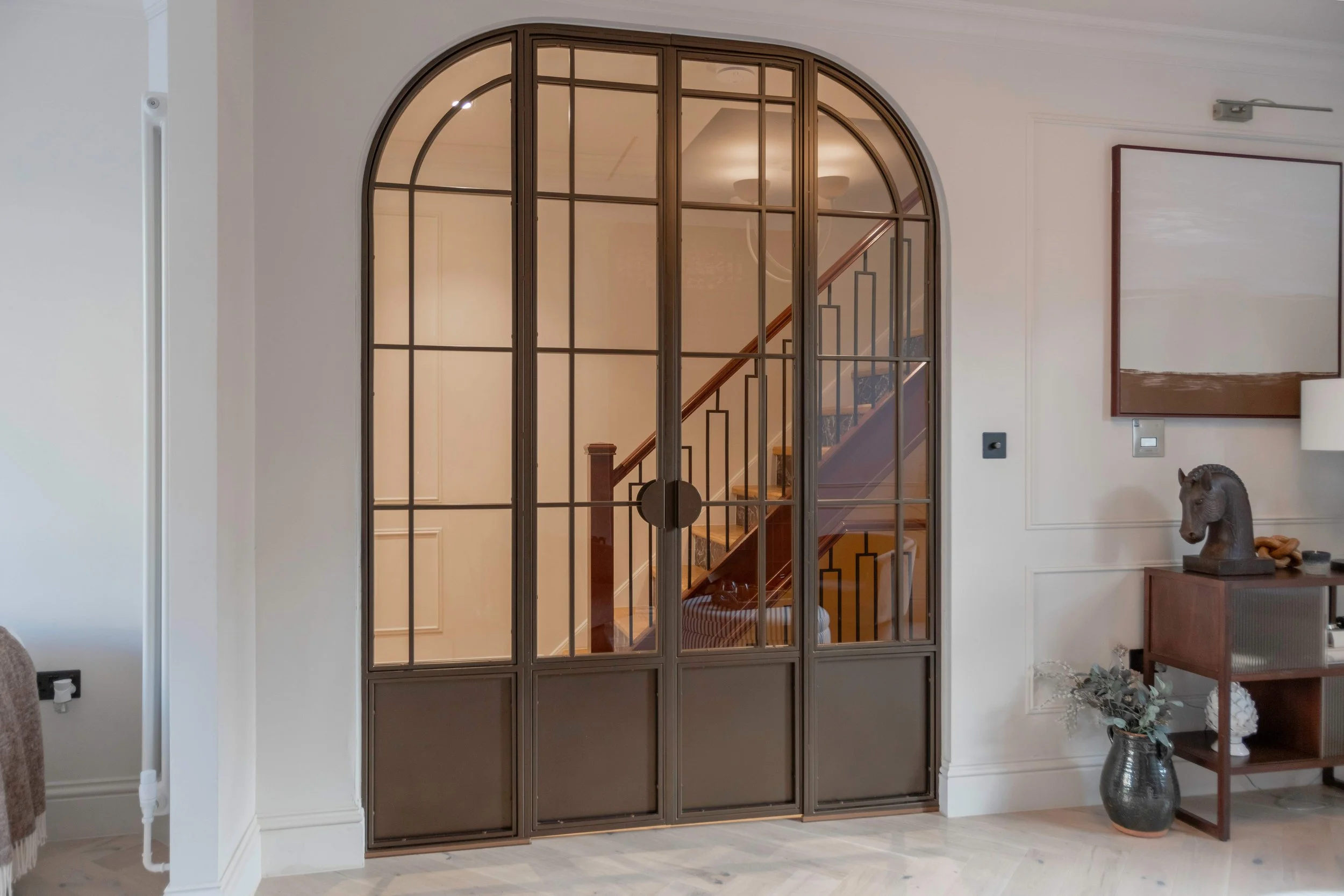
Defining Space Without Creating Friction
Flow does not mean everything must be open. In fact, homes that lack definition often feel unsettled. The most successful luxury interiors balance openness with clarity.
Steel doors allow spaces to be defined without introducing friction. They establish thresholds that feel intentional rather than obstructive. When open, they disappear visually. When closed, they retain connection through light and transparency.
This is particularly valuable between spaces that serve different functions but still benefit from proximity, such as kitchens and dining rooms or living rooms and studies. Steel doors allow each space to operate independently while remaining part of a larger whole.
The result is a home that adapts easily throughout the day. Open and connected when social. Calm and contained when privacy is needed.
Explore how our doors provide the perfect solution Steel Double Doors
Guiding Movement Through Framing
Steel doors act as frames. Where they are positioned and how they are proportioned influences how people move through a home.
A well-placed door draws you forward. It creates a moment of anticipation as you move from one space to the next. This is especially effective when steel doors are positioned at the end of a hallway or between two primary spaces.
The slim profiles of steel frames allow these moments to feel light rather than heavy. Unlike thick timber casings, steel doors maintain clarity at points of transition. Movement feels natural and deliberate rather than forced.
In this way, steel doors subtly choreograph how a home is experienced. They guide without directing and separate without isolating.
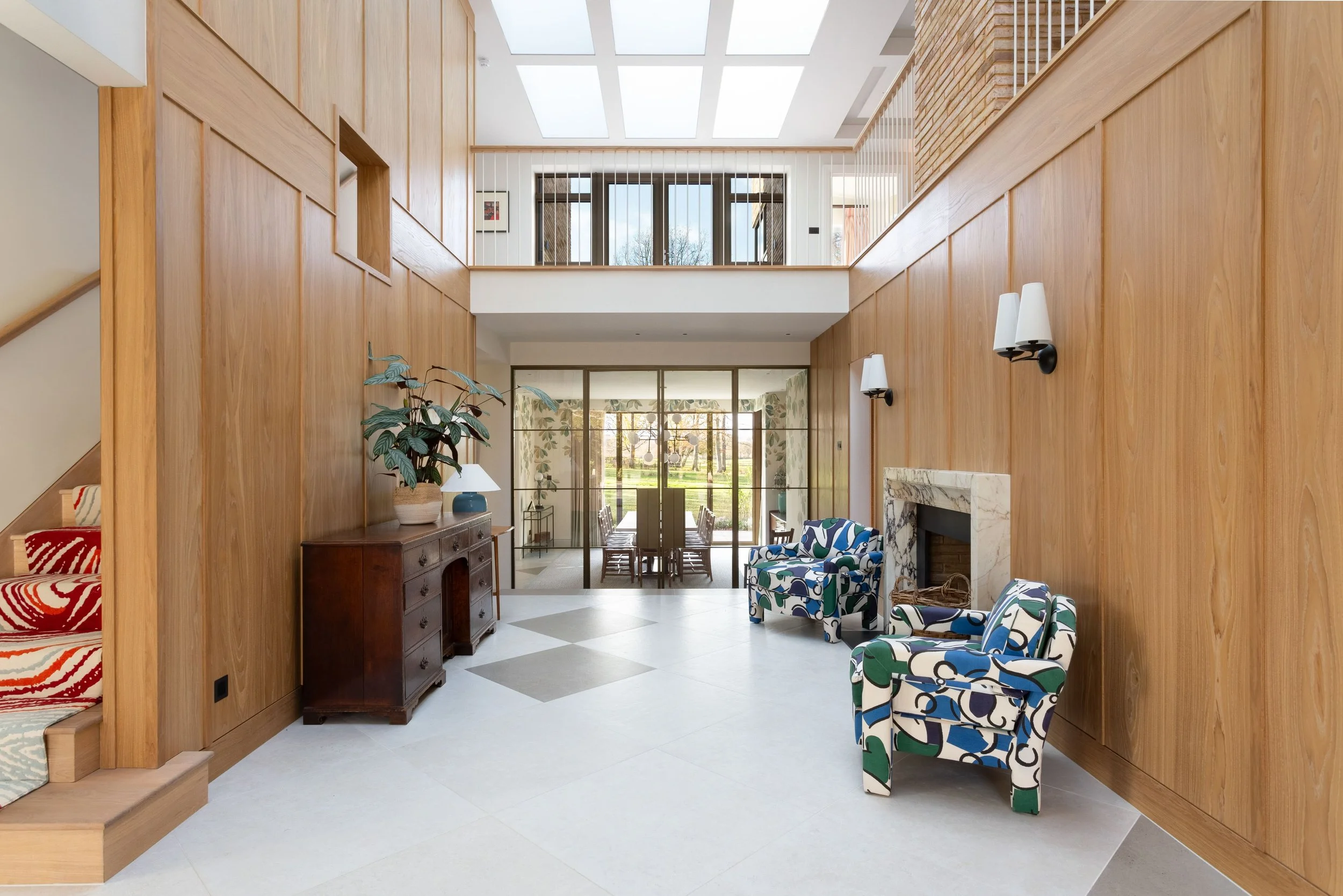
Light as a Tool for Flow
Light plays a critical role in how flow is perceived. Brighter spaces feel more open and more inviting. Dark or enclosed spaces slow movement and create hesitation.
Steel doors excel at managing light because their strength allows for large glazed areas with minimal framing. Light is able to pass from room to room without interruption.
This is particularly valuable in homes with deeper plans where natural light may only enter from one side. Steel doors redistribute that light, extending its reach and creating a more balanced environment.
In winter months, when daylight is limited, this becomes even more important. Homes feel calmer and more usable when light is shared rather than contained.
Flow in Homes With Multiple Uses
Modern homes are rarely single-purpose. Rooms are expected to adapt. A dining room can also serve as a workspace. A living area may need to be separated for quiet in the evening.
Steel doors support this flexibility without requiring structural change. They allow spaces to open fully when needed and close without visual heaviness when required.
This adaptability is one of the reasons steel doors are increasingly specified as standard in new luxury homes. They future-proof interiors by allowing layouts to evolve with changing lifestyles.
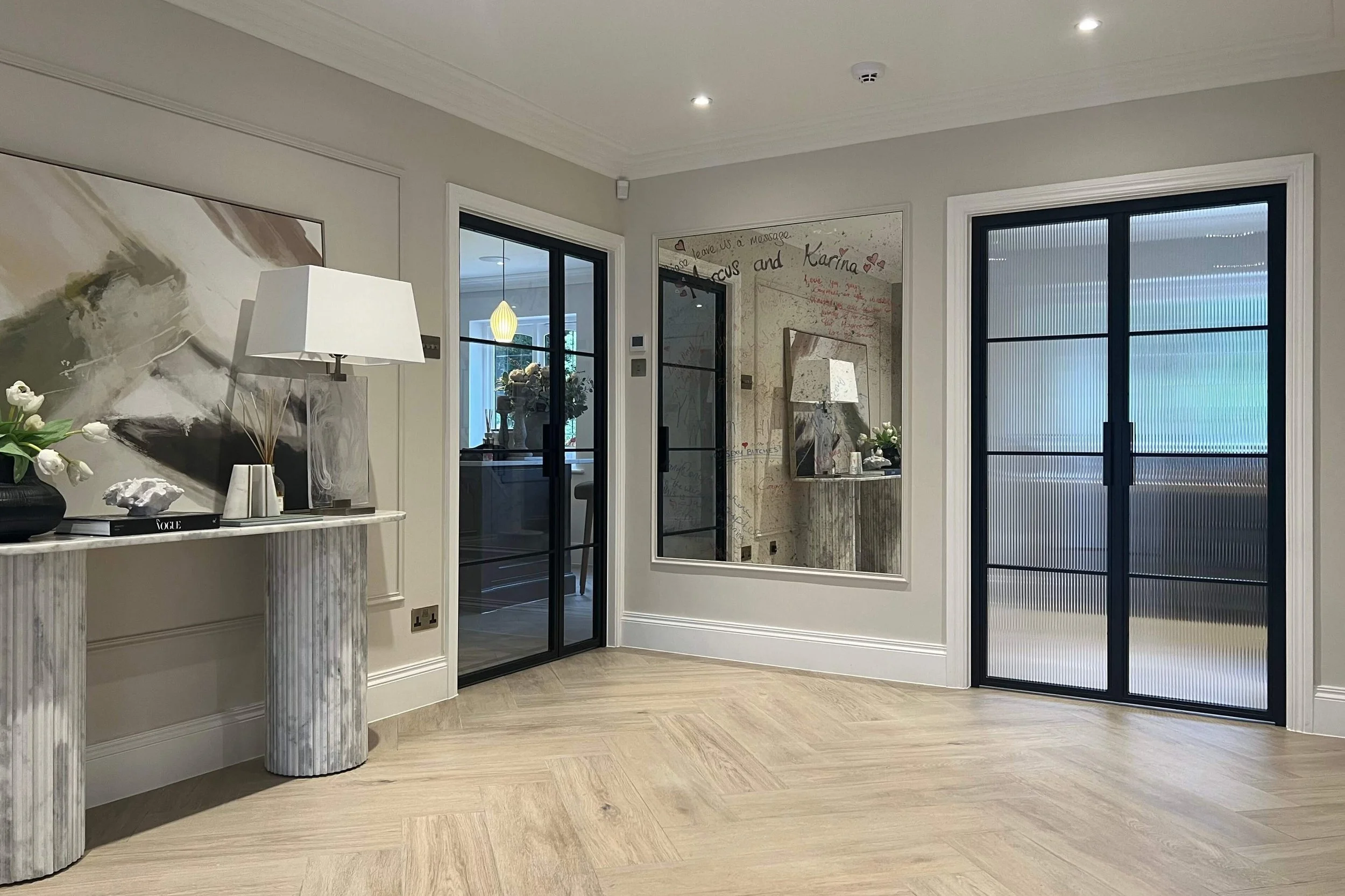
Creating Calm Through Order and Alignment
Flow is not only about movement. It is also about visual calm. Homes feel more settled when elements align and repeat with intention.
Steel doors contribute to this by introducing consistent lines and proportions. Bar layouts can align with windows, joinery or architectural details elsewhere in the home. Door heights can repeat across spaces, creating rhythm.
This sense of order reduces visual noise. The eye moves easily from one space to another without interruption. As a result, the home feels calmer and more coherent.
Designers increasingly use steel doors as reference points around which other elements are organised. This approach strengthens flow without adding complexity.
View our completed projects, which are a great example of the impact that steel doors have on a home Case Studies
Why Steel Doors Influence Perception More Than Other Door Types
Timber and aluminium doors can also be glazed but they often lack the visual precision that steel provides. Thicker frames interrupt sightlines. Modular joints create visual breaks.
Steel doors read as architectural rather than decorative. Their clarity allows them to influence how space is perceived more strongly than other systems.
Because steel doors feel permanent and intentional, they anchor the interior. Movement feels grounded rather than temporary. This contributes significantly to the sense of flow in a luxury home.
Flow Without Alteration: A Strategic Advantage
One of the most compelling aspects of using steel doors to influence flow is that it does not require structural change. In renovations, especially, this is a significant advantage.
Rather than removing walls or altering layouts, steel doors can be introduced to refine what already exists. This makes them a strategic tool for improving how a home feels without the disruption of major building work.
For architects, designers and homeowners, this flexibility is invaluable. It allows design intent to evolve without compromising structure or budget.
Steel Doors as a Standard Feature in 2026
As we look ahead to 2026, it is clear that steel doors will continue to play a central role in shaping residential interiors. Their ability to influence flow without altering layouts aligns perfectly with how homes are now designed and lived in.
More new homes are being delivered with steel doors as standard. More renovations are considering them earlier. More designers are using them as spatial tools rather than decorative features.
This shift reflects a broader move towards design decisions that improve how homes feel, not just how they look.
Conclusion: Flow Is Designed, Not Accidental
Flow is not something that happens by chance. It is the result of deliberate decisions about how spaces connect visually and emotionally.
Steel internal doors offer one of the most effective ways to influence this experience. Without moving walls, they shape sightlines, guide movement, manage light and create order.
In luxury homes where every detail matters, steel doors have become essential architectural elements. They allow interiors to feel open yet defined, calm yet flexible.
As design thinking continues to prioritise experience over decoration, steel doors will remain at the centre of how homes are shaped and understood.
Get Your Doors:
Enquire today to discuss your next project:
Submit an enquiry or call our team for a tailored consultation.
Let’s Talk
Whether you're renovating a home, specifying for a new build, or delivering a luxury interior for a client — we’re here to help.
At Joshua James, we work with architects, interior designers, homeowners and contractors across the UK to design and supply bespoke steel internal doors. Every door is crafted to exacting standards, tailored to suit each project’s vision, and built to stand the test of time.
If you're ready to elevate your next project with precision-made steel framed doors, let’s talk.