Steel Internal Doors for Open Plan Living: Dividing Space Without Losing It
Steel internal doors allow open plan spaces to be divided while remaining visually connected. When closed, the glass maintains the sightlines and light that make open plan living work. When open, the spaces become physically connected once more. For homeowners with an existing open plan ground floor who want more definition, more versatility, or simply more considered architecture, steel doors and screens offer a solution that no other material or product quite replicates.
Open plan living is generous by nature. The sense of space, the flow of light, the connection between kitchen, dining and living — it is a way of living that continues to define luxury homes across the country. But generosity without structure can also feel formless. A large open plan ground floor with no definition between zones is a space that is difficult to settle in, difficult to work from, and difficult to make feel truly resolved.
Steel internal doors offer a way to bring structure to open plan living without dismantling it. They divide. They define. They create moments of arrival and separation within a flowing space. And because they are glazed, they do all of this while preserving the light and visual connection that makes open plan living worth having in the first place.
Why Open Plan Homes Benefit From Steel Doors
The appeal of steel doors in an open plan context comes down to one quality that other solutions cannot match: they divide without separating.
A solid wall creates two rooms. A curtain or blind creates visual noise and rarely feels resolved. A timber door closes off a space entirely and — in a home designed around openness — can feel like an architectural contradiction.
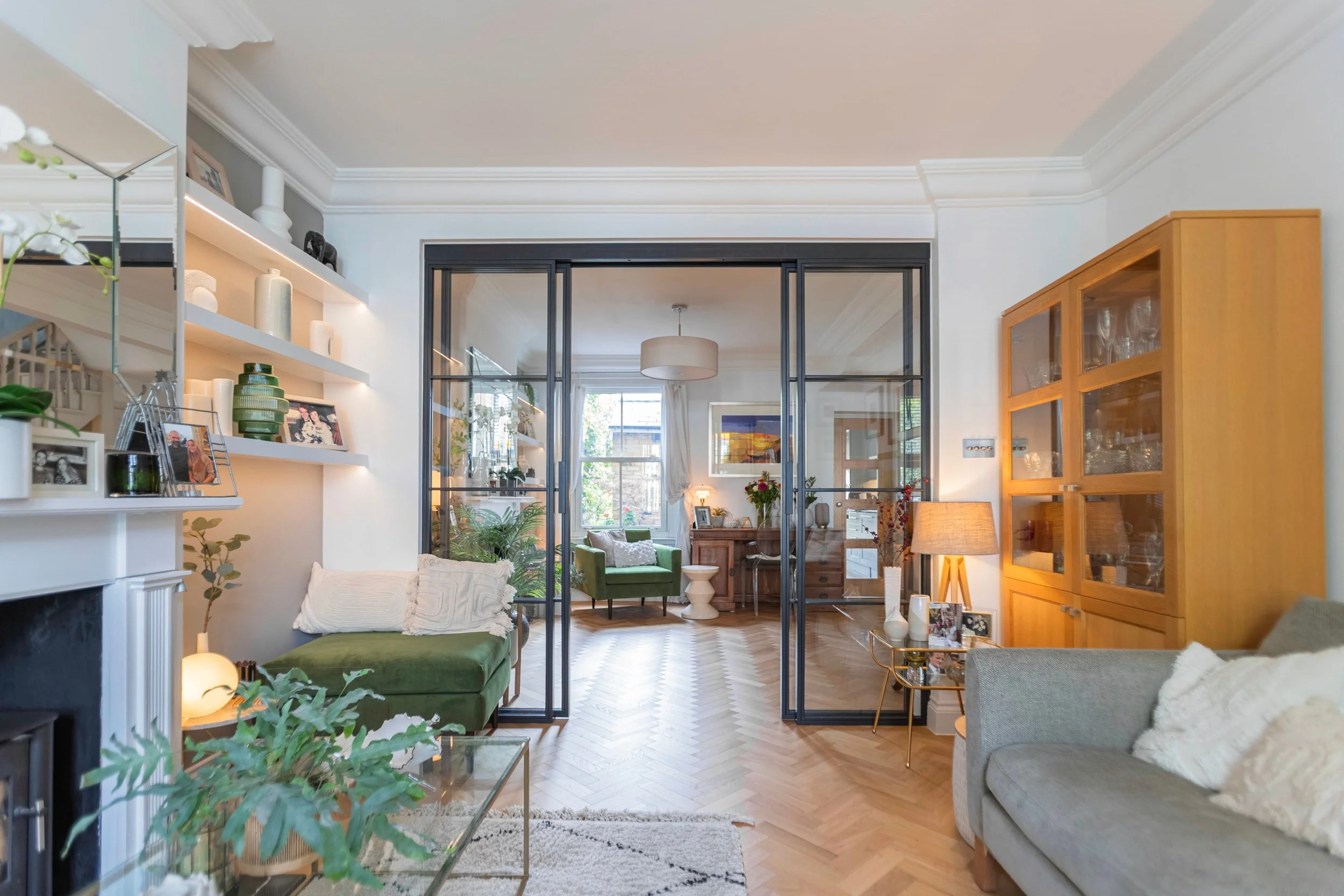
Steel doors do something different. The slim steel frame holds the glass, and the glass holds the view. When the doors are closed, the sightlines remain. Light continues to move between spaces. The connection between zones is preserved, even as the physical boundary is established. When the doors are open, that boundary disappears entirely — the spaces breathe together as they were designed to.
This quality makes steel doors uniquely well suited to open plan homes, where the goal is not to undo the architecture but to give it more nuance.
The Most Common Applications in Open Plan Homes
Open plan ground floors present a range of opportunities for steel doors and screens, and the right solution depends entirely on the layout of the space and how it is lived in.
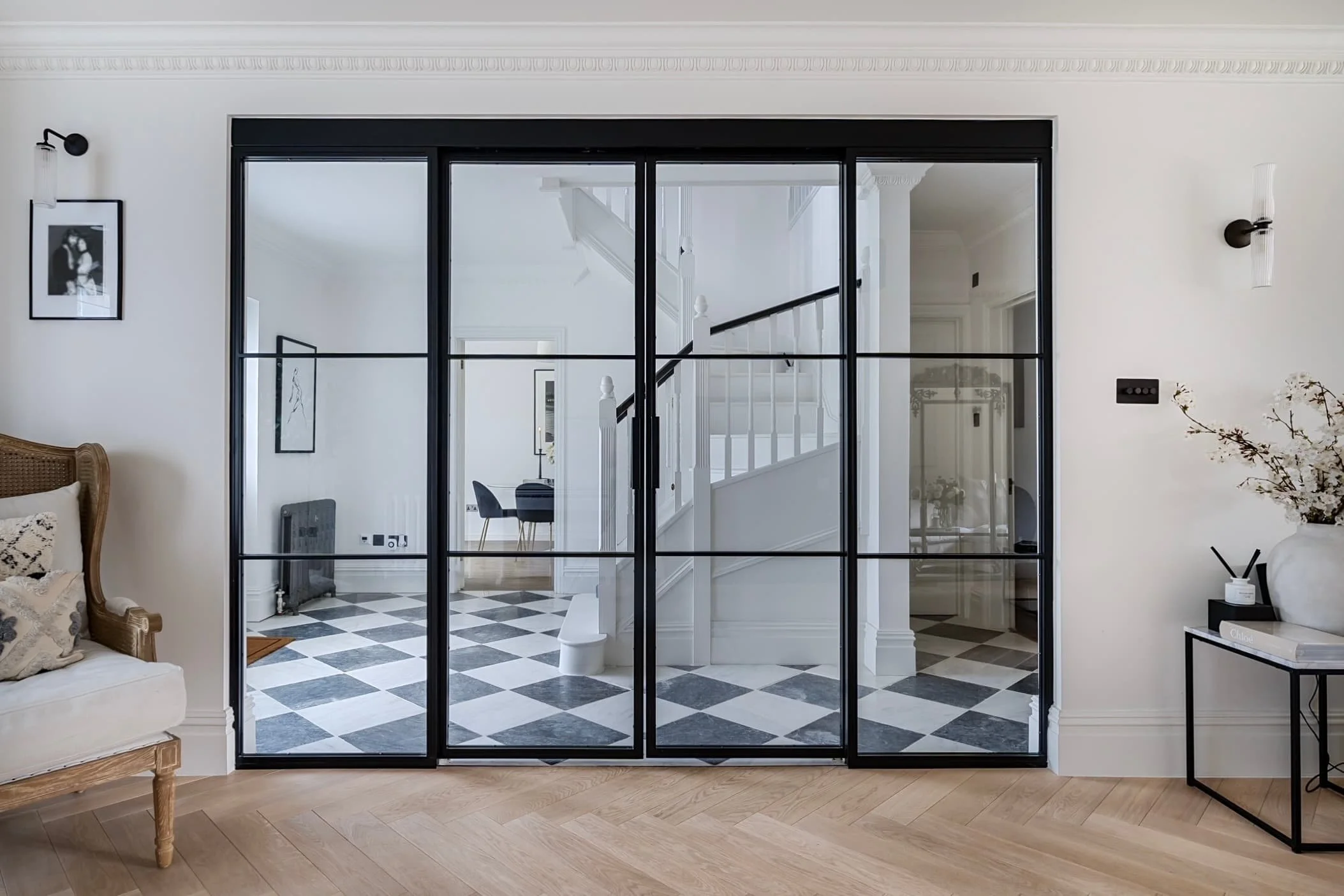
Dividing the entrance hallway. One of the most popular applications in open plan homes is creating a defined hallway within what would otherwise be a single flowing space. Without a hallway, the front door opens directly into the living area — which can feel exposed and lacking in arrival. A double sliding door set with side screens, as we produced for a client in West Byfleet, creates a proper hallway and arrival sequence without the need for building work. The screens maintain the visual connection to the living space beyond, while the doors provide the physical separation when needed. The result is a home that feels both generous and considered.
Carving out a home office. As more homeowners work from their primary residence, the demand for a defined workspace within an open plan setting has grown considerably. The challenge is creating a space that feels separate enough to work in without making the wider home feel smaller or more enclosed.
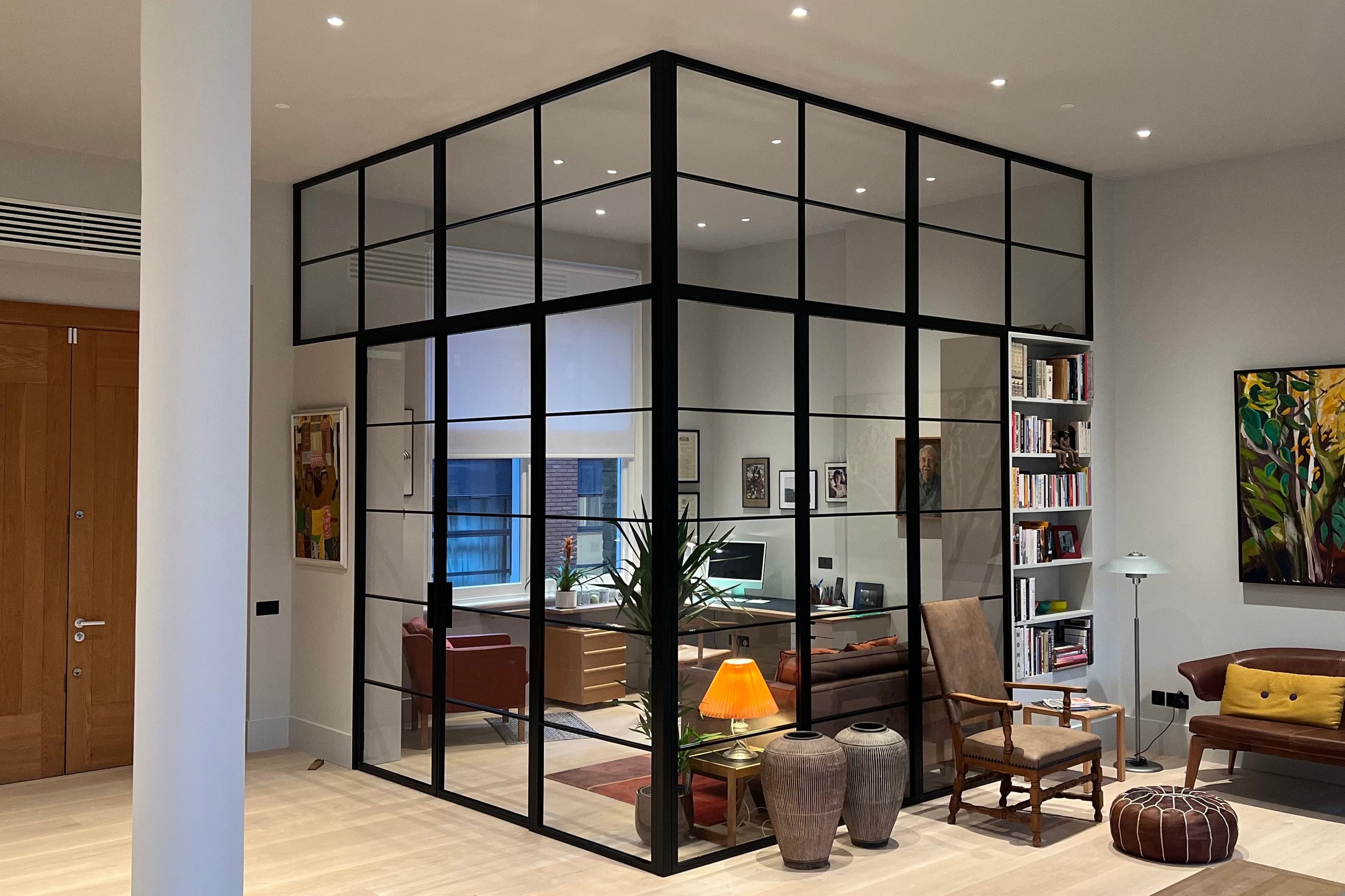
In Farringdon, we produced an L-shaped steel screen with a double door set built to wrap around two existing bookshelves — a structure that created a self-contained home office within a vast open plan dining, living and kitchen space. The only other rooms in the property were bedrooms and bathrooms, making the office an architectural intervention that gave the main space a purpose it had previously lacked. The glass kept the wider space visible from within the office and vice versa. The couple's London residence gained an entirely new function without losing any of its character.
Creating defined zones within large spaces. Open plan floors that span the full depth of a property — particularly in townhouses and basement conversions — present a specific challenge: how to create distinct zones within a space that is too large to feel intimate as a single room.
In Twickenham, we produced a Z-shaped steel screen almost the full depth of the property, with a single door set into it. One side became the hallway and staircase. The other became a snug and office. The screen gave the basement the structure it needed to function as a home rather than simply as space, and the glass ensured neither zone felt enclosed or cut off from the other.
Internal windows between spaces. Not every open plan solution requires a door. For the same space that we created the corner office, we produced bespoke steel-framed internal windows between a bedroom and the kitchen below — hinged, like our doors, and designed to be opened or closed depending on the occupant's preference. The apartment had originally been designed as an open plan space, but the client decided they wanted more privacy for guests. The internal windows offered a solution that preserved the connection between the two spaces while allowing for separation when needed. It is a less common application, but one we would approach with the same care and craft as any other project.
Choosing the Right Configuration for Your Space
The configuration of a steel door set within an open plan home is determined by the specifics of the space — there is no single answer that suits every situation. A few principles are worth considering.
Hinged doors suit openings where the swing path is clear and the act of opening and closing the door feels deliberate and considered. A pair of double hinged doors in a wide opening creates a moment of arrival. They are the most common choice across our work, and in an open plan setting they work particularly well where the door is intended to be a feature.
Sliding doors are the natural choice where floor space is at a premium or where the opening sits within a flowing space that benefits from a door that disappears when not in use. In an open plan home, sliding doors can be opened fully and held against the wall, leaving the width of the opening completely clear. For the West Byfleet project, sliding doors were the right solution precisely because they allowed the hallway to vanish when the doors were open — restoring the original openness of the space on demand.
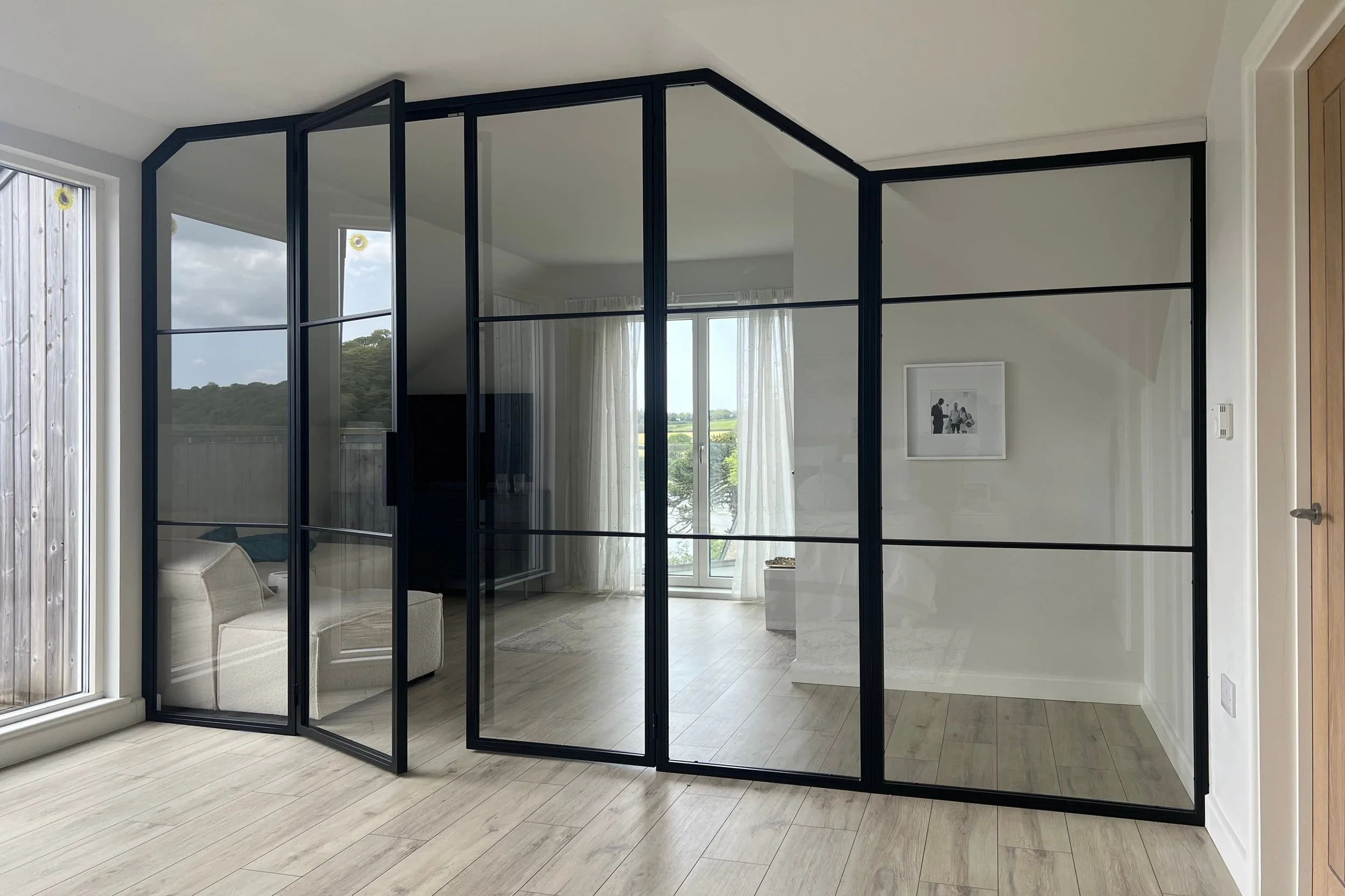
Fixed screens — with or without a door set within them — extend the architectural language of a steel door beyond the opening itself. An L-shaped or Z-shaped screen does not simply divide a doorway; it reshapes the geometry of the space. This is the most interventionist approach, and often the most transformative. It requires more thought at the planning stage, but the results — as the Twickenham and Farringdon projects demonstrate — can fundamentally change how a home functions.
Our Interior Collection gives a full overview of available configurations. Our Portfolio shows how they have been applied across a range of real projects.
Glass and Finish in an Open Plan Context
In an open plan setting, glass choice carries particular weight. The door or screen is always present, always doing its job, and the glass determines how the two zones relate to one another at every moment of the day.
Clear glass preserves the sightlines and light flow that open plan living depends on. It is the most common choice where the goal is to divide without separating, the visual connection between spaces remains entirely intact, and the frame reads as a purely architectural element within the room.
Reeded glass softens and diffuses the view without eliminating it. It is a considered choice where a degree of visual privacy is desirable. Such as a home office that benefits from a sense of enclosure, or a snug that works better when its contents are suggested rather than displayed. Light continues to pass through freely. The spaces remain connected in atmosphere if not in detail.
The finish of the frame will be read from multiple angles and in varying light throughout the day. In a large open plan space, a steel door or screen is visible from further away and for longer periods than a door in a corridor. This means the finish choice has more presence and deserves proportionally more thought. Our Finishes page covers the full range of options.
Starting the Conversation
Every open plan home is different, and the right solution for yours will depend on how the space is laid out, how it is used, and what you are trying to achieve. Some projects call for a single door set in a single opening. Others, like those in Twickenham and Farringdon, require something more structural, more considered, and more bespoke.
At Joshua James, we have produced steel doors and screens for open plan spaces of every scale and configuration. Whatever the brief, the approach is the same: understand the space, understand how it is lived in, and design something that makes it work better, without compromising what makes it worth living in.
If you are considering steel doors for your open plan home, get in touch and we will guide you through the options. You are also welcome to visit our showroom to see our doors and screens in person.
Frequently Asked Questions
Can steel internal doors be added to an existing open plan home without structural work? In most cases, yes. Where a door is being fitted into an existing opening, no structural work is required beyond ensuring the opening has adequate fixing points for the frame. More complex solutions — such as freestanding or L-shaped screens — may require some preparation, which your builder can advise on. We always recommend discussing the structural requirements early in the process.
Do steel internal doors reduce noise between open plan zones? Steel doors with toughened or standard laminated glass will reduce sound transmission to a degree. With the addition of acoustic glass and drop-down seals, they can be better suited to limiting the transfer of sound between two spaces. They will take the edge off sound between spaces — particularly when closed — but homeowners looking for meaningful sound separation should consider this alongside other acoustic measures.
Which configuration works best for dividing a hallway from an open plan living space? Sliding doors with fixed side screens are a particularly effective solution for this application, as they allow the full width of the opening to be cleared when the doors are open, restoring the original openness of the space entirely. Hinged doors work equally well where the swing path is clear and the door is intended to be a feature element.
Can steel screens be built around existing furniture or architectural features? Yes. Our Farringdon project is a great example of this. The L-shaped screen was designed to wrap around two existing bookshelves, creating a seamless integration with the surrounding joinery. Bespoke configurations that work around structural columns, existing cabinetry, or other fixed architectural elements are something we regularly produce. Like all of our doors and screens, each design is manufactured on a fully bespoke basis to suit the specific requirements of the space.
Are steel internal doors suitable for open plan spaces in period properties? Steel doors work well in period properties, particularly when paired with a finish and bar design that complements the existing architecture. Our Classic and Traditional bar layouts tend to sit most naturally in period settings, while the slim sightlines of our systems avoid the heaviness that might otherwise feel out of place.
How do I begin planning steel doors for my open plan home? The best starting point is a conversation with our team. We will ask about your space, your brief, and what you are trying to achieve, and from there we can begin to develop options that suit your home and your vision. Get in touch to begin.
Let’s Talk
Whether you're renovating a home, specifying for a new build, or delivering a luxury interior for a client — we’re here to help.
At Joshua James, we work with architects, interior designers, homeowners and contractors across the UK to design and supply bespoke steel internal doors. Every door is crafted to exacting standards, tailored to suit each project’s vision, and built to stand the test of time.
If you're ready to elevate your next project with precision-made steel framed doors, let’s talk.