What Are the Disadvantages of Steel Internal Doors? (And Why They’re Usually Misunderstood)
Introduction
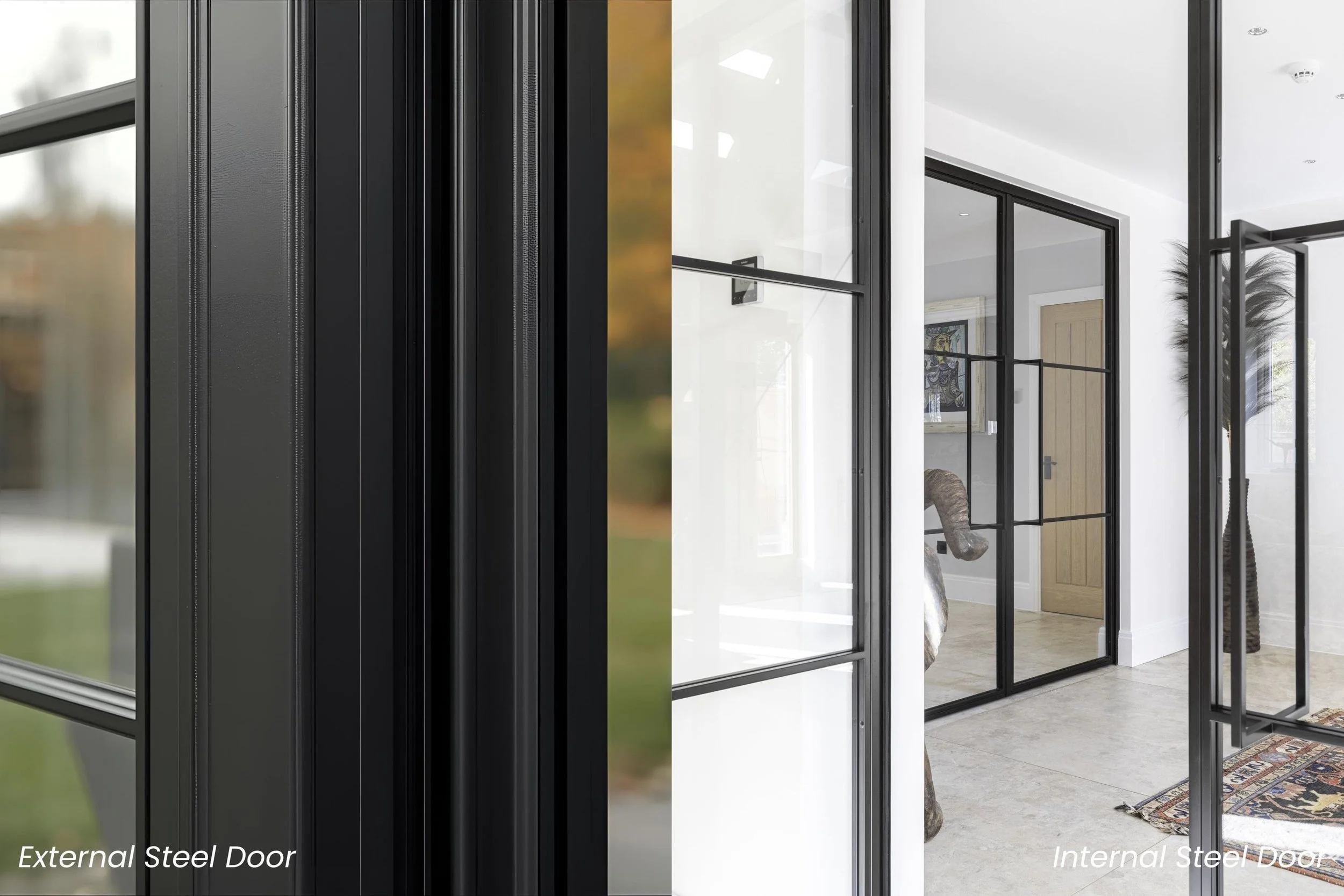
Search online for “the disadvantages of steel doors” and you’ll find endless warnings about rust, dents, burglary ratings, thermal insulation, exterior weather exposure, and security concerns. That information is written about a completely different type of product — external, hollow, foam-filled steel security doors. These are mass-manufactured, thin-skinned metal doors designed for garages, outbuildings, or utility areas.
They have absolutely nothing in common with welded internal steel-glazed doors used in high-end residential and commercial interiors.
Internal steel doors are architectural features: slender, elegant, fully welded, and designed to enhance light, flow and spatial balance. Because the internet is flooded with misinformation, homeowners and even design professionals often arrive with misconceptions about what steel internal doors can and cannot do.
This article addresses every supposed disadvantage, expanding on the truths, correcting the misconceptions, and providing a balanced, expert overview. Whether you’re a homeowner planning a renovation, an architect specifying doors or an interior designer working on a high-end scheme, this guide gives you the clarity you need.
The Biggest Issue: Online “Disadvantages” Don’t Apply to Internal Steel Doors
Most disadvantages appearing in online search results come from confusion between:
Exterior steel doors (thin skins, insulation cores)
Cheap metal-look aluminium systems
Internal welded steel doors
The quality difference is vast.
Internal steel doors, like those from Joshua James, are made from:
• Fully welded steel sections
• Bespoke configurations
• Slim sightlines
• Architectural glazing
• Powder-coated finishes
• Optional premium finishes and specialty coatings
They are not clipped together, lightweight or weather-exposed. They are crafted architectural elements that live indoors.
The real “disadvantage” is not the product, it’s the imitation, as well as misinformation online.
“Steel Doors Are Heavy” — True, But This Is a Benefit, Not a Drawback
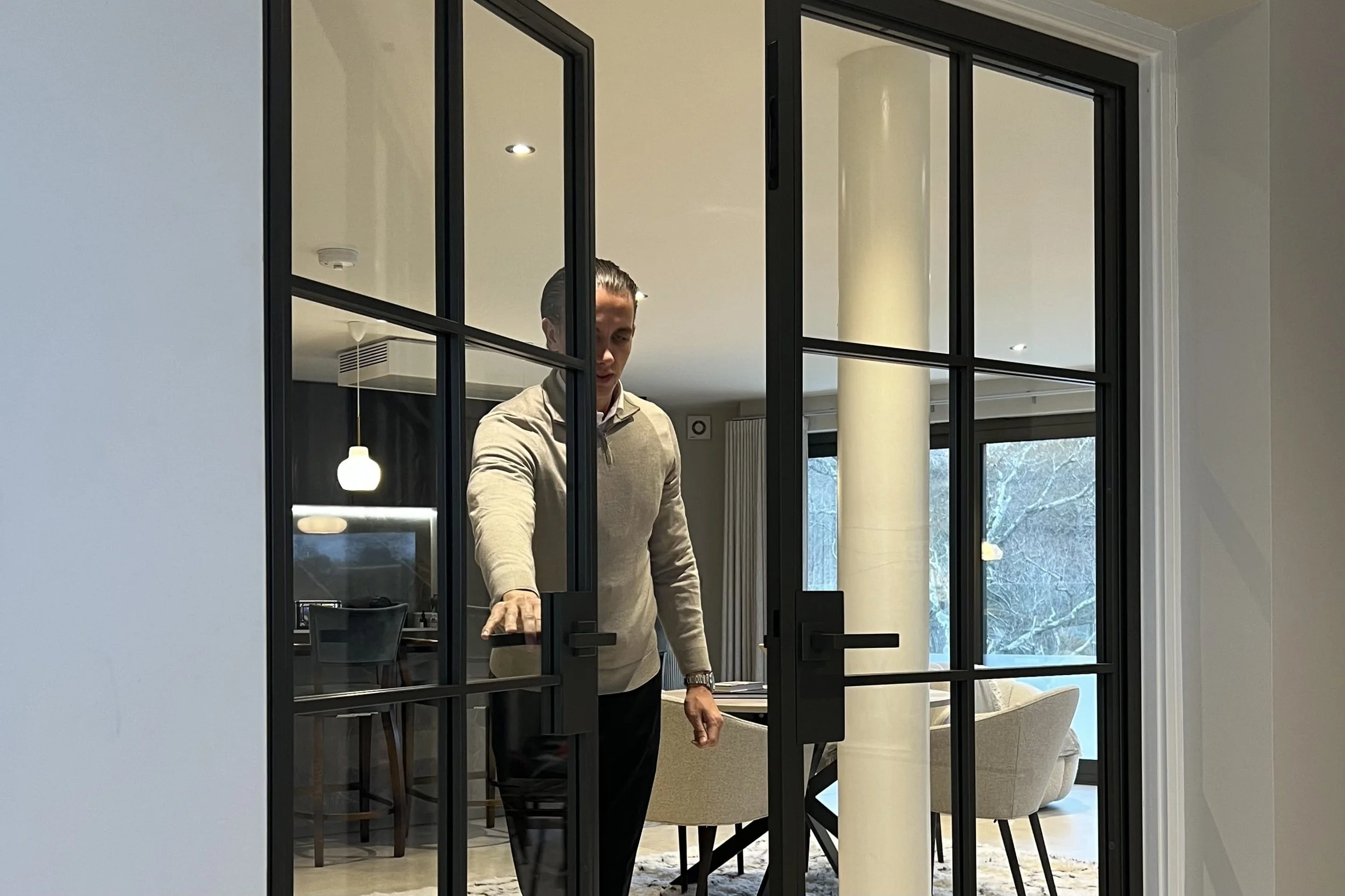
Steel does weigh more than timber or aluminium, and clients often assume this is a negative. In practice, it’s one of the reasons steel internal doors feel luxurious. When you open a steel door, there is an immediate sense of solidity, smooth movement and reassuring stability. This weighted tactility is something many designers intentionally specify for premium homes, because it communicates permanence and craftsmanship.
The weight also enhances performance. Heavier doors are less likely to wobble, twist or vibrate, and they close with a satisfying, confident motion. Timber can warp, aluminium can flex, but a properly welded steel door maintains its geometry for decades. For clients visiting our showroom, the first reaction is always the same: “This feels incredibly solid.”
In some cases, such as very large pivot doors, the weight requires careful pivot selection. This is where the expertise of the design and survey team matters. Hydraulic and soft-close pivots solve any operational concerns with larger pivot doors. Weight becomes a controlled design feature rather than a problem.
“Steel Doors Are Expensive” — Yes, But They Earn Their Worth Over Time
When comparing quotes, steel internal doors frequently cost more than aluminium kits or timber joinery and this is entirely justified. A bespoke welded steel door is not an off-the-shelf product; it is a crafted architectural component. The fabrication process includes cutting raw steel, welding by hand, refining every joint, grinding and finishing every weld, applying a high-quality powder coat or premium finish, glazing, assembly and final QC checks before installation.
The value lies not only in the material but in the longevity. Aluminium often relies on mechanical joints that loosen over time, especially with daily use. Timber moves with humidity, can swell, and can easily dent or chip. Poorly made aluminium systems marketed as “industrial style” fail earlier than clients expect, leading to replacements.
A steel door maintains its alignment, integrity and appearance for decades. The upfront cost is offset by dramatically lower lifetime maintenance and by the architectural value it brings to the property.
For clients comparing quotes without understanding the underlying differences, price may initially seem like a disadvantage, until they understand what they’re actually buying.
Steel isn’t expensive; cheap alternatives are just cheaper for a reason.
Learn more about our steel single doors
This value becomes even clearer when comparing like-for-like configurations across our range of steel single doors.
“Steel Dents Easily” — A Common Myth Caused by Cheap External Doors
The claim that steel doors “dent easily” appears constantly online, but it comes from exterior steel security doors, not architectural internal steel glazing.
Exterior steel doors are often:
• Thin-skinned
• Hollow or foam-filled
• Designed for mass use
• Vulnerable to dents
Internal steel doors are completely different:
• Constructed from thicker steel profiles
• Fully welded
• Rigid and solid
• Protected by powder coating
• Highly resistant to impact
In reality, aluminium dents far more easily than steel.
Timber chips more easily than steel.
UPVC cracks more easily than steel.
The myth persists only because the term “steel door” is used broadly. When clients visit your showroom, they immediately understand the difference; it is physically impossible to mistake the strength of welded steel for a less durable material.
“Steel Doors Rust” — Not Indoors and Not When Specified Correctly
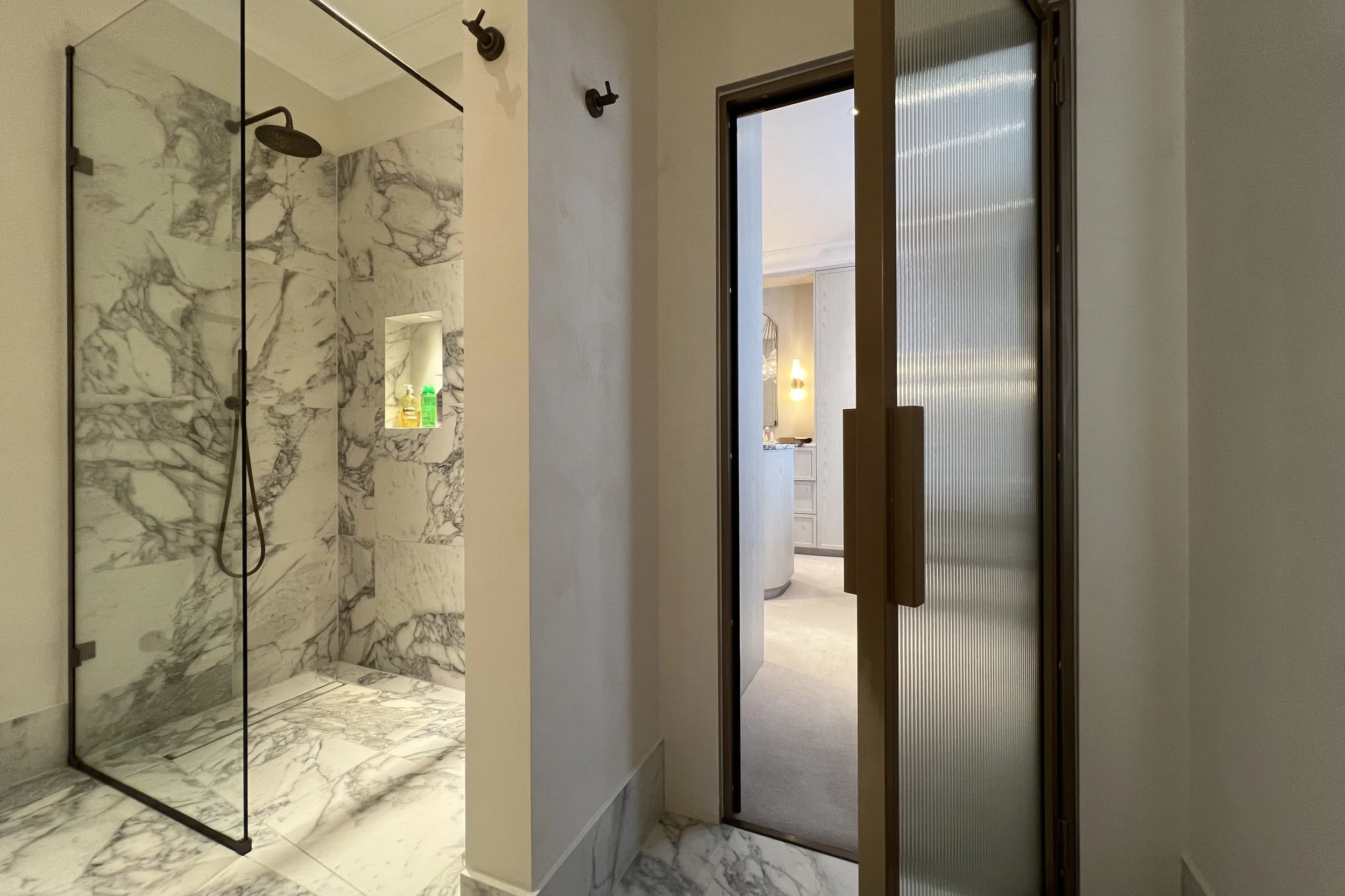
Rust is another concern found throughout Google’s search suggestions, but this concern again stems from exterior applications rather than internal ones. Internal steel doors live in controlled environments, free from rain, UV exposure and severe weather. Powder coating protects the steel and indoor humidity levels are far too low to cause corrosion.
But what about humid environments?
Internal steel doors installed in:
• Bathrooms
• Shower rooms
• Home spas
• Indoor pools
• Wellness suites
• Basement gyms
— experience higher levels of moisture.
This is where zinc coating becomes beneficial.
Why zinc coating matters
Zinc acts as a sacrificial protective layer beneath the powder coat, dramatically increasing corrosion resistance. When used in humid spaces, zinc-coated steel frameworks provide exceptional longevity and stability even in steam-heavy or moisture-rich environments.
Your process ensures that doors near water are specified correctly with a zinc base layer, proper sealing and moisture-resistant glazing types.
This transforms steel from “potentially vulnerable” to “completely safe for humid environments.”
Rust is not a disadvantage when correct fabrication processes are used.
“Steel Doors Look Too Industrial” — Only If You Want Them To
Many clients initially associate steel with a harsh or industrial aesthetic. In reality, bespoke steel internal doors can be warm, soft, refined and elegant. The aesthetic has evolved tremendously.
Today's steel internal doors use:
• Slimmer sightlines
• Contemporary bar layouts
• Bronze, grey and soft black finishes
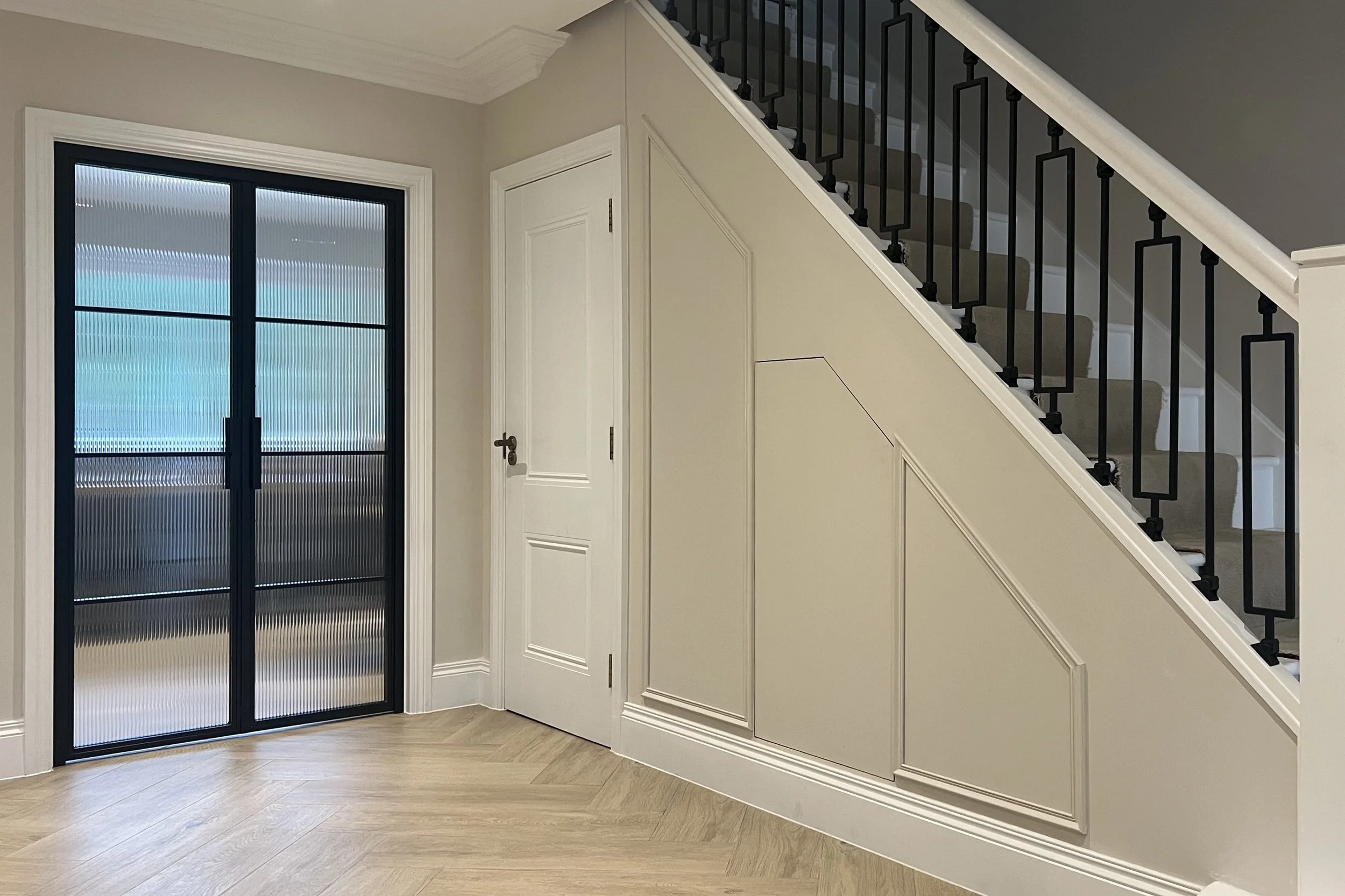
• Reeded, frosted or tinted glass
• Curved or arched bars
• Bespoke proportions
• Architectural framing
Steel has become a staple of luxury modern homes precisely because it adapts to almost any interior style. Rather than feeling factory-like, steel provides a crisp architectural line that complements natural materials such as timber, stone, textured walls, brass and linen.
Industrial is a choice, not a requirement. To see how varied the aesthetic can be, explore our full Interior Collection.
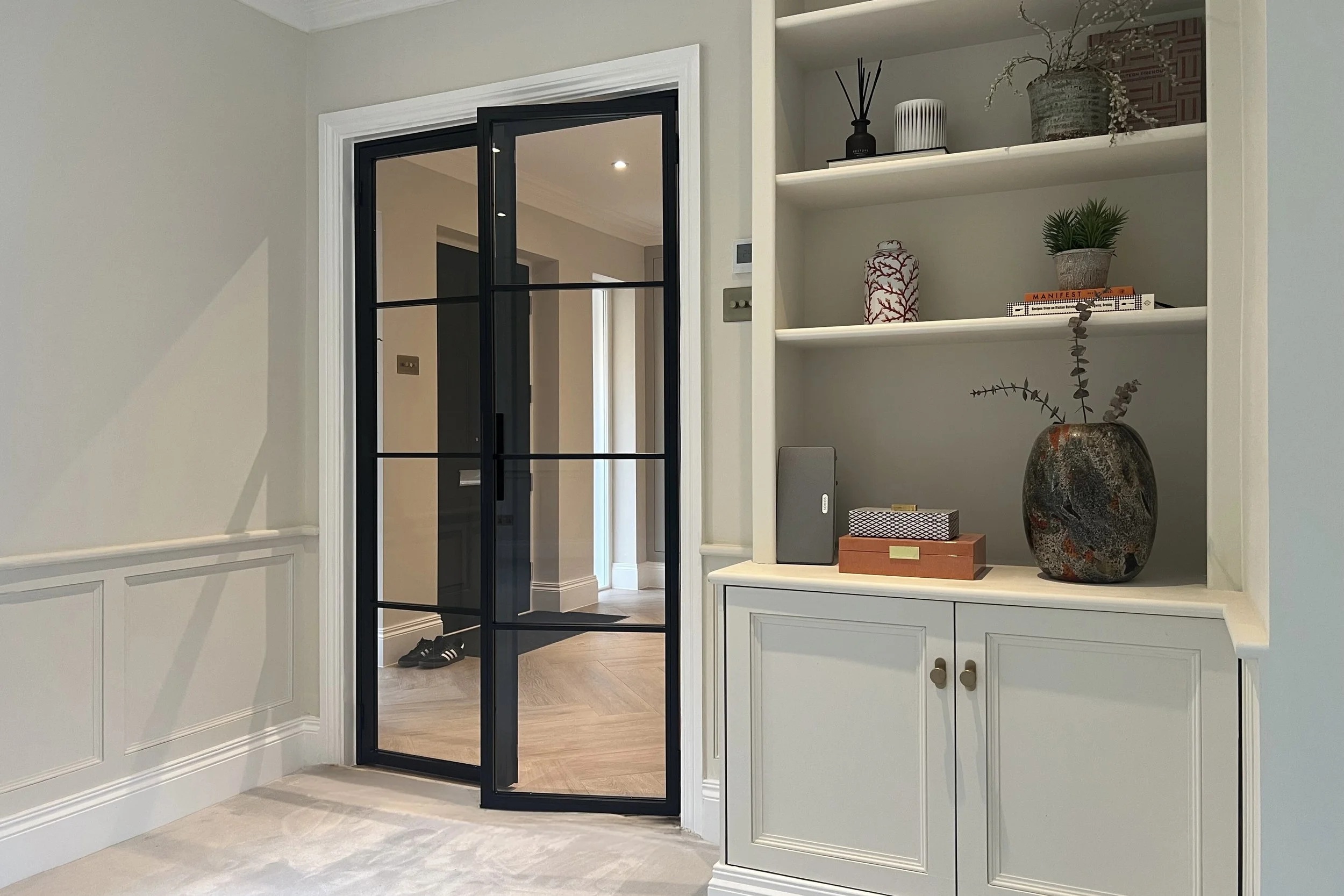
“Steel Doors Block Light” — In Reality, They Maximise Light Flow
It may seem counterintuitive, but steel internal doors often increase natural light rather than obstruct it. Unlike timber or aluminium, steel requires far less material to support large panes of glass. This results in:
Larger glazed areas
Slimmer frames
Wider sightlines
Clearer views between rooms
For darker hallways, kitchens or transitional areas, steel internal doors are one of the most effective ways to introduce and carry light through a property. This is one of the primary reasons designers specify them.
“Steel Doors Are Hard to Install” — Only If the System Is Poorly Made
You will often see claims that steel doors are “difficult to install.” This is true only for low-quality systems that arrive out-of-square or use clip-together aluminium components mislabelled as steel. Our system avoids this entirely.
Why Joshua James doors install cleanly
• Full professional survey
• CAD-accurate drawings
• Fully welded frames
• No mechanical movement
• Correct tolerances designed into fabrication
• Clear guidance for supply-only clients
• Expert installers available nationwide
The only time installation becomes challenging is in older homes where walls and floors are not level, but this is true for every precision-made door system, not just steel.
When installed correctly, steel doors operate flawlessly.
To understand how we ensure accuracy, see our step-by-step guide on How to Order.
“Steel Doors Conduct Sound” — Glazing Determines Acoustic Behaviour
Another misconception is that steel doors perform poorly acoustically. Again, this comes from confusing material with system.
Steel frames block or transmit a small portion of the sound — the main surface area is the glass.
For better acoustic separation, you can specify:
• Laminated glass
• Acoustic interlayers
• Reeded glass for soft diffusion
• Thicker laminate build-ups
This allows you to tailor sound performance to suit:
• Home offices
• Snugs
• Media rooms
• Bedrooms or quiet areas near social spaces
Acoustics are not a disadvantage; they’re a design choice.
“Steel Doesn’t Suit Every Style” — And That’s Honest
To stay balanced, steel internal doors are not suitable for:
• Homes where solid timber doors are integral to the period authenticity
• Clients seeking low-budget solutions
• Rooms requiring full visual privacy
• Schemes where glazing is not desired
Steel is exceptional when used in the right context; no material is completely universal.
The Real Disadvantage: Steel-Look Doors Create Market Confusion
The biggest problem in the industry is not steel itself, it’s misrepresentation.
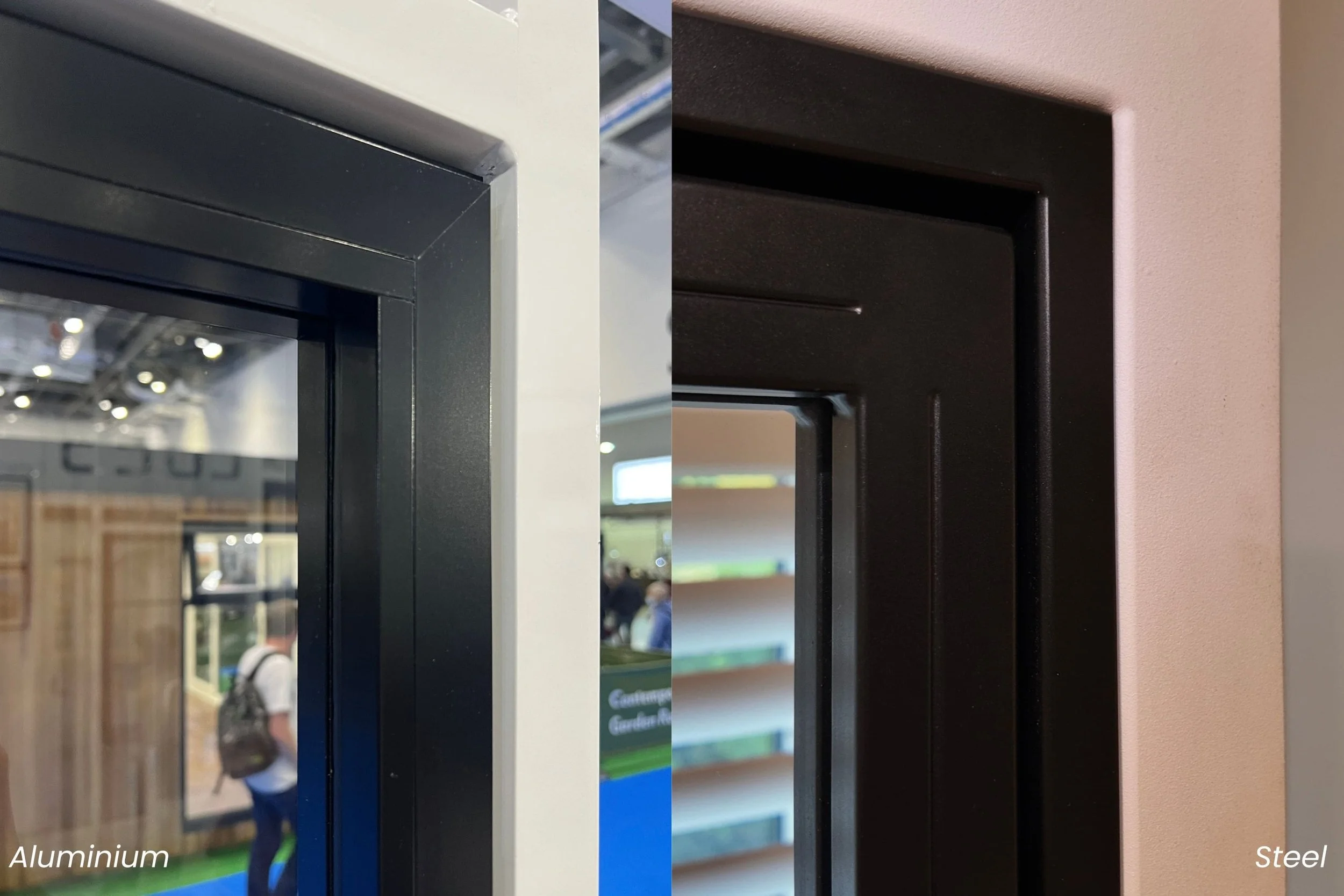
Many companies sell aluminium doors marketed as “steel style”, “industrial” or “metal doors.” These are visually similar but structurally inferior.
Here’s how clients can spot the difference:
• Magnet test — sticks to steel, not aluminium
• Visible joints — aluminium systems show mechanical connections
• Feeling the weight — aluminium feels hollow
• Bar depth — aluminium bars lack the 3D solidity of steel
• Warping over time — aluminium systems can sag
• Bulkier profiles — to make up for weak structural strength
Conclusion — Most “Disadvantages” Are Myths, Not Real Limitations
When you filter out misconceptions, it becomes clear that steel internal doors offer:
Longevity
Architectural clarity
Better sightlines
A premium tactile experience
Exceptional strength
A timeless aesthetic
The true disadvantages are few and manageable:
Longevity
Higher upfront cost
Heavier frames
Not suitable for every design style
Require professional fabrication
Confusion caused by aluminium “lookalikes”
But none of these detract from the fact that for modern, high-quality interiors, steel internal doors are one of the most refined and long-lasting choices available.
Looking for steel?
Enquire today to discuss your next project:
Submit an enquiry or call our team for a tailored consultation.
Let’s Talk
Whether you're renovating a home, specifying for a new build, or delivering a luxury interior for a client — we’re here to help.
At Joshua James, we work with architects, interior designers, homeowners and contractors across the UK to design and supply bespoke steel internal doors. Every door is crafted to exacting standards, tailored to suit each project’s vision, and built to stand the test of time.
If you're ready to elevate your next project with precision-made steel framed doors, let’s talk.