Steel Doors as a Centrepiece: When Doors Become the Feature, Not the Background
Introduction: The Shift from Background Detail to Architectural Statement
For many years, internal doors were treated as background elements. Necessary, functional and often designed to disappear into the surrounding architecture. In high-end homes today, that mindset has shifted dramatically.
Steel internal doors are no longer specified simply to divide space. They are increasingly used to define it.
In luxury residential projects across the UK, steel doors have become centrepiece features, anchoring interiors visually and emotionally. Positioned on key sightlines, aligned with architectural axes and finished with intention, they now play the same role once reserved for staircases, fireplaces or bespoke joinery.
This change is not about trend alone. It reflects a deeper evolution in how homes are designed, experienced and valued.
Doors as Architectural Moments
A centrepiece is not about scale alone. It is about presence.
Steel doors achieve this through proportion, material honesty and precision. Their slender frames create strong visual lines without overwhelming a space, while the clarity of glass allows the door to command attention without blocking light or flow.
In many homes, the most impactful steel doors sit between public and private zones: hallway to kitchen, living to dining, entrance to rear living space. These thresholds become moments of transition, framed deliberately rather than concealed.
Instead of blending into walls, steel doors frame views, pull the eye through the property and create a sense of anticipation as you move from one space to the next.
Sightlines, Symmetry and Visual Balance
One of the reasons steel doors lend themselves so well to centrepiece use is their ability to align perfectly with surrounding architecture.
Because steel is fabricated to exact dimensions, doors can be centred precisely within openings, aligned with ceiling lines, cabinetry, staircases or glazing beyond. This level of control allows designers to create strong symmetry or intentional asymmetry depending on the brief.
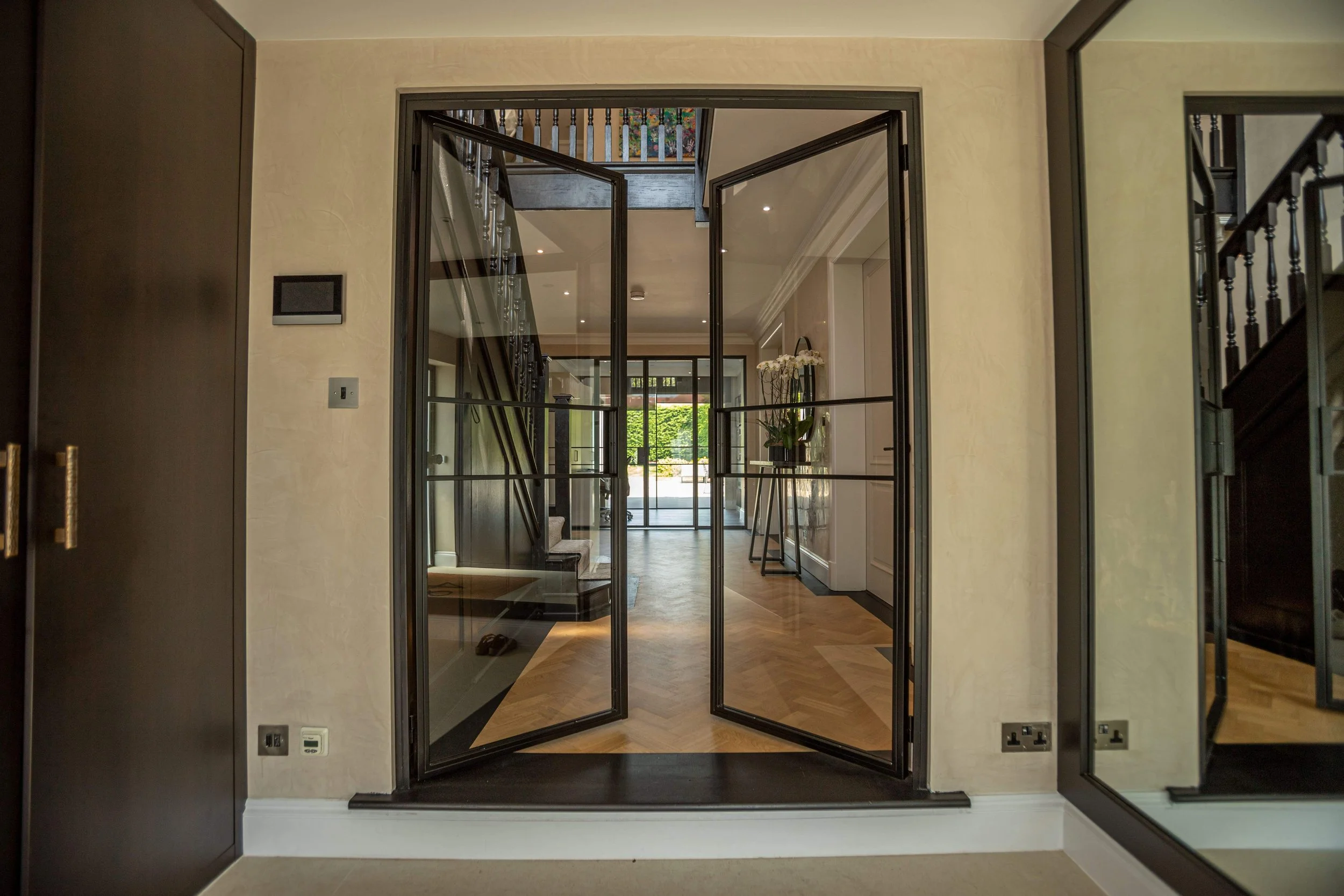
In open-plan homes, a centrally positioned steel double door can act as a visual anchor, giving structure to what might otherwise feel like a continuous expanse. When closed, the door reads as a composed elevation. When open, it disappears into the wider spatial rhythm.
This balance between presence and restraint is what elevates steel doors from product to architectural feature.
Proportion Over Decoration
Unlike timber or aluminium systems that rely on bulk or ornamentation, steel doors derive their impact from proportion.
Slim frames, carefully spaced bars and uninterrupted glazing create a sense of quiet confidence. Even complex layouts remain visually calm because steel allows divisions without visual noise.
This is particularly important when doors are intended to be focal points. Overly decorative solutions can quickly feel dated or dominant. Steel doors avoid this by letting geometry and material quality do the work.
In centrepiece applications, less really is more.
Finishes That Elevate the Feature
Finish plays a crucial role when a door is intended to be seen and noticed.
Jet black remains a classic choice, offering contrast and definition. However, we increasingly see warmer metallic tones such as bronze and antique brass used to soften the visual weight of steel while enhancing its presence.
These finishes catch light subtly throughout the day, adding depth rather than flat colour. When paired with glass, they allow the door to feel integrated into the interior palette rather than applied afterward.
A centrepiece steel door should feel considered, not imposed.
Glass as Part of the Composition
When steel doors become a feature, glass selection becomes part of the architectural composition rather than a secondary decision.
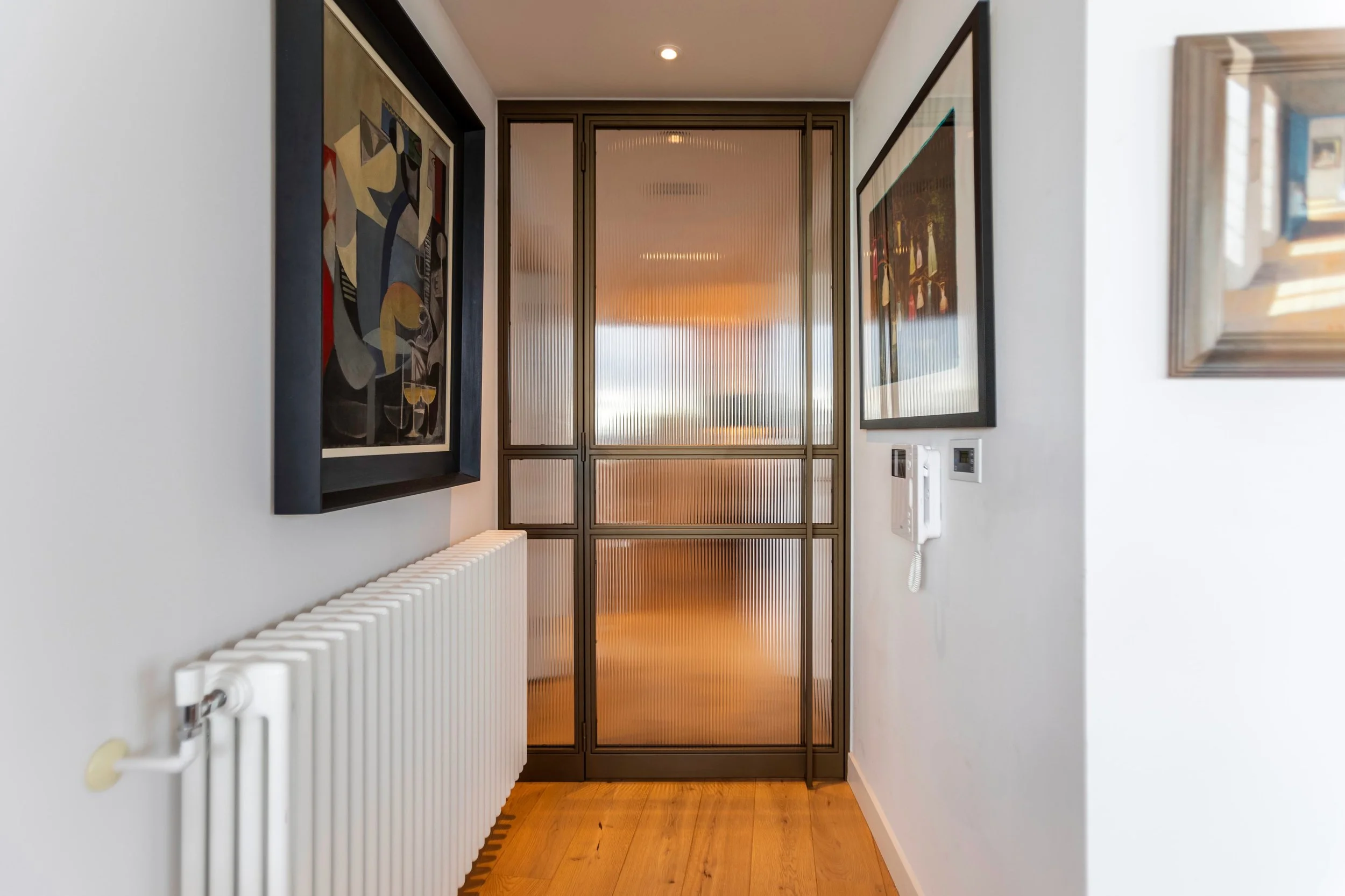
Clear glass emphasises openness and connection. Reeded or textured glass introduces rhythm, privacy and light diffusion without breaking the visual language of the door. Increasingly, designers combine glass types within a single installation, using clear panels at eye level and textured glass above or to the sides.
This layered approach adds depth and interest while maintaining coherence.
Because steel doors can be fabricated to accommodate different glass specifications, designers are free to treat glazing as a design tool rather than a limitation.
Centrepiece Doors in Different Areas of the Home
Steel doors do not need to be oversized to act as a focal point. Their placement is what matters.
In entrance halls, they establish the tone of the home immediately. In living areas, they frame views and create moments of pause. In kitchen transitions, they introduce structure without sacrificing sociability.
Even in more intimate settings such as studies or snugs, a steel door can elevate the space, turning a functional threshold into a moment of design clarity.
For single openings, steel single doors offer refinement without excess. Larger apertures benefit from bespoke double steel doors that reinforce symmetry and proportion.
When Doors Define the Space, Not the Walls
One of the most significant shifts in contemporary home design is the move away from relying solely on walls to define space.
Steel doors allow zones to be established visually rather than physically. This makes them ideal centrepieces in homes where openness and flow are key but separation is still required.
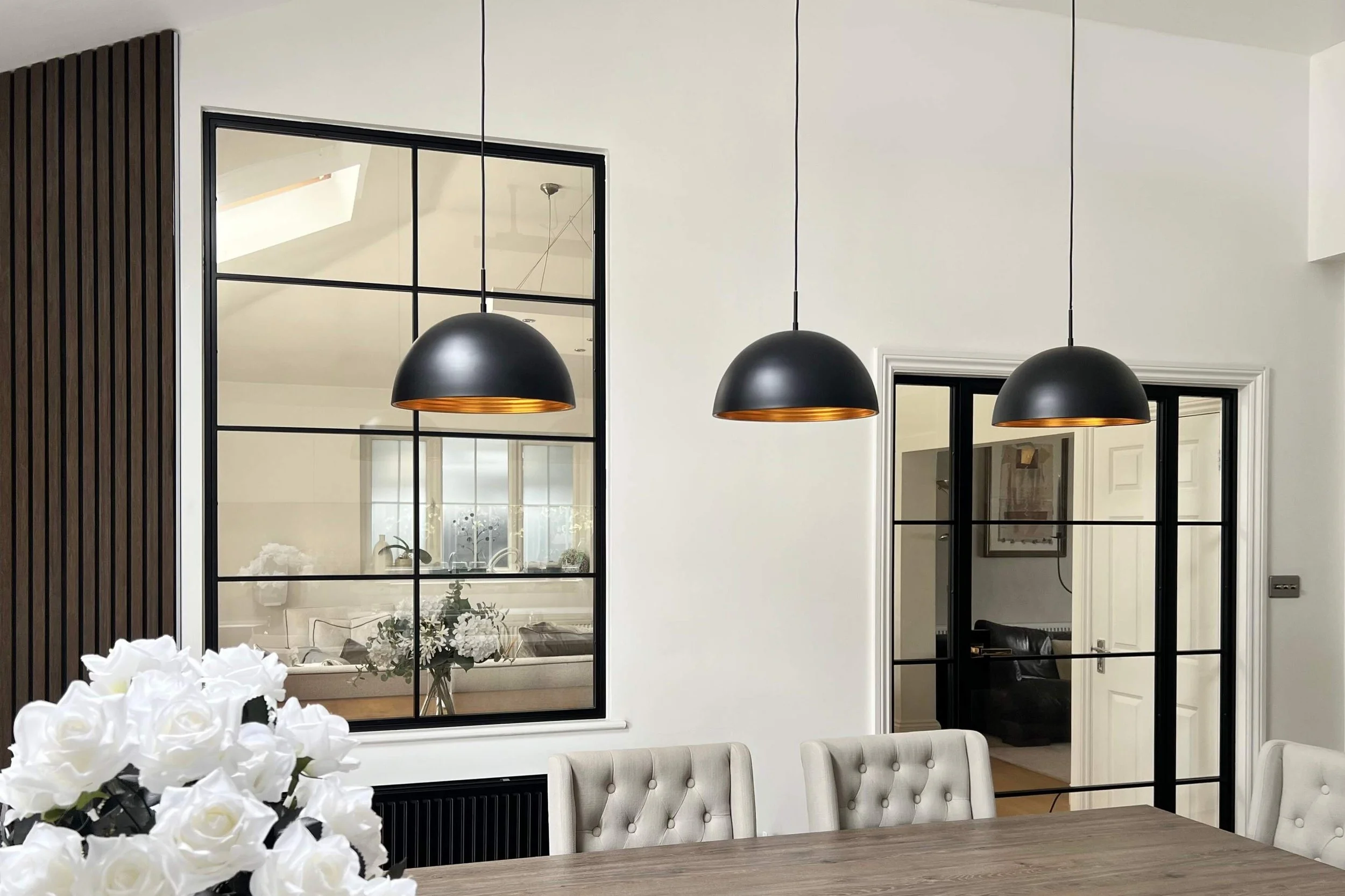
Used as steel and glass room dividers, they provide structure without enclosure, clarity without confinement.
In this role, the door becomes the defining element, shaping how the space is read and experienced.
Fire-Rated Doors Without Compromise
Even where fire protection is required, centrepiece design need not be sacrificed.
Fire-rated steel doors can be specified to maintain the same proportions, sightlines and finishes as non-rated installations. This continuity is particularly important when doors sit on key visual axes or connect multiple spaces.
For projects requiring compliance without visual compromise, fire-rated steel internal doors allow safety and design to coexist seamlessly.
Why Steel Doors Resonate Emotionally
Beyond aesthetics, centrepiece steel doors resonate because they feel permanent.
They convey solidity, craftsmanship and intention. Clients instinctively recognise the difference between something that has been designed as part of the architecture and something added later.
This emotional response is a key reason steel doors are increasingly associated with quality and value in luxury homes.
A New Standard in High-End Residential Design
As more architects, designers and developers specify steel doors early in projects, their role as centrepieces becomes even more pronounced.
Rather than asking whether a steel door is needed, many now ask where it should sit and how it should shape the interior.
This mindset shift suggests that steel doors are no longer a feature upgrade, but an expected element of well-designed homes.
Conclusion: The Door That Defines the Home
When steel doors are treated as centrepieces, they transcend function.
They frame movement, guide light, establish rhythm and anchor interiors with quiet authority. They are not background details but architectural statements that enhance how a home is seen, used and remembered.
If you’re considering steel doors as part of a luxury renovation or new build, thinking of them as centrepieces rather than partitions opens up far greater design potential.
To discuss how steel doors could shape your space, speak to our team about your project.
Let’s Talk
Whether you're renovating a home, specifying for a new build, or delivering a luxury interior for a client — we’re here to help.
At Joshua James, we work with architects, interior designers, homeowners and contractors across the UK to design and supply bespoke steel internal doors. Every door is crafted to exacting standards, tailored to suit each project’s vision, and built to stand the test of time.
If you're ready to elevate your next project with precision-made steel framed doors, let’s talk.