Steel internal doors work exceptionally well in period properties when the right choices are made. The key is selecting a system with character and warmth rather than one that reads as purely contemporary, pairing it with a bar design that respects the architecture of the home, and choosing a finish that sits naturally within the existing palette. Done well, the result feels entirely at home.
Period properties present one of the most rewarding contexts for bespoke steel internal doors. The original architecture — the proportions, the detailing, the sense of craft in the bones of the building — creates a setting that steel doors, when specified thoughtfully, can complement rather than contradict. The material has its own history. Steel has been used in domestic architecture for well over a century, and the association between steel framed glazing and the character of older buildings is one that many homeowners feel instinctively before they can fully articulate why.
The challenge is not whether steel doors belong in a period property. It is how to specify them so that they feel as though they always did.
Choosing the Right System
Not every steel door system suits a period property equally. The InoCross20 is our recommendation for this context, and the reasons are specific.
It is fully welded. The joints between the steel sections are welded rather than mechanically fixed, which produces a seamless, rounded finish that has more in common with traditional craftsmanship than a system assembled from components. That quality matters in a period setting, where the eye is accustomed to materials that have been worked and finished rather than simply put together.
It is also the most customisable system we produce. Period properties rarely conform to standard proportions, openings are often irregular, ceiling heights vary, and the architectural details of the surrounding space demand a door that can be designed around them rather than imposed upon them. Our InoCross20 doors accommodates this flexibility without compromise.
Systems with ultra-slim, purely contemporary profiles — our InoCrossSCULPTURE, for example — are designed for a different context. Their minimalist aesthetic is a strength in a modern interior, but in a period setting it can feel at odds with the character of the surrounding architecture. The right system is one that brings presence and warmth, not one that reads as a deliberate contrast to everything around it.
Explore the InoCross20 in detail on our Interior Collection page.
Bar Design: The Most Important Decision
If system choice sets the foundation, bar design is where the character of a steel door in a period property is really determined. And in this context, the choice is clear.
Our Traditional Designs — horizontal bars with a single central vertical bar per panel — are the natural starting point for period properties. This layout has an architectural precedent that goes back generations. It reads as considered and proportioned rather than industrial or contemporary, and it sits naturally alongside the details that period properties typically carry — panelled doors elsewhere in the home, cornicing, original flooring, and joinery that has a sense of weight and order to it.
Classic horizontal bar layouts also work well, particularly in settings where the period architecture is more restrained. The horizontal lines introduce a calm, ordered quality that suits the scale of many Victorian and Georgian rooms.
More contemporary bar designs — lattice patterns, asymmetric compositions, heavily geometric arrangements — are not wrong in a period setting, but they require more confidence in the overall interior vision. In the right hands they can produce something genuinely striking. For homeowners who are less certain, the traditional layouts are the more resolved starting point.
Our full range of bar designs can be explored on our Designs page.
Finish: Warmth Over Austerity
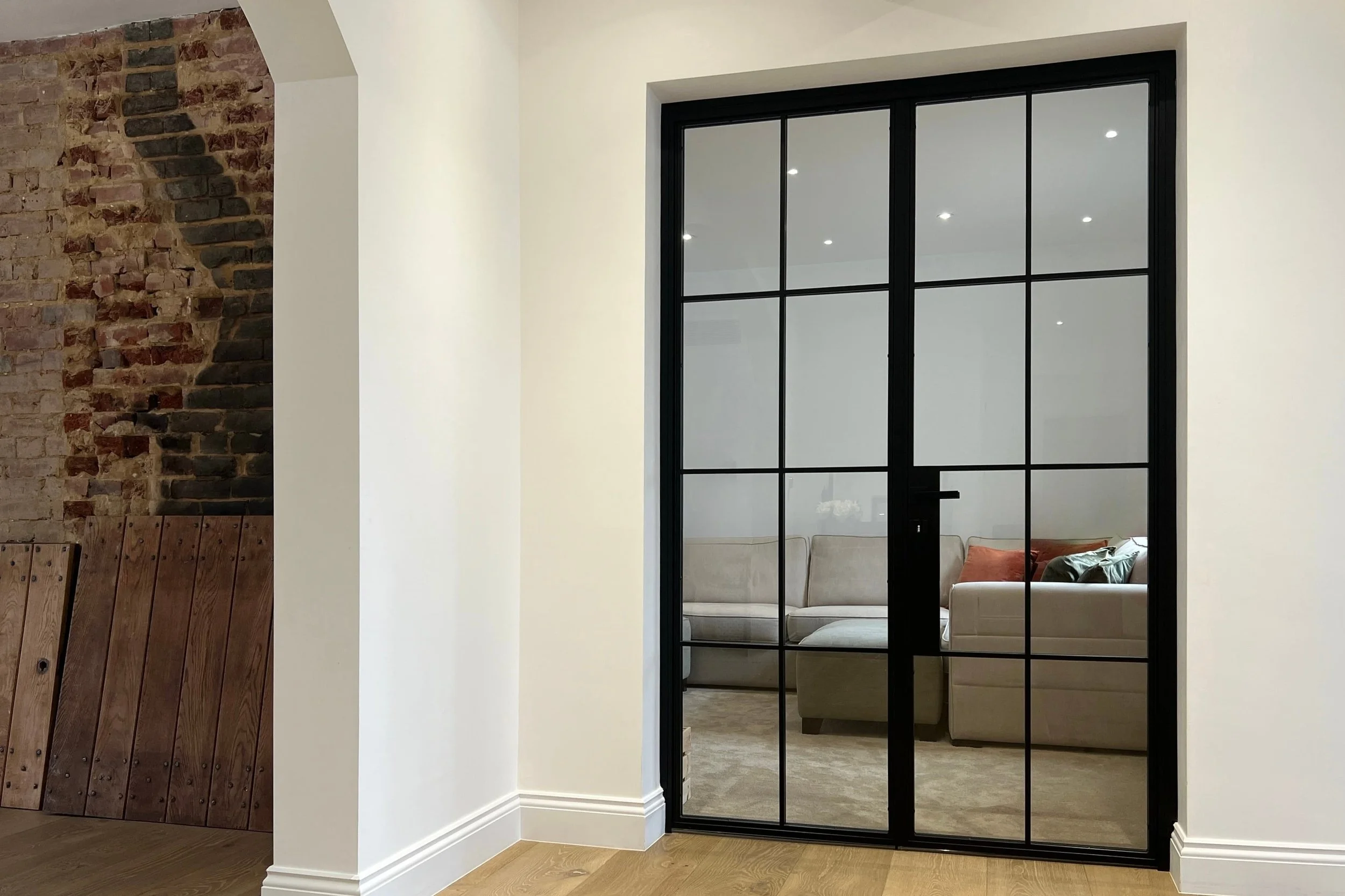
The finish of a steel door in a period property deserves particular thought. The palette of an older home, including the tones in the plasterwork, the warmth of aged timber, the character of original stone or tiled floors, tends to respond better to finishes that have warmth and depth rather than those that read as stark or cool.
RAL 9005 jet black has its place in period properties, particularly where the interior has been renovated with a confident, contemporary hand and the doors are intended to make a bold statement. But for homeowners who want the doors to sit within the architecture rather than stand apart from it, warmer dark tones — RAL 7021 black grey, RAL 7016 anthracite — often feel more resolved.
Brushed Bronze and other premium metal finishes can be particularly effective in period settings. They carry a sense of material history that powder coat alone cannot quite replicate, and they respond to the kind of warm, layered interiors that older properties tend to produce when renovated with care.
The ironmongery should follow the same logic. Aged brass, bark bronze and other metal hardware finishes sit naturally in period properties and reinforce the sense that the doors belong in the space rather than having arrived from somewhere else entirely.
Our Finishes page covers the full range of options available.
Two London Projects: What Is Possible in Practice
The principles above are most clearly understood through real projects. Two from our Portfolio demonstrate how steel doors can work within period London properties in very different ways.
Hackney
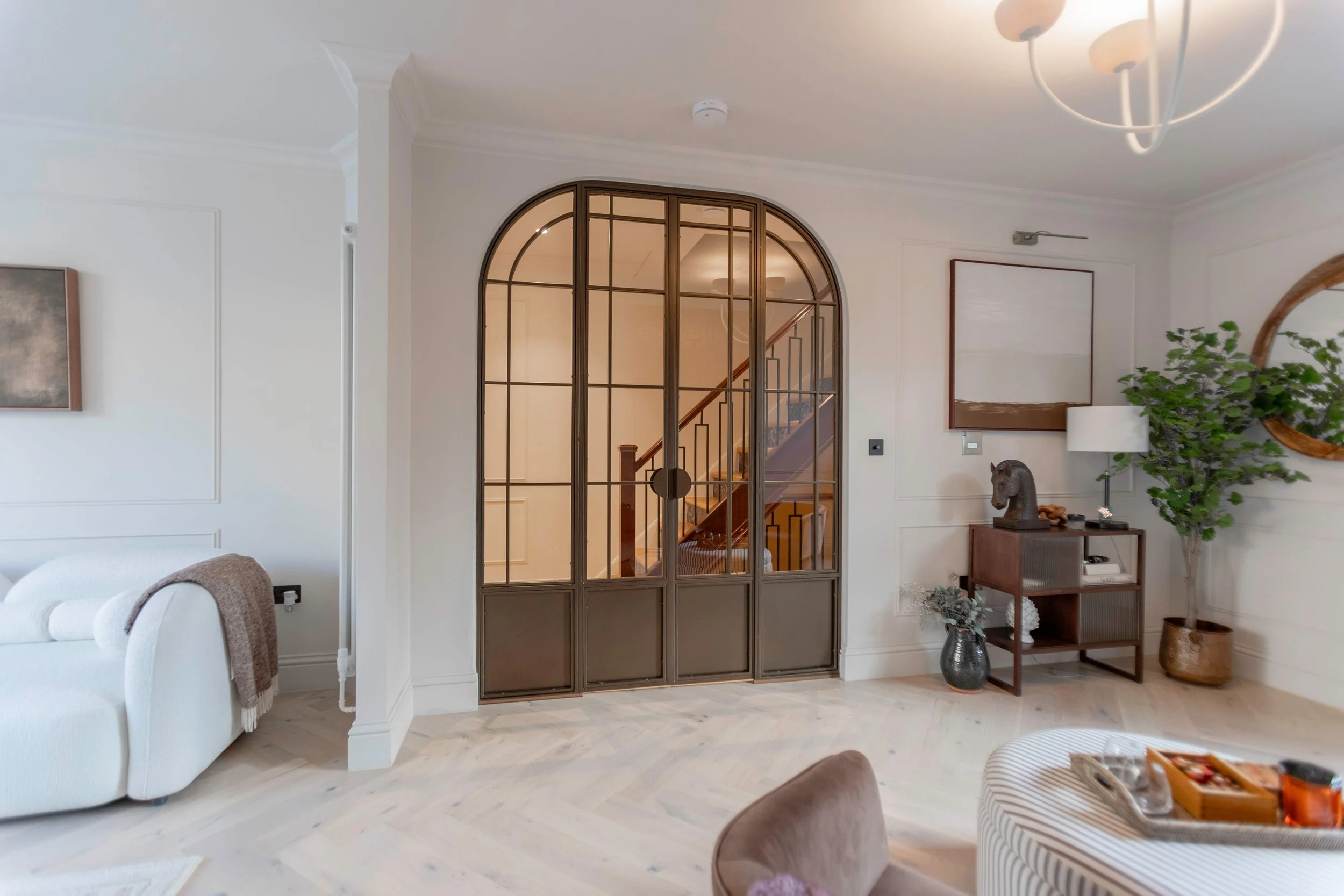
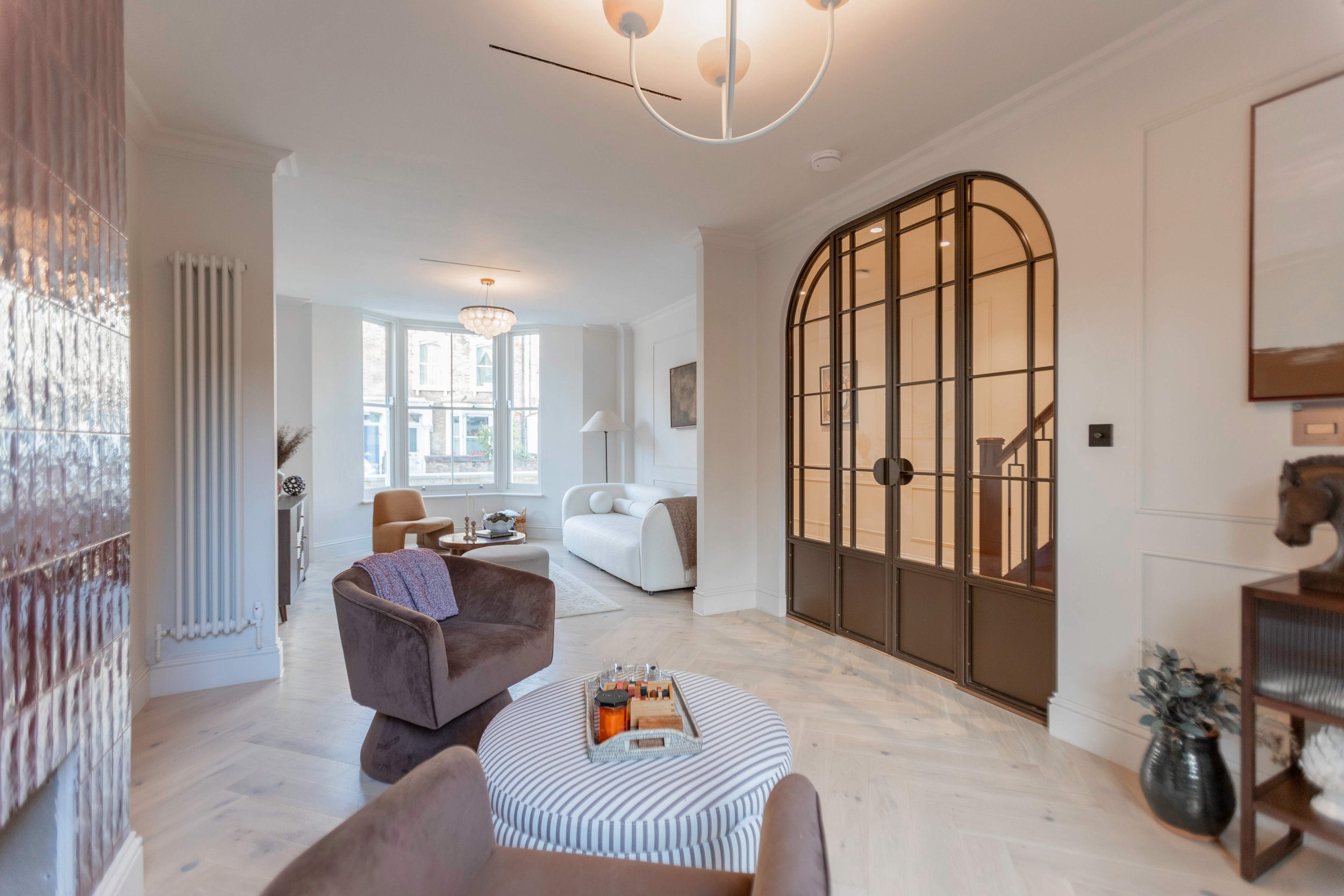
This Hackney project centred on a striking double door set framed by arched fixed screens, installed at the entrance of a high-end period property developed in collaboration with a specialist London property developer and his interior design team. The brief arrived with pre-rendered CGIs that captured the desired aesthetic precisely — a powerful architectural statement within a space defined by its original arched aperture.
The doors were finished in a rich bronze powder coat, chosen to complement the interior's warm, luxurious palette. Kick plates added visual weight and practical privacy between the entrance hallway and lounge. The corners of each door leaf were subtly arched to maximise the width of the opening while honouring the curvature of the aperture — a detail that required careful design and precise execution. Bespoke semi-circle handles, crafted to echo the arch, completed the composition.
The result is a door set that does not simply divide two spaces. It defines the character of the entire property, acting as both a functional installation and a sculptural centrepiece that sits entirely naturally within the architecture of the home.
You can view the full project in our Portfolio.
Clapham
The Clapham project took a different approach — one that demonstrates how steel doors can work within a period property that has been renovated with a more contemporary interior vision. Four distinct door sets were specified across three floors, each tailored in size, finish and function, working with a London-based interior designer throughout the process.
All four sets featured reeded glass and a minimalist design without crossbars, creating clean transitions between spaces while maintaining privacy and light flow. On the ground floor and basement, the doors were finished in RAL 7021 black grey — a soft, warm alternative to black that provided refined contrast without austerity. On the first floor, the doors took a different direction entirely, finished in RAL 1036 pearl gold to complement the metallic accents in the dressing room's lighting and furniture.
A pocket sliding door between the master bedroom and dressing room disappeared entirely into the wall when open, preserving the flow of the space. A stainless steel frame was specified for the ensuite bathroom door, providing durability in a humid environment without compromising on the design language of the rest of the installation.
The project shows that period properties are not confined to a single aesthetic approach. The architecture provides the setting. The interior vision determines the direction. Steel doors, specified well, can serve both.
You can view the full project in our Portfolio.
Planning and Listed Buildings
For most period property renovations, internal doors do not require planning permission. Changes to the interior of a property, including the installation of internal doors, are generally considered permitted development and do not need local authority approval.
Listed buildings are a different matter. If your property is listed, any works that affect its character, including internal alterations, may require listed building consent. This is a matter for your architect or planning consultant rather than something Joshua James manages directly, but it is worth confirming early in the process, particularly for Grade I or Grade II* properties where the requirements are most stringent. Your local planning authority or a specialist conservation architect will be able to advise on what applies to your specific property.
Starting the Conversation
Every period property is different, and the right specification for yours will depend on the character of the home, the vision for the renovation, and the specific openings involved. At Joshua James, we work with homeowners and their design teams from the earliest stages of a project, helping to ensure that the doors are designed as part of the interior rather than added to it afterwards.
If you are considering steel internal doors for a period property, get in touch and we will guide you through the options. You are also welcome to visit our showroom to see our doors in person before you commit.
Frequently Asked Questions
Do steel internal doors suit period properties? Yes, when specified thoughtfully. The key is choosing a system with warmth and character, a bar design that respects the architecture of the home, and a finish that sits naturally within the existing palette. Our InoCross20 system paired with a traditional bar design is the most common and most resolved approach for period settings.
Which bar design works best in a period property? Our Traditional Designs, horizontal bars with a single central vertical bar per panel, are the natural starting point. They have an architectural precedent that suits the proportions and detailing of Georgian, Victorian and Edwardian properties. Classic horizontal layouts are also a strong choice in more restrained period settings.
Do I need planning permission to install steel internal doors in a period property? For most period properties, internal door installations do not require planning permission. Listed buildings are the exception, if your property is listed, you may need listed building consent for internal alterations. We recommend consulting your architect or local planning authority early in the process to confirm what applies to your specific property.
What finish works best in a period property? Warmer finishes tend to sit more naturally within period interiors. RAL 7021 black grey, RAL 7016 anthracite and bronze metal finishes all work well alongside the tones and materials typically found in older homes. Jet black can work in period properties with a confident contemporary interior, but warmer tones are generally more forgiving across a range of settings.
Can steel doors be installed in a listed building? Yes, subject to obtaining the necessary listed building consent where required. Steel doors have been installed in listed properties, and their slim sightlines and design flexibility make them a sympathetic choice in many heritage settings. Your architect or planning consultant will be able to advise on the consent process for your specific property.
Which Joshua James system is best for a period property? We recommend our InoCross20 doors for period property projects. It is fully welded, producing a seamless and well-rounded finish that suits older architecture, and it is the most customisable system we produce, which is particularly important in period properties where openings often have irregular proportions or architectural details that require a bespoke approach.
Let’s Talk
Whether you're renovating a home, specifying for a new build, or delivering a luxury interior for a client — we’re here to help.
At Joshua James, we work with architects, interior designers, homeowners and contractors across the UK to design and supply bespoke steel internal doors. Every door is crafted to exacting standards, tailored to suit each project’s vision, and built to stand the test of time.
If you're ready to elevate your next project with precision-made steel framed doors, let’s talk.