How to Prepare Your Home for Steel Internal Doors: What to Think About Before You Order
Steel internal doors are not a decision you make at the end of a renovation. The homeowners who are happiest with the result — and the ones whose projects run most smoothly — are invariably those who brought their doors into the conversation early, thought through the details before committing, and arrived at installation day with everything in place.
This guide is written for homeowners who are planning ahead. Whether you are at the architectural drawing stage or further into a build, it covers what to consider, when to consider it, and the oversights that are easiest to avoid when you know what to look for.
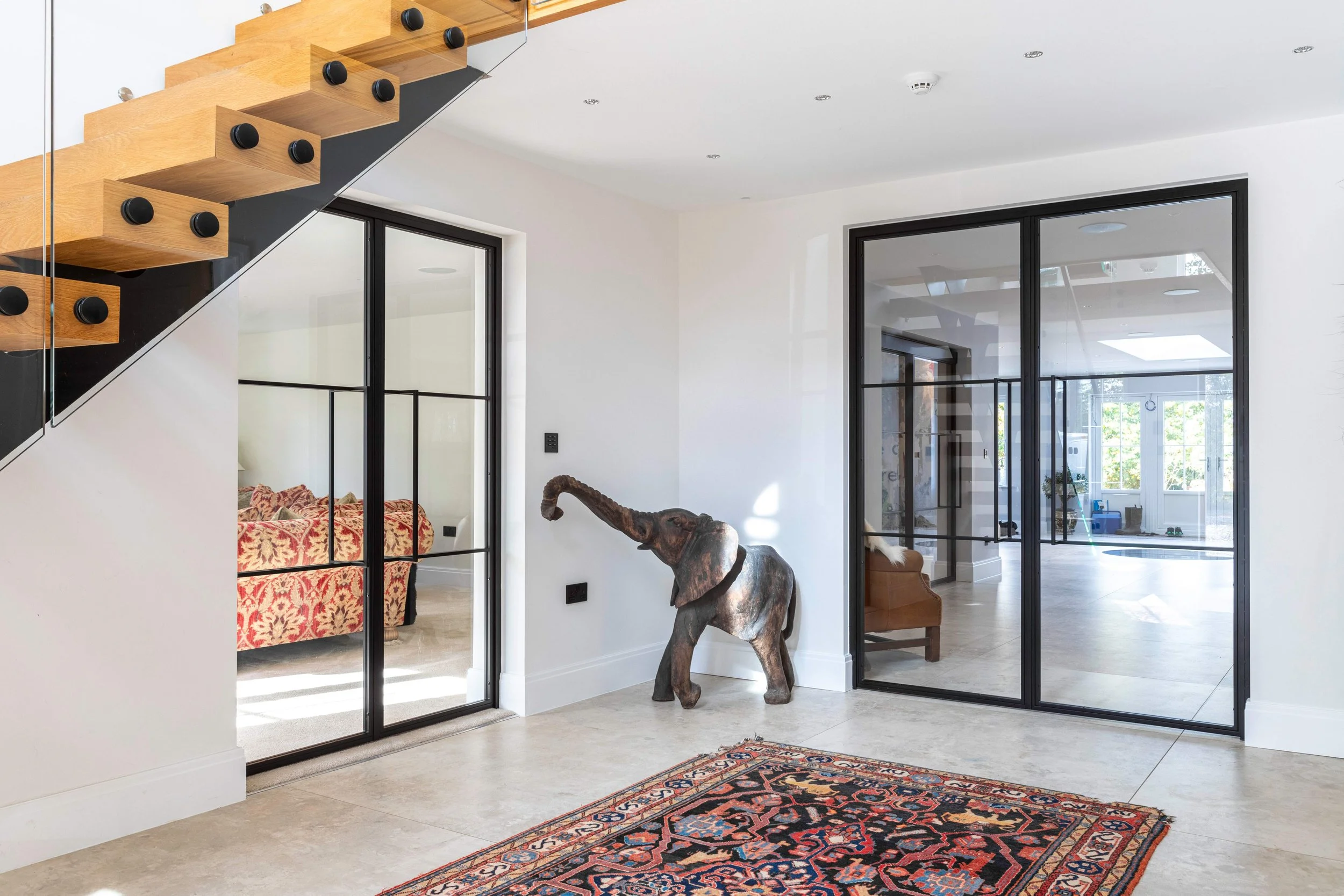
When to Get in Touch
There is no single right moment to begin a conversation with Joshua James, but there is a principle worth following: earlier is almost always better.
For homeowners working with an architect, the drawing stage is a valuable point to engage. At this stage, opening sizes and configurations are still being determined, and a conversation with us can help ensure the openings are designed to get the best from the doors — the right width for a double set, the right height for a grand hallway entrance, the right position for a sliding door track. Decisions made on a drawing are far easier to revisit than decisions made in a formed opening.
Find or homeowners who are further along — with openings already formed or sizes already known — that is equally a fine point to begin. What matters is that the conversation happens with enough time to allow for the full process: design, drawing approval, production and installation.
Our Order Process page sets out exactly what to expect at each stage.
Lead Times: Planning Around Production
Every door we produce is made to order. There are no stock items, no off-the-shelf solutions — each set is handcrafted to the specific requirements of the project. That level of craft takes time, and it is time worth planning around.
Our current lead times run from drawing approval — not from the point of first enquiry, but from the moment the final drawings have been signed off and production can begin. For our non-fire-rated doors, that is typically six to nine weeks. For fire-rated doors, ten to fourteen weeks.
The practical implication is straightforward: if there is a date in your renovation by which the doors need to be installed — whether that is a contractor finishing date, a building control visit, or simply a date by which you want your home finished — count back from that date and build the lead time in. Leaving it late rarely causes an insurmountable problem, but it does create pressure that is easily avoided with a little foresight.
One point worth noting for projects involving fire-rated doors: if building control is due to sign off on your project, the fire doors must be installed before that visit. It is worth confirming this timeline with your project manager or contractor well in advance.
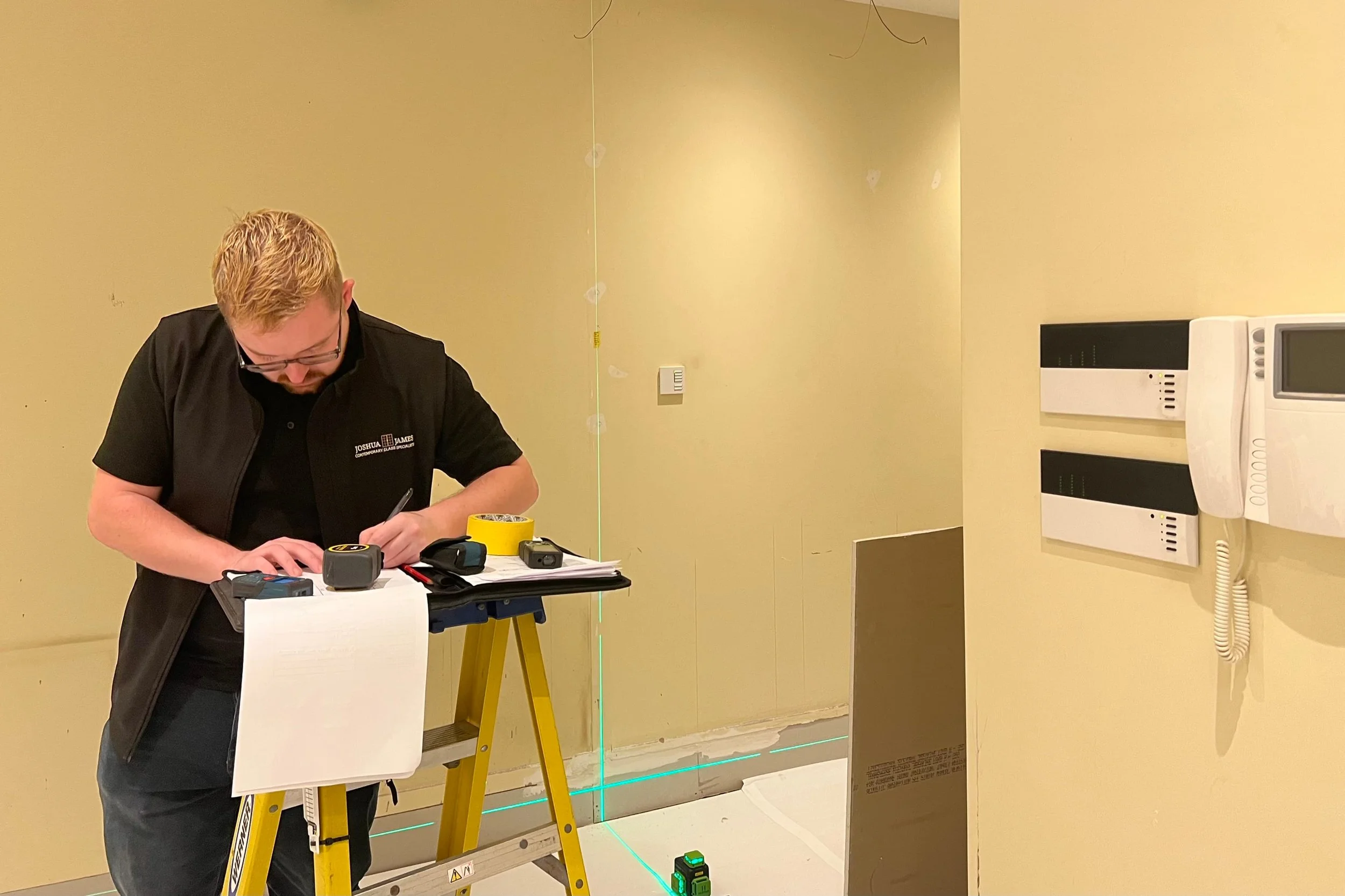
The Survey: What It Involves and When to Do It
We offer an optional survey service — and most of our clients choose to take it up, for the peace of mind of knowing that every measurement has been taken directly from the opening by our team.
The ideal time for a survey is once the opening is fully formed. At that point, we can measure precisely, account for any variation in the structure, and produce drawings that reflect exactly what will be installed.
We do, however, recognise that our lead times sometimes mean clients would prefer to survey earlier — before plastering and finishing is complete. In those cases, we work with the client and their builder to agree an opening size that everyone is building towards. Deductions are made for plasterboard, plaster and any other finishing layers, and the agreed dimensions become the reference point for both the build and the production of the doors. It is a practical solution that keeps projects moving without sacrificing accuracy.
For clients who prefer to proceed without a survey — working to agreed sizes provided directly — that is equally possible. Regardless of the route taken, we produce detailed drawings for every project, which the client signs off before production begins. Those drawings set out all the specifics: sizes, glass type, finish, door configuration, positioning within the reveal, and every other detail of the order. Nothing goes into production until those drawings are approved.
Structural Preparation: What Your Builder Needs to Know
Steel internal doors — particularly sliding and bi-folding configurations — require solid, adequate fixing points within the structure of the opening. This is not something Joshua James manages directly, as we do not carry out general building works, but it is something your builder or contractor needs to plan for, if not already in place, and ensure is in place before installation day.
For hinged doors, the key requirement is that the frame of the opening provides sufficient fixing for the door to be secured correctly. For sliding and bi-folding doors, the consideration is more significant — both configurations are top-hung, meaning the full weight of the doors hangs from the head of the opening. The structure above must be capable of supporting that load. Timber or another solid structural material within the head is typically required, and it is worth confirming this with your builder at the earliest opportunity.
Incorporating side screens alongside a sliding door not only enhances the overall aesthetic, but also provides essential structural support, as the door is suspended from a steel section securely fixed to the top of the side screens to help distribute and carry the weight of the system.
If there is any uncertainty about what is required for your specific opening, raise it with us during the design stage and we can advise on what your builder should be providing.
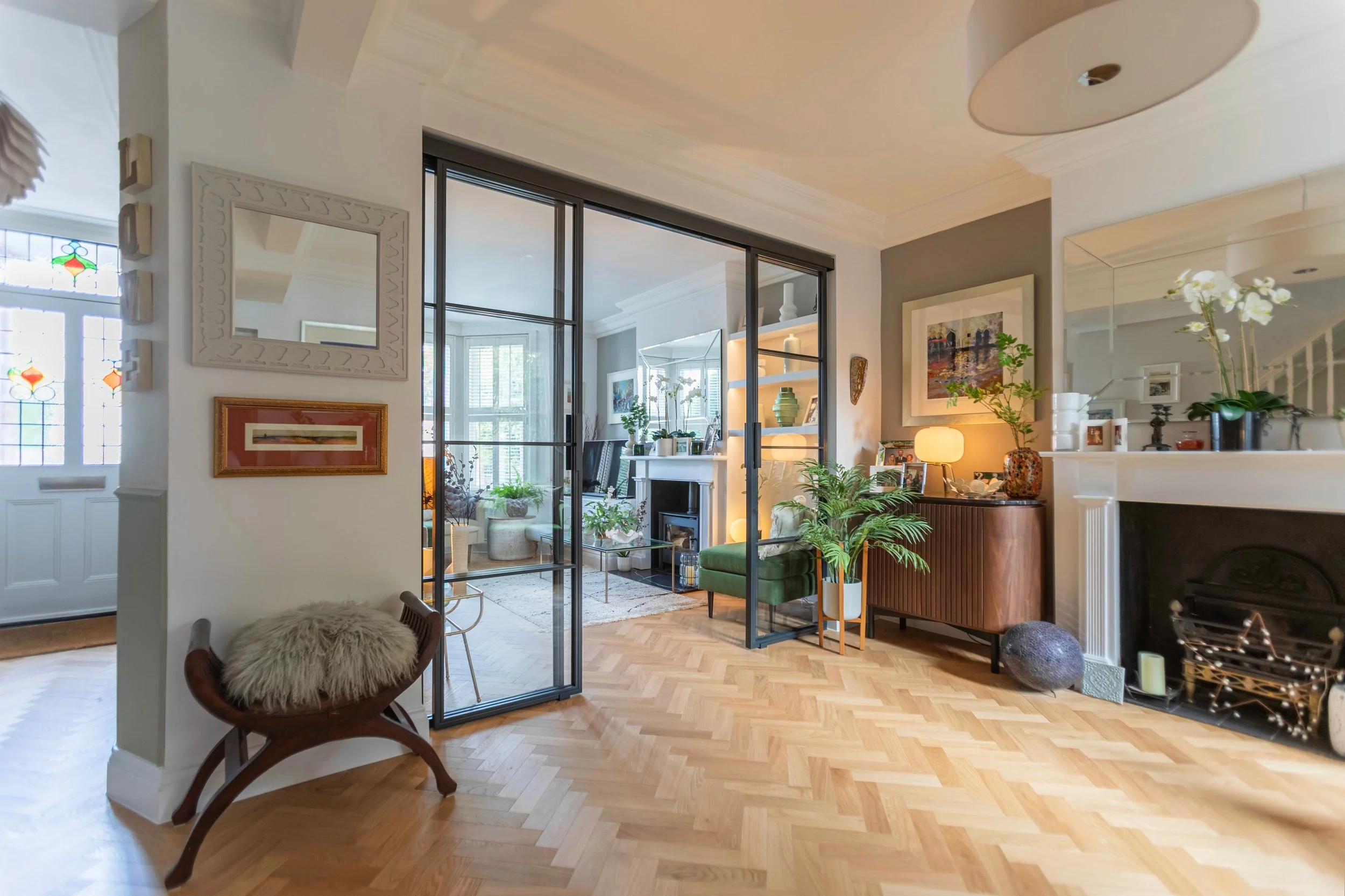
Decisions to Make Before You Commit
Beyond the structural and logistical preparation, there are a number of design decisions that are best made early — not because they cannot be revisited later, but because making them with proper thought, rather than under time pressure, consistently produces better outcomes.
Configuration. The most fundamental question is which configuration suits the opening — hinged, sliding, bi-folding, or something else. This is not always obvious, and it is worth considering how the space is used, how much clearance is available for a door to swing, and whether the full width of the opening ever needs to be unobstructed. Our Interior Collection gives a full overview of what is available.
Single or double. For wider openings, the choice between a single door and a double set is worth considering carefully. A double set brings symmetry and presence, but it also introduces the question of which leaf will be the main door and which the secondary — a decision that shapes how the doors are used every day. The natural flow of traffic through the opening, the swing path of each leaf, and the position of furniture all play a part. It is a decision that should be made early and deliberately, not resolved at the point of installation.
Swing path. For hinged doors, the direction and arc of the swing matters more than most homeowners initially appreciate. A door that opens into the path of a kitchen island, another door, or a frequently used appliance will be a daily frustration. Think through where the door will sit when fully open, and whether that position works with the room as it is lived in.
Positioning within the reveal. Where the door sits within the depth of the wall — whether flush with one face, centred, or positioned to one side — affects both the aesthetics and the practicality of the installation. Many clients choose to position their doors over a change in flooring, which provides a natural and considered transition point. Where the flooring is the same on both sides, the decision is one of personal preference and design intent. For hinged doors that need to swing around a wall return, positioning to one edge of the reveal is often the practical choice. For those who prefer symmetry, a central position is the natural answer. For sliding door sets that include fixed side screens, there is an additional decision: which side carries the fixed screen and which side the sliding door. Furnishings, room layout and how the space is used will all inform this.
Fixed screens. Some openings benefit from the addition of fixed screens alongside the doors — extending the glazed area, maintaining the visual connection between spaces, and creating a more architectural composition. Whether to include them, and on which side, is worth thinking through at the design stage rather than adding as an afterthought.
Visit our Designs pages for reference on how different configurations and bar layouts translate across a range of opening types.
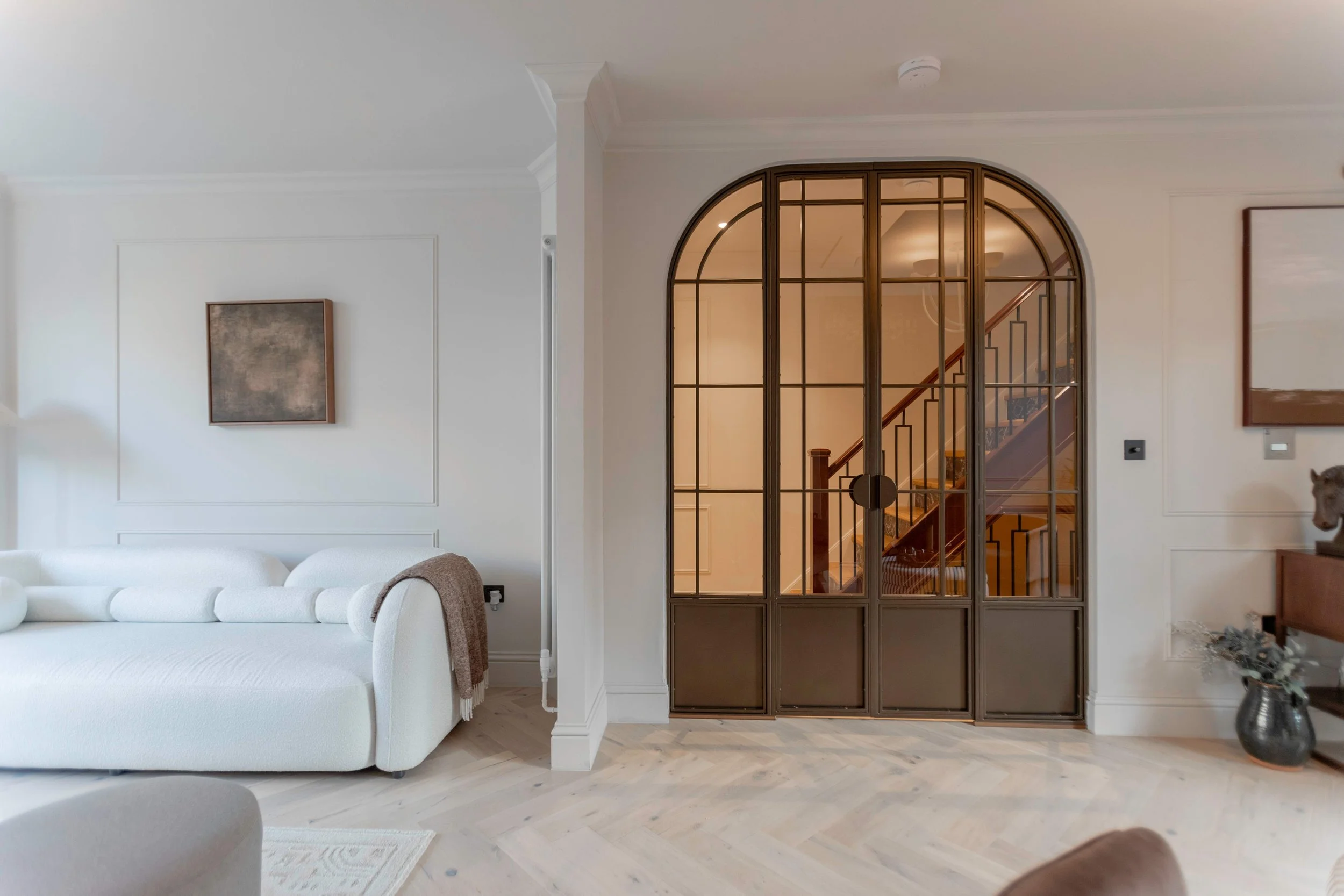
The Drawing Sign-Off: The Most Important Step Before Production
Before any door leaves our workshop, detailed drawings are produced and presented to the client for approval. This is the point at which every detail of the order is confirmed — sizes, glass type, finish, configuration, positioning within the reveal, handle style, and anything else specific to the project.
It is worth approaching the drawing sign-off with care. Read everything. Check the sizes against your opening. Confirm the glass type is what you discussed. Make sure the configuration reflects the decisions you have made about main and secondary doors, swing direction and reveal position.
Once drawings are approved and production begins, changes become difficult and in some cases impossible to accommodate. The drawing sign-off is your opportunity to be certain — and it is one worth taking seriously.
A Process Designed Around You
Every project at Joshua James begins with a conversation. From that first exchange through to the finished installation, we work to make the process as straightforward as possible — providing guidance at every stage, producing drawings that leave nothing to interpretation, and manufacturing to a standard that makes the result worth the planning that preceded it.
If you are at the beginning of your project or simply thinking ahead, get in touch and we will talk you through everything from the first question to the finished door.
You can also visit us at our showroom to see our doors in person before you commit.
Let’s Talk
Whether you're renovating a home, specifying for a new build, or delivering a luxury interior for a client — we’re here to help.
At Joshua James, we work with architects, interior designers, homeowners and contractors across the UK to design and supply bespoke steel internal doors. Every door is crafted to exacting standards, tailored to suit each project’s vision, and built to stand the test of time.
If you're ready to elevate your next project with precision-made steel framed doors, let’s talk.